
Table of Contents
Going gluten free doesn’t mean giving up grains. Not even close! There are more gluten free grains than most people realize, and almost every one of them can go into a cake, a cookie, or a pan of brownies.
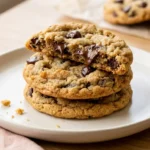
I have a gluten sensitivity, and so do my kids. So gluten free baking isn’t a trend at our house, it’s just how we bake. My go-to is oat flour, and I always make my own (a minute in the blender is all it takes). Two of the first recipes I made that way were my mom’s: her cookies and her brownies, both with oat flour in place of regular flour.
So this guide does two jobs. First, the simple answer: which grains are safe and which ones only look safe. Then the part I actually care about, which is how each grain behaves in baking. What it tastes like, what texture it gives you, and which Slice of Sweet recipes use it.
What grains are gluten free?
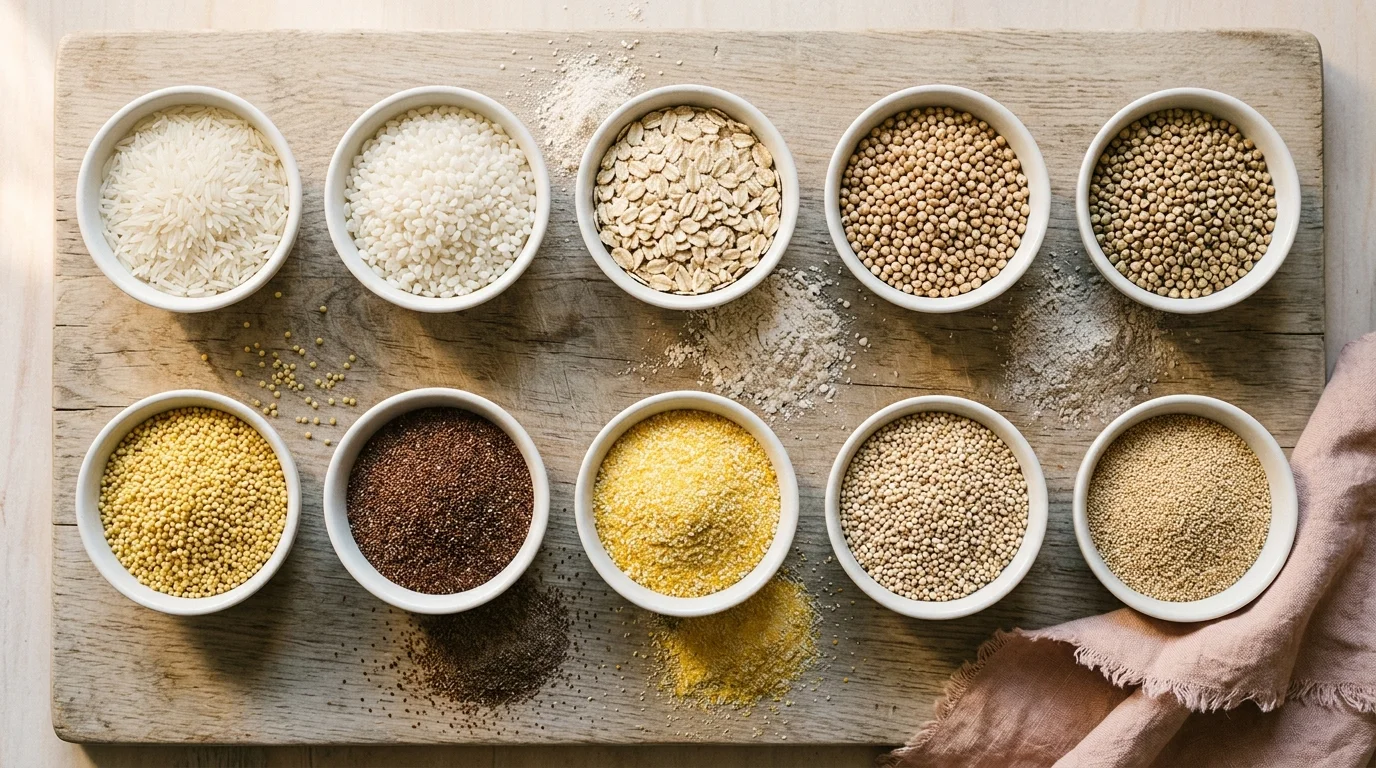
The naturally gluten free grains are rice, wild rice, corn, sorghum, millet, teff, and oats (only when they’re certified gluten free). Quinoa, buckwheat, and amaranth are technically seeds, not true grains, but they cook and bake like grains and they’re gluten free too.
Here’s the full list of grains for a gluten free diet, all in one place:
- Rice (white, brown, black, red, and sweet or glutinous rice)
- Wild rice
- Corn (cornmeal, corn flour, polenta, grits)
- Sorghum
- Millet
- Teff
- Oats (certified gluten free only)
- Quinoa (a seed)
- Buckwheat (a seed)
- Amaranth (a seed)
Gluten itself is a protein found in wheat, barley, and rye. All of these gluten free grains are naturally free of it. The catch is that they’re often grown, milled, or packed near wheat, so if you have celiac disease, buy the ones labeled gluten free. The Celiac Disease Foundation is a great place to learn more about living gluten free.
Grains that contain gluten (and the sneaky ones)
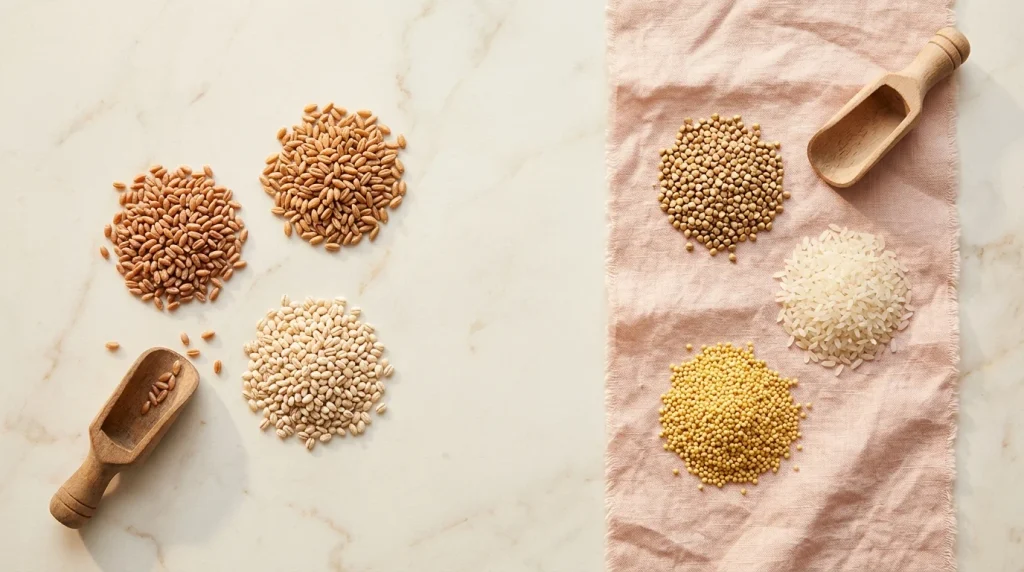
Three grains contain gluten: wheat, barley, and rye. Easy enough. The trouble is that wheat goes by a lot of other names, and some of them sound just like gluten free ancient grains.
All of these are wheat, so they all contain gluten:
- Spelt
- Farro (and emmer)
- Kamut, also sold as khorasan wheat
- Einkorn
- Durum and semolina
- Bulgur
- Freekeh
- Triticale (a wheat and rye cross)
Barley hides too. Malt, malt extract, and malted milk powder are made from barley, which is why malted milk balls and a lot of cereals are off the list.
And then there are the two that trip people up the other way. Buckwheat has “wheat” in its name, but it isn’t wheat at all. It’s a seed from a plant related to rhubarb. Glutinous rice (the sticky rice used for mochi) sounds like it’s full of gluten, but “glutinous” just means gluey. It’s completely gluten free.
Gluten free grains baking chart
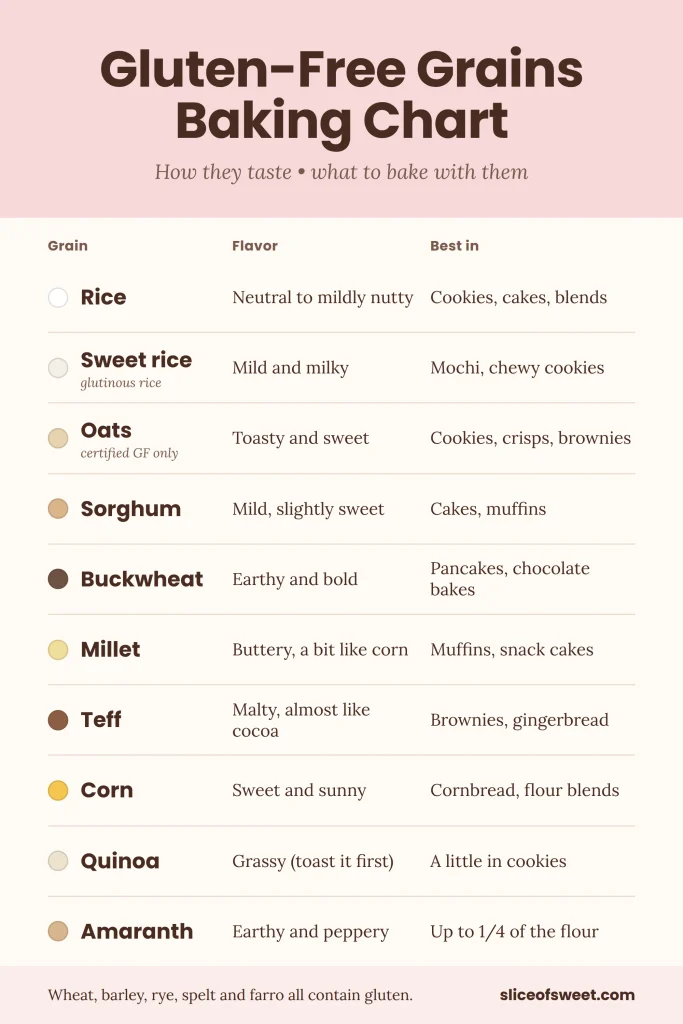
This is the gluten free grains chart I wish I’d had on my fridge. Pin it, or join my email list and I’ll send you a free printable version.
| Grain | What you’ll buy | Flavor | What it does in baking | Best in | Try it in |
|---|---|---|---|---|---|
| White rice | White rice flour | Neutral | Crisp, light, can be sandy if coarse | Shortbread, cut-out cookies | Sugar cookies |
| Brown rice | Brown rice flour (superfine if you can) | Mild, a little nutty | Base flour for most blends | Cakes, quick breads | Banana bread |
| Sweet (glutinous) rice | Sweet rice flour, mochiko | Mild, milky | Chewy, stretchy, binds | Mochi, chewy cookies | Dubai chocolate mochi |
| Oats (certified GF) | Rolled oats, oat flour | Toasty, sweet | Moist, tender, a little chewy | Cookies, crisps, brownies | Brownies, apple crisp |
| Sorghum | Sorghum flour | Mild, slightly sweet | Soft crumb with good structure | Cakes, muffins, blends | Pancake mix |
| Buckwheat | Buckwheat flour | Earthy, bold | Tender, dark, rustic | Pancakes, chocolate bakes | Fluffy pancakes |
| Millet | Millet flour | Mild, buttery, a bit like corn | Light, cakey crumb | Muffins, snack cakes | Carrot cake |
| Teff | Teff flour (brown or ivory) | Malty, a little like cocoa | Moist, soft, dark | Brownies, gingerbread, spice cake | Brownies (swap in 1/3 teff) |
| Corn | Cornmeal, corn flour, cornstarch | Sweet, sunny | Gritty-tender (meal) or silky (starch) | Cornbread, olive oil cake | Cornstarch in your flour blend |
| Quinoa | Quinoa flour | Grassy, slightly bitter | Dense, high protein | Small amounts in cookies | (toast it first, see below) |
| Amaranth | Amaranth flour, puffed amaranth | Earthy, peppery | Dense, browns fast | Crackers, a little in muffins | (use up to 1/4 of the flour) |
How to bake with gluten free grains, one by one
Rice: The workhorse. Brown rice flour is the base of most blends, and white rice flour gives cookies that crisp, snappy edge. The one complaint people have is grittiness. Buy superfine if you can find it, and let cake or muffin batter sit for 20 to 30 minutes before baking so the flour soaks up liquid and softens.
Sweet rice flour: Totally different from regular rice flour, so don’t swap one for the other. It’s what makes mochi stretchy. A tablespoon or two in a batch of cookies gives you a chewier middle.
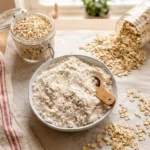
Oats: My favorite for anything cozy. Oat flour keeps brownies and cookies moist, and you can make your own by blending certified gluten free rolled oats until fine (about 1 1/4 cups of oats gives you 1 cup of flour). It does make things a bit heavier, so I don’t use it alone in a light layer cake.
Sorghum: If you only try one of these gluten free grains, make it this one. It’s mild, a little sweet, and has more protein than rice flour, so cakes hold together better. Swap it in for up to a third of the rice flour in a blend.
Buckwheat: Bold. Really bold. It tastes earthy and a little like whole wheat, and it turns everything darker. That’s a good thing next to chocolate, apples, pears, or coffee. Start with 25% buckwheat in a blend and go up from there once you know you like it.
Millet: Soft and buttery, with a light, cakey crumb. Millet flour goes stale and bitter faster than most, so buy small bags and keep it in the freezer.
Teff: One of the gluten free ancient grains, with tiny seeds and big flavor. Teff tastes malty, almost like cocoa, which is why it’s so good in brownies, gingerbread, and spice cakes. Brown teff is stronger; ivory teff is milder.
Corn: Cornmeal brings sweetness and a little crunch. Cornstarch isn’t a grain flour in baking terms, it’s a starch, and it’s one of the things that keeps gluten free cakes tender.
Quinoa: The trickiest of the bunch. The flour can taste grassy and bitter. Toasting it in a dry skillet over medium heat for 5 to 8 minutes, stirring until it smells nutty, takes most of that edge away.
Amaranth: Earthy and dense, and it browns fast. Keep it to about a quarter of your flour, and tent your bake with foil if the top darkens before the middle is done.
Wild rice: Mostly cooked and eaten whole, not ground. Folded into a savory muffin it’s lovely, but you won’t need it for desserts.
Are oats gluten free?
Oats are one of the most useful gluten free grains, but regular oats usually aren’t safe. They’re grown in rotation with wheat and barley and run through the same harvesters and mills, so stray wheat kernels end up in the bag.
That’s why every oat recipe on Slice of Sweet calls for certified gluten free oats. In the US, a “gluten free” label means the product tested under 20 parts per million of gluten, the limit set by the FDA’s gluten free labeling rule. Some brands go further and use purity protocol oats, which are grown and handled away from gluten grains from the field onward.
One more thing to know. A small number of people with celiac disease react to a protein in oats themselves, even pure ones. Health Canada’s review of the research explains this well. If oats bother you, sorghum or millet flour are the easiest swaps in most cookie and crisp recipes.
Gluten free vs grain free: what’s the difference?
Gluten free means no wheat, barley, or rye. Grain free means no grains at all, so even gluten free grains like rice, corn, oats, sorghum, and millet are out. Every grain free recipe is gluten free, but most gluten free recipes aren’t grain free.
People go gluten and grain free for different reasons, like a doctor’s advice or a paleo way of eating. For baking, it changes the flours you reach for:
- Almond flour (blanched, finely ground) for moist, tender cakes and chewy cookies
- Coconut flour, used in small amounts because it soaks up a lot of liquid
- Tapioca starch and arrowroot for lightness and a bit of chew
- Cassava flour, the closest thing to an all-purpose swap
- Seed flours like sunflower seed flour for nut free baking
Quick note on the seeds from earlier: quinoa, buckwheat, and amaranth aren’t true grains, but most people who eat grain free still leave them out. If you’re baking for someone else, ask!
If you need grain free, a few of my recipes already work:
- Vanilla bean panna cotta is naturally grain free, no swaps needed
- The cheesecake post has a baked vegan and paleo version that’s grain free, plus an almond flour crust option
- My carrot cake has a grain free version made with almond flour, tapioca, and coconut flour
- The lemon bars can be made with a grain free almond flour crust
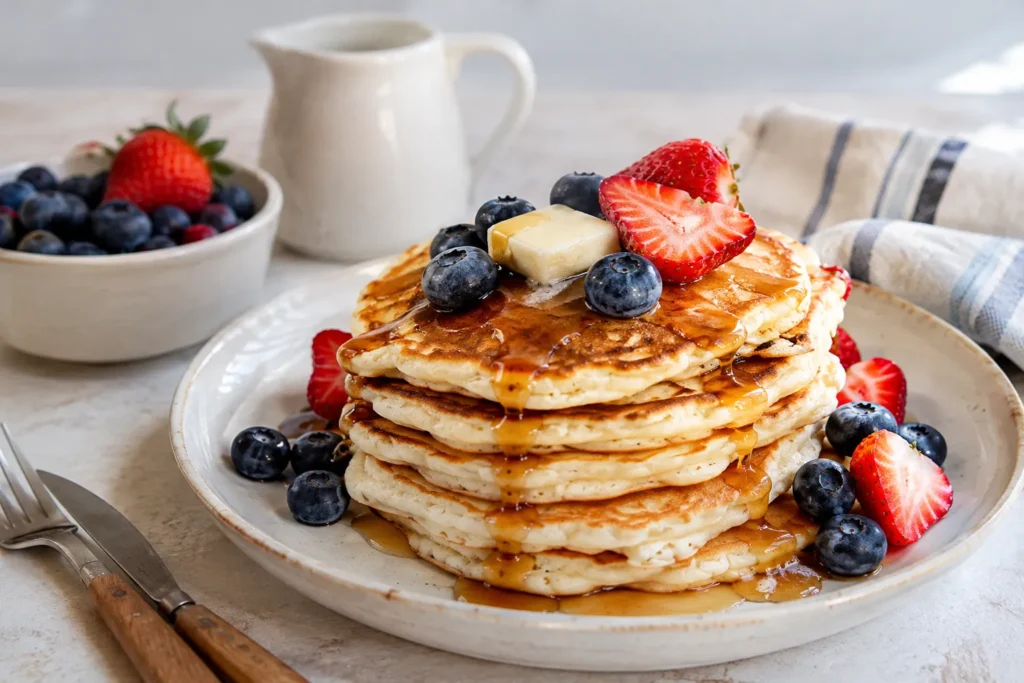
- The fluffy pancakes post includes almond flour and cassava flour versions
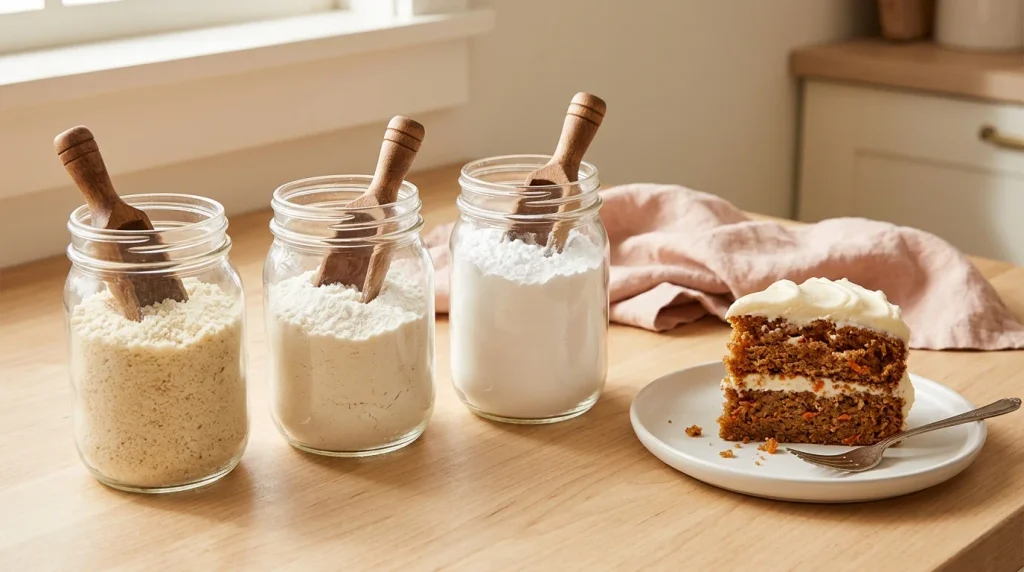
How to mix your own flour blend
None of the gluten free grains behave like wheat flour on their own. Rice alone is sandy, oat alone is heavy, buckwheat alone is a lot. That’s why blends work: you mix a couple of grain flours for flavor and structure, then add starch for lightness.
Here’s a simple starting blend of gluten free grains and starches, by weight (it makes about 3 cups):
- 200 g superfine brown rice flour
- 100 g sorghum flour
- 100 g potato starch (starch, not potato flour)
- 50 g tapioca starch
Whisk it really well, then store it in an airtight jar.
This blend has no xanthan gum, so add it per recipe: about 1/4 teaspoon per cup of blend for cookies, and 1/2 teaspoon per cup for cakes and muffins. If your recipe already calls for a 1:1 blend that includes xanthan gum, skip it.
Once you’re comfortable, play with it. Swap the sorghum for teff when you’re making brownies, or for buckwheat in a spice cake. Keep the starches the same and the texture stays close.
Weigh, don’t scoop! Gluten free flours vary a lot in how much a cup weighs, so a kitchen scale is the easiest way to get the same result every time.
If you’d rather not mix anything, a good store-bought 1:1 blend is completely fine. My pancake mix shows how I use one.
Gluten free grains FAQ
Is rice gluten free?
Yes, every kind: white, brown, wild, black, and sticky rice. Watch out for flavored rice mixes, though, since seasoning packets can contain wheat or barley.
Is corn gluten free?
Yes. Cornmeal, polenta, grits, and cornstarch are all naturally gluten free. Just check for a gluten free label if you have celiac disease, because of shared milling equipment.
Are ancient grains gluten free?
Some are, some aren’t. The gluten free ancient grains are teff, millet, sorghum, amaranth, and quinoa (plus buckwheat, if you count it). Spelt, farro, einkorn, and kamut are all forms of wheat, so they contain gluten.
Is buckwheat gluten free?
Yes. Despite the name, it isn’t related to wheat. Some buckwheat noodles (soba) are mixed with wheat flour, so read the ingredients.
Is quinoa a grain?
Technically no. It’s a seed, along with buckwheat and amaranth. You’ll see them called pseudocereals, but in the kitchen they’re used just like grains.
What are gluten free whole grains?
Gluten free whole grains are the ones that still have their bran and germ: brown rice, wild rice, millet, sorghum, teff, oats, quinoa, buckwheat, and amaranth. White rice and cornstarch are refined.
Is barley gluten free?
No. Barley contains gluten, and so does malt, which is made from barley.
What are the best gluten free grains for baking?
For most cakes and cookies, a blend of rice and sorghum plus starch. For flavor, oats in cookies and crisps, teff in anything chocolate, and buckwheat in pancakes.
How can gluten free grains still contain gluten?
Through cross-contact. The grain itself has no gluten, but it can pick up wheat, barley, or rye in the field, at the mill, or in the packing plant. Oats are the classic example, but it happens with millet, sorghum, and buckwheat too. A certified gluten free label means the product was tested.
What are 5 grains to avoid on a gluten free diet?
Wheat, barley, rye, spelt, and triticale. Add farro, kamut, einkorn, bulgur, and semolina to that list too, since they’re all forms of wheat.
Which gluten free grains are high in protein?
Quinoa, amaranth, teff, and buckwheat have more protein than rice or corn. Sorghum is up there as well, which is part of why it gives cakes a sturdier crumb.
Can you make bread with gluten free grains?
Yes, but bread is trickier than cake because it relies on gluten for stretch. Most gluten free breads use a mix of brown rice, sorghum, millet, or teff flour with starch, plus psyllium husk or xanthan gum to hold the dough together.
Can you mill your own gluten free flour?
Yes. A grain mill or a strong blender handles softer grains like oats, millet, buckwheat groats, and quinoa well. Rice is harder and tends to come out gritty at home, so buying rice flour is easier. If you have celiac disease, use a mill that’s never ground wheat, and keep fresh flour in the freezer so it doesn’t go stale.
Is poha gluten free?
Yes. Poha is flattened rice, so it’s naturally gluten free. Look for a gluten free label if cross-contact matters for you.
More recipes to try
Ready to bake with these gluten free grains? Start with the oats in my peanut butter oatmeal cookies, or try sweet rice flour in the Dubai chocolate mochi. Curious about rice in snack form? This post on what rice cakes are made of covers it, and the caramel rice cakes are an easy treat. You’ll find the rest in my gluten free cakes, cookies, and desserts.
Which of these grains is already in your pantry? Tell me in the comments, and let me know if there’s one you’d like a full recipe for. Teff brownies, maybe?