
Table of Contents
Peanut butter oatmeal cookies are the rare cookie that wins over everyone at the table: chewy from the oats, rich and salty-sweet from the peanut butter, and easy to adapt to almost any diet. Yet search for a recipe and you’ll find two camps that rarely talk to each other. One bakes classic, bakery-style cookies with butter, flour, and eggs. The other stirs together a flourless, egg-free dough of oats, natural peanut butter, and banana or maple syrup.
The advice on peanut butter contradicts itself too. Some bakers warn that natural peanut butter ruins cookies, while others use nothing else.
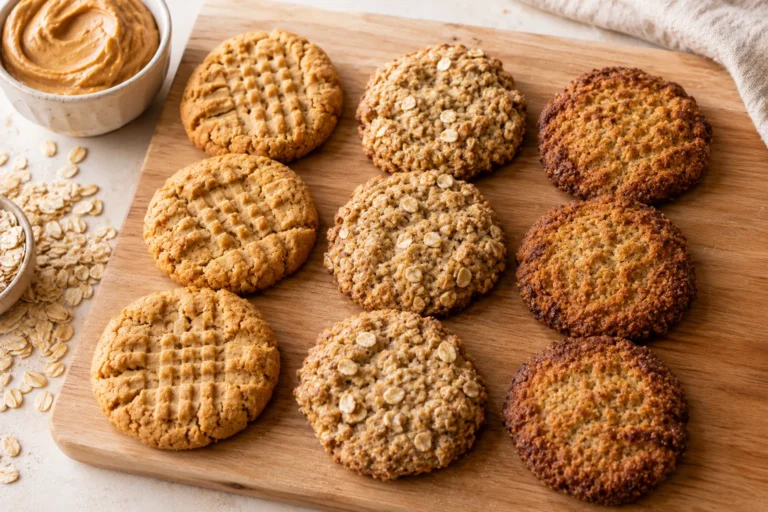
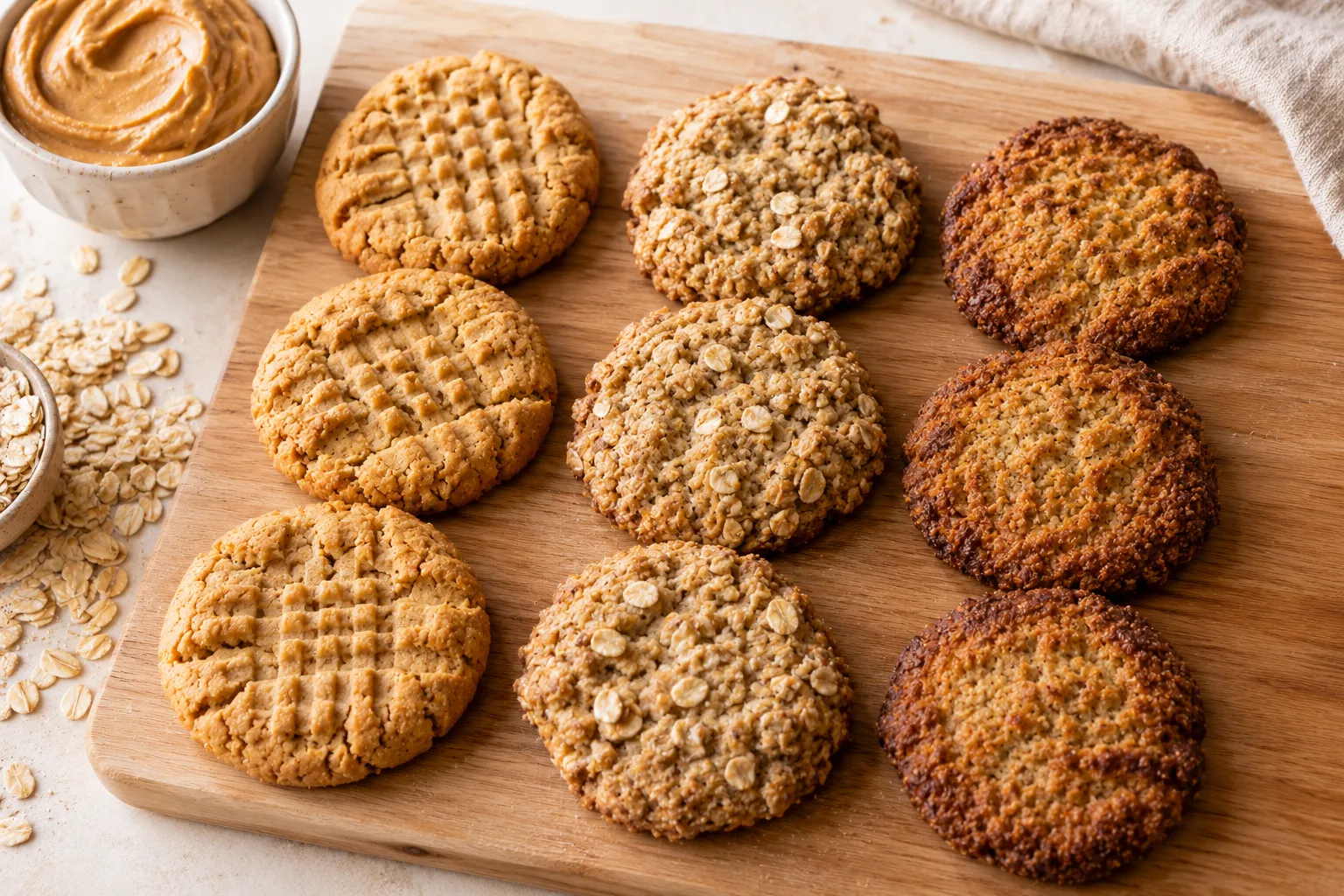
This guide brings all three styles into one place: a classic soft-and-chewy cookie, a 4-ingredient flourless version that’s naturally gluten-free, and a gourmet brown butter cookie with malted milk. You’ll also learn the science behind each choice, so you can fix dry, flat, or crumbly batches for good. Want more ideas? Browse the full collection of gluten-free cookie recipes here at Slice of Sweet.
Quick Summary & Recipe Comparison Matrix
Quick answer: The best peanut butter oatmeal cookies use old-fashioned rolled oats for chew and creamy peanut butter for rich flavor. Classic versions cream butter and sugars with flour and eggs. Four-ingredient flourless versions swap in banana or maple syrup for a naturally gluten-free cookie. Bake at 350°F (177°C) for 10–14 minutes for crisp edges and soft centers.
| Feature | Option A: Classic Bakery Style | Option B: 4-Ingredient Flourless | Option C: Gourmet Brown Butter |
|---|---|---|---|
| Texture | Soft center, chewy, crisp edges | Dense, hearty, soft-crunch | Ultra-chewy, rich, caramelized |
| Fat base | Creamed unsalted butter | Peanut butter fats only | Browned butter |
| Peanut butter type | Commercial (Jif, Skippy) | Natural (100% peanuts) | Commercial or drippy natural |
| Flour & binder | All-purpose flour + egg | None (or oat flour) + banana or maple | All-purpose flour + egg |
| Prep / bake time | 15 min / 12–15 min | 5 min / 10–12 min | 15 min / 12–13 min |
| Dietary profile | Traditional | Gluten-free, dairy-free, vegan | Gourmet, high flavor |
The Science of Peanut Butter Oatmeal Cookies
Three ingredient choices decide whether your cookies turn out chewy, crumbly, or flat: the oats, the peanut butter, and the balance of sugar and leavening.
Rolled Oats vs. Quick Oats vs. Steel-Cut Oats
- Old-fashioned rolled oats (the gold standard): Whole oat groats are steamed and pressed flat. They hold their shape in the oven and give oatmeal peanut butter cookies their signature chew.
- Quick-cooking oats: Rolled thinner and cut smaller, so they have far more surface area. They soak up moisture from the wet ingredients fast, pulling liquid away from the flour and fats. That’s why quick-oat dough often bakes up dry or gummy.
- Steel-cut oats: Chopped but never rolled or steamed. A 12-minute bake can’t soften them, so they stay hard and gritty.
Natural vs. Commercial Peanut Butter
This is where most recipes contradict each other, and the answer depends on what else is in the bowl.
- Commercial peanut butter (Jif, Skippy): Made with hydrogenated vegetable oils and stabilizers that hold the fat in a stable emulsion. In a butter-and-flour dough, it behaves predictably, so cookies don’t overspread or crumble.
- Natural peanut butter (peanuts and salt): Its oil separates and floats free. In a classic recipe, creamed butter already supplies plenty of fat, so the extra loose oil breaks up the dough’s structure and the cookies turn crumbly, dry, or greasy.
In a flourless recipe, the logic flips. With no butter or flour competing, that same runny, pourable texture coats every oat and binds with the banana or maple syrup. Natural peanut butter is the right choice there.
Fat & Sugar Dynamics: Spread vs. Lift
- Granulated vs. brown sugar: White sugar encourages spread and crisp edges. Light or dark brown sugar holds onto moisture, adding chew and a gentle molasses depth.
- Baking soda vs. baking powder: Peanut butter dough is heavy. Baking soda promotes browning and spread, while a little baking powder adds lift so thick cookies stay tender inside.
Master Recipes & Exact Ratios
Option A: Classic Soft & Chewy Peanut Butter Oatmeal Cookies
Dry ingredients
- 1 ½ cups all-purpose flour (or a 1:1 gluten-free flour blend)
- 1 ½ to 2 cups old-fashioned rolled oats
- 1 tsp baking soda
- ½ tsp baking powder
- ½ tsp salt
- ½ tsp ground cinnamon
Wet ingredients
- 1 cup (2 sticks) unsalted butter, softened to about 65°F
- 1 cup creamy commercial peanut butter
- 1 cup brown sugar
- ½ cup granulated sugar
- 2 large eggs
- 1 to 2 tsp vanilla extract
Optional: 1 to 2 cups semi-sweet or dark chocolate chips. This turns the batch into peanut butter oatmeal chocolate chip cookies, the most-requested variation in most kitchens.
Option B: 4-Ingredient Flourless Cookies (Gluten-Free, Vegan)
- 2 cups certified gluten-free rolled oats
- 1 cup smooth natural peanut butter
- 1 ¼ cups mashed ripe banana (or ⅔ cup pure maple syrup)
- ½ cup chocolate chips or oat flour (optional, for extra binding)
Stir everything in one bowl, scoop, flatten, and bake at 350°F for 10–12 minutes. Use dairy-free chips to keep them vegan.
Option C: Gourmet Brown Butter & Malted Milk Cookies
- 130 g browned butter, cooled
- 135 g old-fashioned oats, toasted
- 130 g smooth peanut butter
- 100 g granulated sugar and 60 g brown sugar
- 45 g malted milk powder
- 90 g all-purpose flour
- 1 large egg
- ½ tsp baking soda and ½ tsp kosher salt
Browned butter and toasted oats layer nutty, toffee-like flavor on top of the peanut butter. Malted milk powder adds a subtle, old-fashioned diner sweetness.
Step-by-Step Baking Guide & Pro Techniques
Step 1: Toast the Oats (The Flavor Upgrade)
Spread rolled oats on a rimmed baking sheet and bake at 350°F (180°C) for 10–15 minutes, stirring once, until lightly golden and fragrant. Let them cool for about 10 minutes, then fold them into the dough for a deeper, nutty flavor. It’s essential for Option C and an easy upgrade for the classic recipe.
Step 2: Cream or Melt the Fat
- Classic cookies: Beat room-temperature butter with the sugars and peanut butter for 2 minutes, until light and fluffy.
- Brown butter cookies: Melt butter in a saucepan until the foaming stops and golden-brown specks form, about 3–4 minutes. Cool it for 15–20 minutes before adding the egg so it doesn’t scramble.
Step 3: Shape, Flatten & Bake
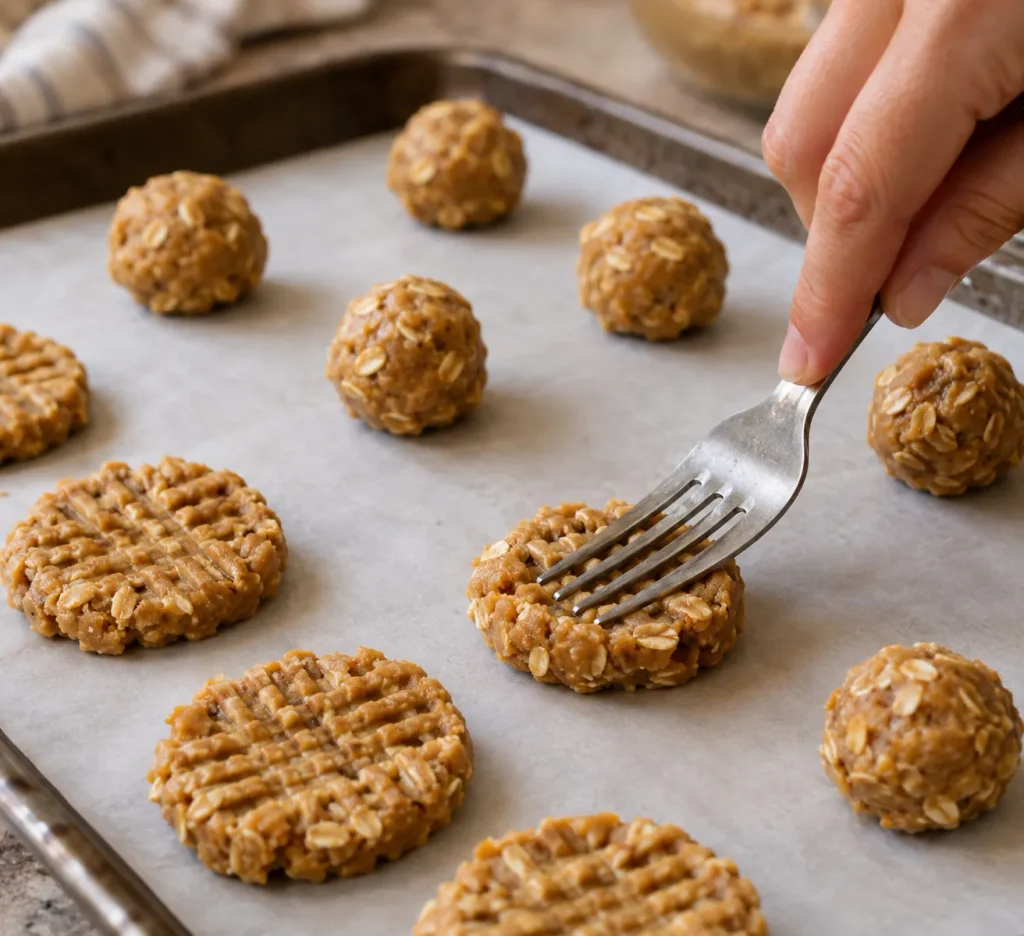
- Scoop: Use a medium cookie scoop (2 tbsp, about 1.5 oz) and space dough balls 2–3 inches apart on parchment-lined sheets.
- Press: Peanut butter dough is thick and won’t spread much on its own. Flatten each ball slightly with your palm, or press a crosshatch with an oiled fork.
- Bake: Bake at 350°F (177°C) for 10–14 minutes, until the edges are set and golden but the centers still look soft.
Creative Mix-Ins & Custom Variations
Once you’ve nailed the base dough, peanut butter oatmeal cookies become a blank canvas.
- Chocolate & peanut butter trifecta: Fold in ½ cup dark chocolate chips and ½ cup mini peanut butter cups.
- Sweet & chewy trail mix: Add ½ cup raisins or sultanas and ¼ cup chopped walnuts or toasted peanuts.
- Holiday twist: Stir in mini M&Ms or cinnamon chips, add a pinch of nutmeg, and finish with flaky sea salt.
What About No-Bake Peanut Butter Oatmeal Cookies?
No bake peanut butter oatmeal cookies are a different recipe altogether, made on the stovetop instead of in the oven. Most versions bring butter, sugar, milk, and cocoa to a brief boil, then stir in peanut butter, vanilla, and oats. Spoonfuls are dropped onto parchment and left to set as they cool. That cocoa base is why so many people search for chocolate oatmeal cookies no bake peanut butter style: they taste like fudge with a chewy oat bite. Use certified gluten-free oats if you need them to be gluten-free, and find more easy treats in our gluten-free desserts collection.
Troubleshooting Guide (Solving Common Baking Flaws)
Why Are My Cookies Dry or Crumbly?
- Too much flour: Scooping straight from the bag packs flour into the cup. Weigh it on a digital scale, or whisk it, spoon it into the cup, and level with a knife. King Arthur’s Recipe Success Guide walks through both methods.
- The wrong peanut butter: Natural peanut butter in a classic butter-and-flour recipe breaks the dough apart. Save it for the flourless version.
- Overbaking: Cookies keep cooking on the hot sheet after they leave the oven. Pull them when the centers still look slightly underdone.
Why Didn’t My Cookies Spread?
Peanut butter dough is dense. If you skip flattening the dough balls, or your butter was too cold, the cookies bake into domes.
Why Did My Cookies Spread Too Thin?
Melted or overly warm butter is the usual cause. So is placing fresh dough on a pan still hot from the last batch: the fat liquefies before the oats and flour can set.
Storage, Freezing & Make-Ahead Directions
- Room temperature: Keep fully cooled cookies in an airtight container for 4–7 days. Tuck a slice of white bread inside; the cookies draw moisture from it and stay soft.
- Freezing baked cookies: Layer cooled cookies between parchment in freezer-safe bags for up to 3 months. Thaw at room temperature, or microwave for 5–10 seconds.
- Freezing dough balls: Scoop dough onto a tray and freeze for 30 minutes until solid, then transfer to a zip-top bag. Bake straight from frozen at 350°F, adding 1–2 minutes to the bake time.
Frequently Asked Questions (FAQ)
Can I make peanut butter oatmeal cookies gluten-free? Yes. Swap the all-purpose flour for a 1:1 gluten-free measure-for-measure blend, and make sure your oats are certified gluten-free. Regular oats are often cross-contaminated with wheat or barley, which is why Health Canada’s review on oats and celiac disease focuses on pure, uncontaminated oats. Or skip flour entirely with the 4-ingredient flourless recipe. If you love gluten-free baking, try our gluten-free cake recipes next.
Can I use quick-cooking oats if that’s all I have? Rolled oats give the best texture, but quick oats work in a pinch. Mix gently and skip long chilling times, since quick oats dry the dough out faster.
Why should cookies rest on the baking sheet for 5 minutes? They come out of the oven very soft. Resting on the warm pan lets residual heat set the centers, so they don’t break when you move them to a wire rack.
How do I make these cookies dairy-free or vegan? Replace the butter with solid, room-temperature coconut oil or vegan block butter. Use dairy-free chocolate chips, and swap each egg for a flax egg or applesauce.
Are peanut butter oatmeal chocolate chip cookies the same recipe? They’re the classic Option A dough with 1 to 2 cups of chocolate chips folded in at the end. Every other step stays the same.