
Table of Contents
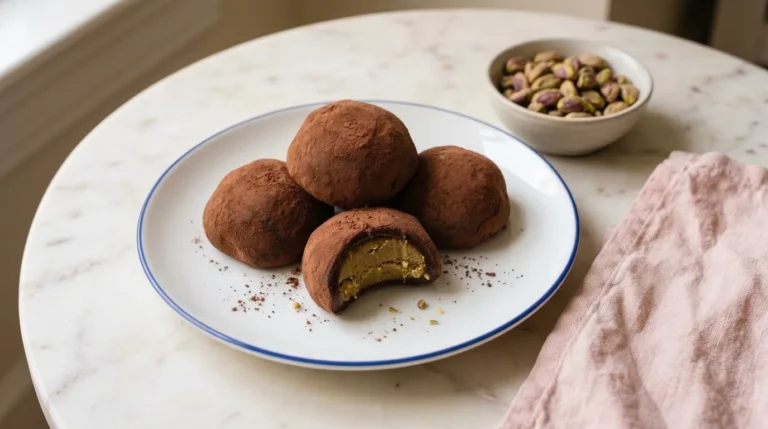
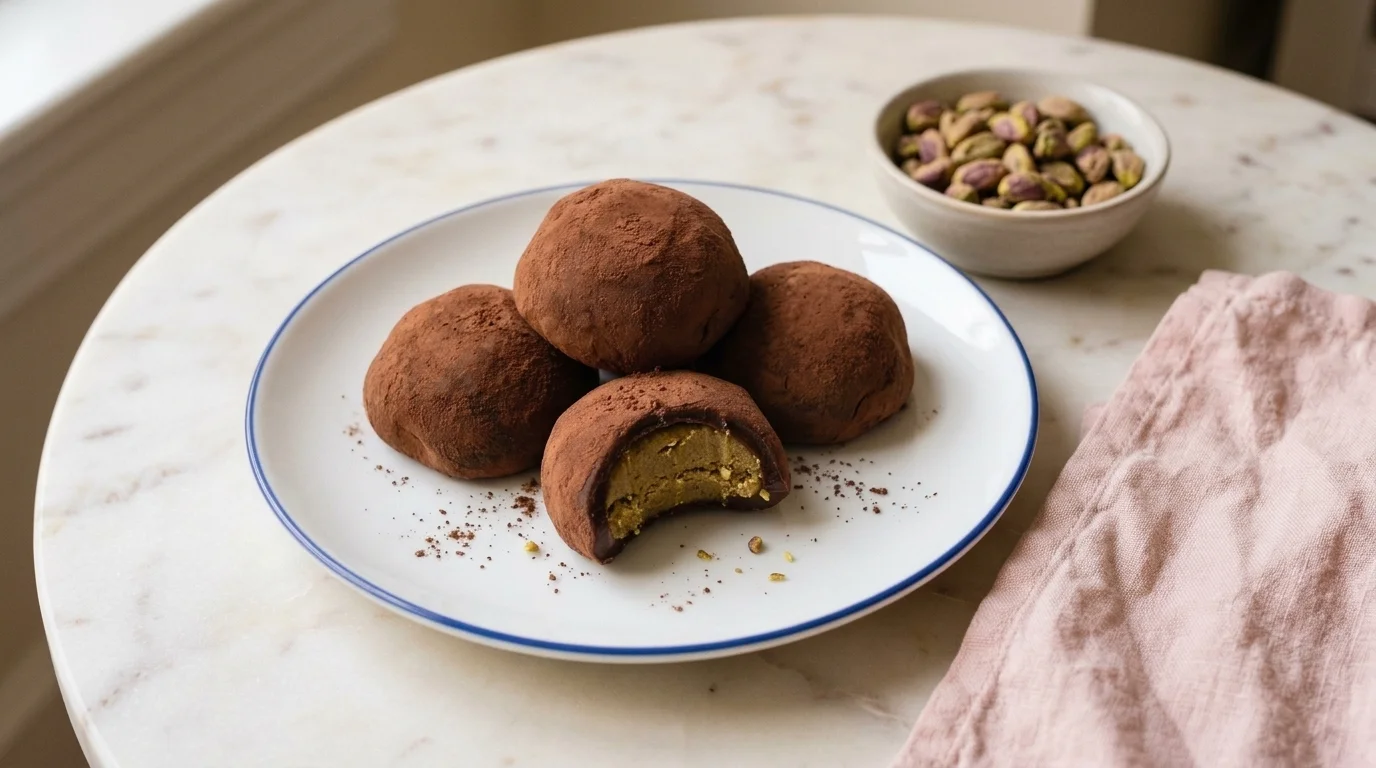
This gluten-free Dubai chocolate mochi is soft, chewy chocolate mochi wrapped around a crunchy pistachio filling, just like the viral Dubai chocolate bar. The catch with most versions? The crunch comes from kataifi, and kataifi is made from wheat. So I swapped it out!
The filling here gets its crunch from toasted rice vermicelli instead. It’s still nutty, still crackly when you bite in, and the chocolate mochi dough cooks in the microwave in about 5 minutes. No steamer, no stand mixer, no special mochi tools.
I kept seeing Dubai chocolate mochi all over Instagram and TikTok, so I made a batch for my dad. That first batch used regular kataifi, like most of the viral versions, and the filling was still crunchy the next day. This gluten-free version keeps the same idea and swaps the kataifi for rice vermicelli.
Quick answer: To make gluten-free Dubai chocolate mochi, toast broken rice vermicelli in butter until golden, mix it with pistachio cream and freeze it into balls. Microwave a dough of glutinous rice flour, sugar, cocoa and milk until glossy and stretchy, then wrap each frozen ball in warm dough and roll it in cocoa.
Is Dubai chocolate mochi gluten-free?
Quick answer: Most Dubai chocolate mochi is not gluten-free. The mochi dough is made from glutinous rice flour, which has no gluten, but the classic filling uses kataifi, a shredded wheat pastry. Swap the kataifi for toasted rice vermicelli or gluten-free crispy rice cereal and the whole thing is gluten-free.
Mochi is made from glutinous rice flour (also sold as sweet rice flour or mochiko). Despite the name, glutinous rice has no gluten at all. “Glutinous” just describes how sticky and stretchy it gets when cooked. So a plain chocolate mochi is naturally gluten-free, as long as the cocoa and other add-ins are too.
The problem is the Dubai part. The original Dubai chocolate bar, first sold in 2022 by Fix Dessert Chocolatier in Dubai, gets its crunch from kataifi (also spelled kadayif or knafeh dough), a shredded pastry made from wheat flour and water. Most Dubai chocolate mochi recipes, and most store-bought versions, use it too.
That’s why this recipe replaces the kataifi with toasted rice vermicelli. Everything else in the recipe is naturally gluten-free, but if you bake for someone with celiac disease, check the labels on your pistachio cream, cocoa powder and rice flour for wheat or “may contain” warnings. The Celiac Disease Foundation keeps a helpful list of hidden gluten sources if you want to double-check anything.
Why this chocolate mochi recipe works
Three small things make the difference here.
The crunch is toasted, not raw. Dry rice vermicelli is hard and a little glassy straight from the bag. Broken into short pieces and toasted in butter for 4 to 6 minutes, it turns golden and crisp, a lot like the kataifi in the original bar. The butter coats it too, so it doesn’t soak up the pistachio cream and go soft right away.
The filling is frozen. Pistachio cream is soft and oily, and if you try to wrap it while it’s at room temperature, it smears all over the dough and leaks out the seam. Frozen balls hold their shape, so wrapping takes about 20 seconds each.
The dough is wrapped while it’s still warm. Warm mochi stretches. Cold mochi tears. That’s really the whole secret of shaping mochi, and it’s why the filling gets made first.
One more thing I like: the cocoa in the dough. It makes the outside taste like chocolate too, so you get the chocolate and pistachio combo in every bite, not only in the middle.
Dubai chocolate mochi ingredients
The full amounts are in the recipe card below. Here’s what each one does.
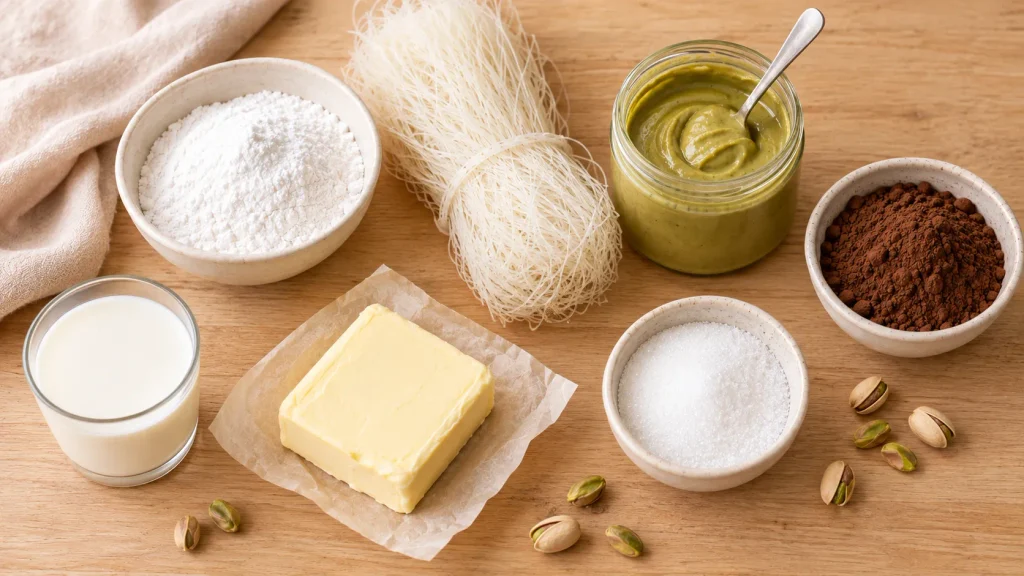
Glutinous rice flour: This is the one ingredient you can’t swap. Regular rice flour won’t work, because it has a different kind of starch and cooks up grainy instead of stretchy. Look for “glutinous rice flour”, “sweet rice flour” or “mochiko” on the bag, and pick one labeled gluten-free if you’re baking for celiac.
Rice vermicelli: The thin, dried rice noodles, not the wheat vermicelli used in some Indian and Middle Eastern desserts. Read the package, since they can look the same.
Pistachio cream: Use a smooth, spreadable pistachio cream. Watch out here! A lot of jars sold as “Dubai chocolate” spread already have kataifi mixed in, which means wheat. Plain pistachio cream is what you want.
Tahini: Just a tablespoon. It cuts the sweetness of the pistachio cream and makes the filling taste nuttier. You can skip it.
Cocoa powder: Unsweetened, for the dough and for rolling. Pure cocoa is gluten-free, but check for a “may contain wheat” line if that matters for you.
Whole milk: It makes the dough softer and more chocolatey than water does.
Butter: A little goes into toasting the noodles and a little gets kneaded into the dough so it stays smooth and less sticky.
Cornstarch: For dusting your hands and the counter. Mochi sticks to everything without it.
Crunch options if you can’t find rice vermicelli
| Crunch | Amount | How it tastes | Notes |
|---|---|---|---|
| Toasted rice vermicelli (my pick) | 60g, broken into 1/2-inch pieces | Closest to kataifi, crisp and buttery | Toast in butter until golden |
| Gluten-free crispy rice cereal | 1 cup (about 30g) | Light and crackly, a bit sweeter | No toasting needed. Many regular brands use barley malt, so buy one labeled gluten-free |
| Gluten-free cornflakes, lightly crushed | 1 cup (about 30g) | Crunchier, more cereal flavor | Regular cornflakes often contain malt too |
| Toasted chopped pistachios | 1/2 cup (about 60g) | Extra nutty, less crackly | Great mixed half and half with any option above |
Dairy-free swaps
Use unsweetened almond or coconut milk beverage in the dough, and coconut oil or plant butter instead of butter. Oat milk works too if it’s certified gluten-free. Then check your pistachio cream, because many contain milk powder.
How to make Dubai chocolate mochi, step by step
These are the moments that matter. The exact amounts and times are in the recipe card.
Step 1: Make and freeze the pistachio filling
Break the rice vermicelli into short pieces, about 1/2 inch long. Doing this inside a large bag keeps the bits from flying all over your kitchen.
Melt the butter in a skillet over medium heat, add the noodles and keep stirring. After 4 to 6 minutes they’ll turn golden and smell toasty. Rice noodles go from golden to burnt fast, so don’t walk away. Let them cool for 5 minutes, then taste one. It should snap and crunch, not feel hard like a raw noodle.
Stir the toasted noodles into the pistachio cream, tahini and a pinch of salt. Scoop 8 balls (about 2 tablespoons each) onto a parchment-lined tray and freeze for 45 minutes, until firm.
Step 2: Cook the chocolate mochi dough
Whisk the glutinous rice flour, sugar, cocoa and salt in a large microwave-safe bowl, then whisk in the milk until there are no lumps. It’ll look like thin chocolate milk.
Cover and microwave 2 minutes, then stir well with a wet silicone spatula. Microwave 2 more minutes and stir again. If you still see runny spots, keep going in 30-second bursts until the dough is thick, glossy and stretchy, with no milky, runny patches. It usually takes about 4 minutes in total, but microwaves vary, so go by how the dough looks, not the timer.
No microwave? Cook it in a nonstick pan over medium-low heat, stirring constantly, for 6 to 8 minutes, until it pulls together into one sticky ball.
Let it cool for a few minutes, just until you can touch it. Then knead in the butter with a spatula or oiled gloves. It starts out slippery, and after a minute it turns smooth and soft.
Step 3: Wrap, seal and roll
Dust the counter and your hands with cornstarch. Divide the warm dough into 8 pieces (about 50g each if you have a scale).
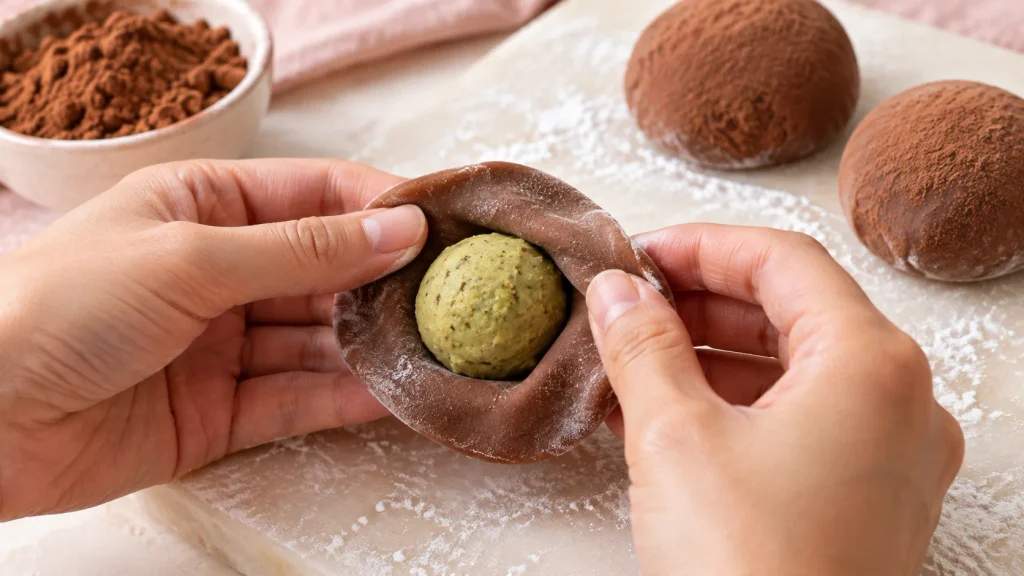
Flatten one piece into a 3 1/2-inch circle, a little thinner at the edges than in the middle. Set a frozen filling ball in the center, pull the edges up over it and pinch them together firmly. Turn it seam side down and roll it gently between your palms to round it out.
Roll each mochi in cocoa powder and tap off the extra. That’s it!
Common mochi mistakes (and how to fix them)
Quick answer: Most chocolate mochi problems come from dough that’s undercooked, dough that’s gone cold before shaping, or filling that isn’t frozen. Cook until glossy with no runny spots, shape while warm, and keep the filling in the freezer until the second you need it.
Why is my mochi dough too sticky to handle?
It’s either undercooked or you need more cornstarch. Undercooked dough looks matte and has wet, milky streaks. Give it another 30 seconds. If it’s cooked and still sticky, that’s normal! Dust your hands again and work quickly.
Why does the dough tear when I wrap it?
It got too cold, or you rolled it too thin. Mochi firms up as it cools, so if it’s stiff, microwave the remaining dough for 10 to 15 seconds to soften it.
Why does the filling leak out?
The balls thawed, or they’re too big for the dough. Work with 2 or 3 balls out of the freezer at a time and leave the rest in. And pinch the seam really well, then set it face down.
Why did the crunchy filling go soft?
The noodles weren’t toasted long enough, or the mochi sat for more than a day. Golden and fully cooled is what you’re looking for before they go into the pistachio cream.
Why is my mochi hard the next day?
The fridge. Cold makes the starch in mochi set up and turn firm (that’s normal, not a mistake in your recipe). See the storage tips below to bring it back.
Serving, storing and freezing
Quick answer: Dubai chocolate mochi is best eaten the same day at room temperature. Refrigerate it airtight for up to 2 days and let it sit out 30 minutes to soften, or wrap each piece and freeze it for up to 1 month, then thaw for about 1 hour.
This Dubai chocolate mochi is best the day you make it, at room temperature. That’s when the dough is softest and the filling is at its crunchiest.
Want it to look more like the Dubai bar? Melt 60g (about 2 oz) dark chocolate, drizzle it over the mochi after the cocoa dusting and sprinkle with 2 tablespoons chopped pistachios. Let it set for 15 minutes.
Storing: Keep the mochi in an airtight container in a cool spot and eat it the same day. For longer, refrigerate for up to 2 days. It will firm up in the fridge, so let it sit out for 30 minutes before eating, or microwave one piece for 5 to 8 seconds. Not longer, or the filling gets runny.
Freezing: Wrap each mochi in plastic wrap and freeze in a bag for up to 1 month. Thaw at room temperature for about 1 hour. Expect the noodles to lose a little crunch after freezing, so if crunch matters most to you, serve them fresh.
Dubai chocolate mochi FAQ
Is My Mochi Dubai chocolate gluten-free?
No. The MyMochi Dubai Chocolate mochi ice cream has kadayif in the pistachio ice cream, and the brand’s own product page says it contains gluten. Recipes can change, so always check the box. If you need a gluten-free version, making it at home is the easiest way.
What’s the difference between chocolate mochi and mochi chocolate?
People use both names for the same thing: mochi dough flavored with cocoa, often with a filling inside. You’ll also see “mochi chocolate” used for chocolates with a mochi center. This recipe is the first kind, chocolate dough on the outside and pistachio crunch inside.
Can I make this chocolate mochi recipe without the Dubai filling?
Yes! Follow steps 2 and 3 and fill the dough with something else: a frozen ball of chocolate ganache, a teaspoon of peanut butter, a strawberry, or a scoop of ice cream. Freeze soft fillings first so they’re easy to wrap.
Can I use regular kataifi?
Only if you don’t need it gluten-free. Kataifi is wheat pastry, so the mochi won’t be safe for anyone with celiac disease or a gluten intolerance.
Can I use regular rice flour?
No. Regular rice flour doesn’t get stretchy, so the dough crumbles and tastes gritty. You need glutinous (sweet) rice flour.
Is this recipe nut-free?
No, pistachio is the whole point here. For a nut-free chocolate mochi, fill it with chocolate ganache or a sunflower seed spread instead.
More gluten-free treats to try
If you love pistachio and chocolate as much as I do, browse more gluten-free desserts, or bake a batch of something from the gluten-free cookies page to go with these on a dessert tray. Need a birthday cake? The gluten-free cake recipes are over here. And everything on Slice of Sweet is gluten-free, so you can browse freely.
If you make this Dubai chocolate mochi, I’d love to hear how it went. Leave a rating in the recipe card, and tell me in the comments which crunch you used!
Gluten-free Dubai chocolate mochi recipe card
Chewy cocoa mochi wrapped around a frozen pistachio filling made crunchy with toasted rice vermicelli instead of wheat kataifi.