
Table of Contents
When the craving hits for carrot cake, this is the one to make! This gluten free carrot cake is soft, really moist, and full of warm spice, with a thick layer of cream cheese frosting on top. Nobody will guess it’s gluten free. I mean it!
Carrot cake is honestly one of the easiest cakes to make gluten free, because the carrots and the oil do half the work for you. But there are a few little things that make a huge difference (how fine you grate the carrots, using oil and not butter, and letting the batter sit for 30 minutes before it goes in the oven). I’ll walk you through all of them below. If you just want to bake, scroll down to the gluten free carrot cake recipe card!
Short answer: what makes a gluten free carrot cake moist? Neutral oil or light olive oil, a little unsweetened applesauce, carrots grated on the smallest holes of your grater, and a 30-minute rest for the batter. The rest gives the rice flour time to soak up the liquid, so the cake isn’t gritty and doesn’t sink in the middle.
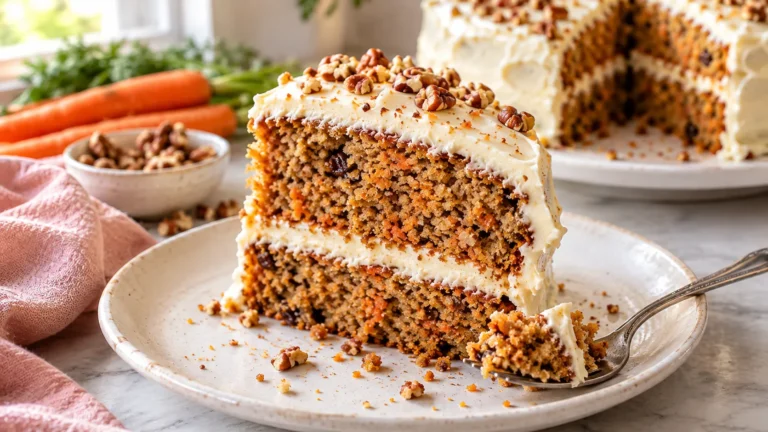
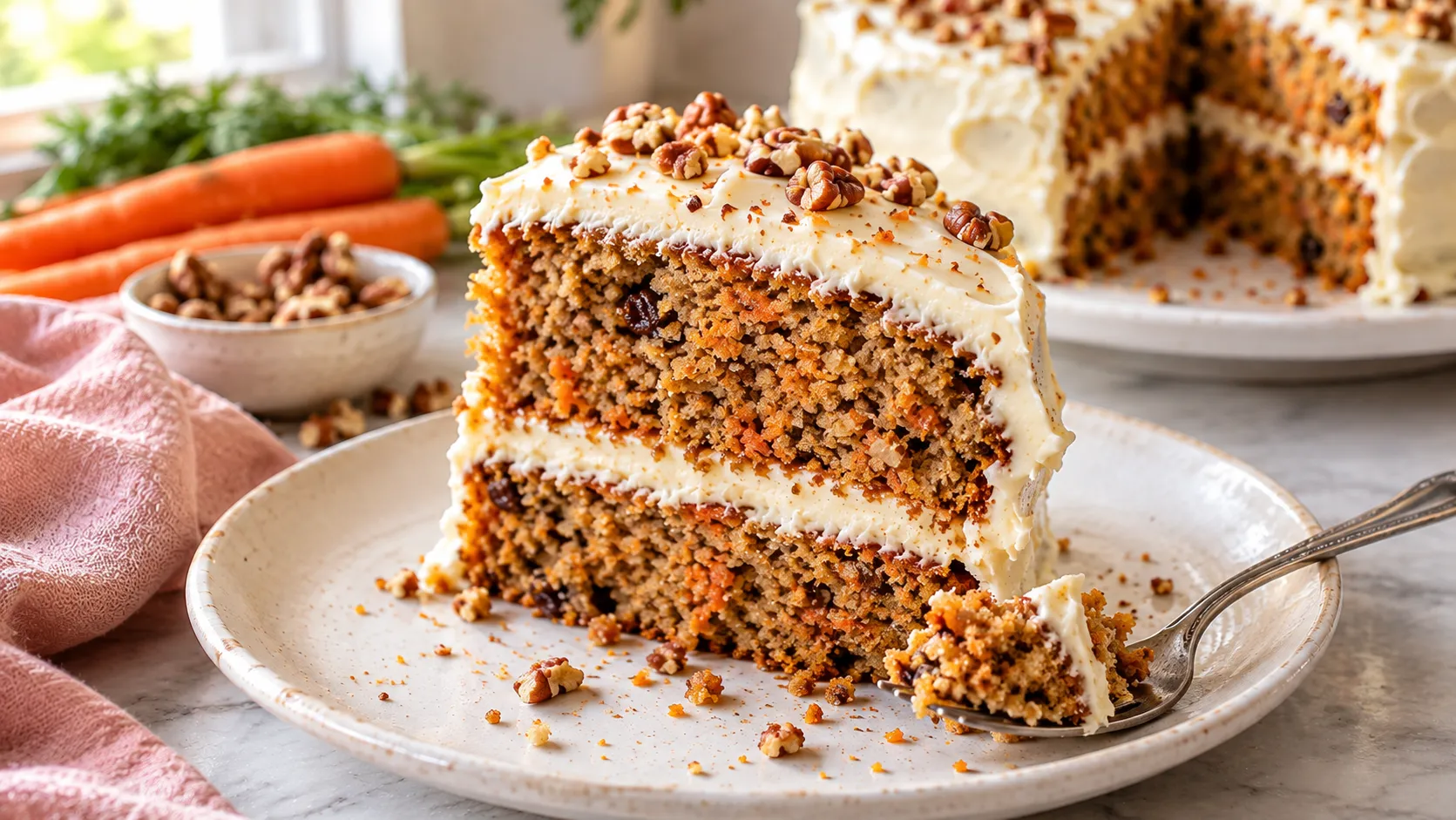
[Photo: tall slice of two-layer carrot cake with cream cheese frosting and chopped pecans on a white plate]
Is carrot cake gluten-free?
No! Regular carrot cake is made with wheat flour. What makes this one gluten free is a good 1:1 gluten-free flour blend, plus a little xanthan gum if your blend doesn’t already have it. Everything else (carrots, spices, oil, eggs, sugar) is naturally gluten free.
Baking for someone with celiac disease? Check that every packaged ingredient is labeled gluten-free, not just the flour. Baking powder, powdered sugar and even spices can sometimes pick up gluten from shared equipment.
Why this recipe works
Most dry gluten free carrot cakes go wrong in the same few places. Here’s what this one does differently.
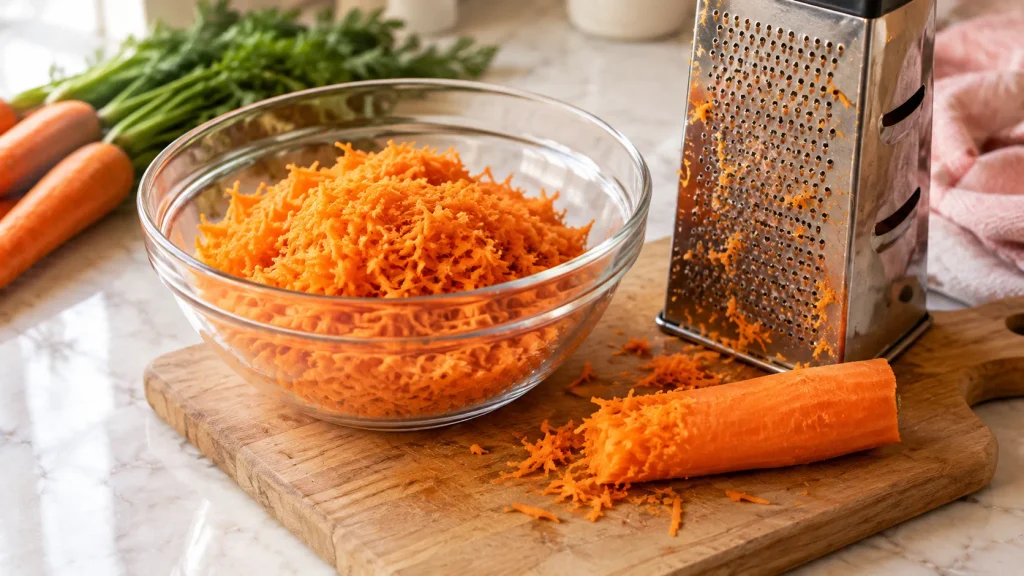
The carrots are grated really fine. Use the smallest holes on your box grater, or pulse chunks of peeled carrot in the food processor until they look like confetti. Fine shreds melt right into the cake and spread their moisture all through it. I’d skip the bags of pre-shredded carrots, though. They’re thick and pretty dry, and they stay chewy even after baking.
There’s oil instead of butter. A carrot cake with cream cheese frosting has to live in the fridge, and butter gets firm when it’s cold. Oil doesn’t, so the cake is still soft on day three. Avocado, sunflower, grapeseed or light olive oil all work.
Applesauce keeps it extra moist. Just half a cup, plain and unsweetened. You won’t taste apple at all!
The raisins get a quick soak. Dry raisins pull liquid out of the batter while it bakes, so give them 10 to 15 minutes in warm water and drain them first. (Not a raisin fan? Leave them out and add a few more nuts.)
Don’t skip the 30-minute rest!
This is the step everyone wants to skip, and it’s probably the most important one. Gluten-free flour blends are mostly rice flour and starches, and they soak up liquid a lot slower than regular flour does. If the batter goes straight into the oven, some of that flour is still dry inside, and that’s where the sandy, gritty texture comes from.
Let the batter sit on the counter for 30 minutes (up to 2 hours is fine) so it has time to hydrate. It’ll look a little thicker when you come back. That’s what you want!
Wondering if the baking powder goes flat while it sits? Not really. Most baking powder is double-acting, so a good part of the lift happens in the oven anyway.
Which gluten-free flour to use
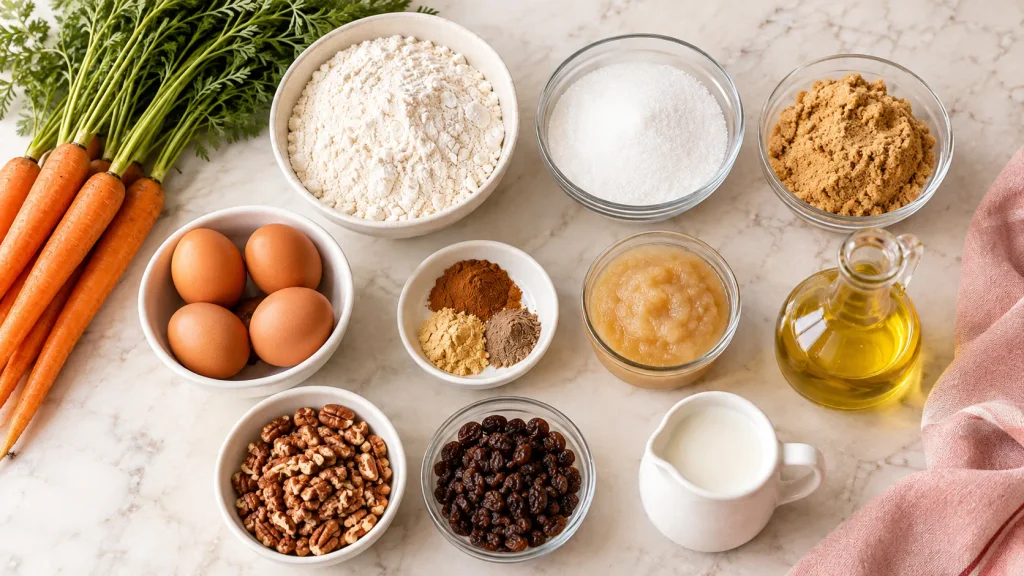
I wrote this gluten free carrot cake recipe for a store-bought 1:1 gluten free flour blend. It’s the easiest way to make carrot cake gluten free, and it gives you the cake that’s closest to a regular one. Bob’s Red Mill 1-to-1, Cup4Cup Multipurpose and Better Batter all work well. Most 1:1 blends already have xanthan gum in them, so check the label before you add the teaspoon in the recipe.
Like mixing your own flours? Try 35% sweet rice flour, 35% certified gluten-free oat flour, 20% millet flour and 10% tapioca starch (by weight), plus 1 teaspoon xanthan gum. It makes a soft, springy cake that tastes a tiny bit earthier, and it’s really nice as a single layer or sheet cake.
For a grain-free carrot cake, use 60% blanched almond flour, 25% tapioca and 15% coconut flour. It bakes up denser and richer, and a little nutty. There’s a lot of fat and fiber in those flours, so add a fifth egg to help the cake hold together.
Whatever flour you use, please weigh it! A cup of gluten-free flour can be off by 30 grams or more depending on how you scoop it, which is enough to turn a moist cake into a dry one.
How to get a good rise
There’s no gluten to trap the air bubbles in a gluten free carrot cake, so the leavening has to be just right. That’s why it has both baking soda and baking powder.
Baking soda needs something acidic to react with. Brown sugar has a little acid from the molasses (it’s also where that warm, caramel-y flavor comes from), and 1 teaspoon of apple cider vinegar gives the soda an extra kick. That’s what stops the cake from puffing up into a big dome in the oven and then sinking as it cools. And no, you can’t taste the vinegar! About 1 teaspoon of cream of tartar works too, if that’s what you have. Baking powder does the rest of the lifting, mostly once the pans are in the oven.
One more thing: go easy on the add-ins. Gluten-free cake is more delicate than regular cake, and too many nuts, raisins and chips can pull the middle down. I keep it to about 1 cup total, half chopped pecans or walnuts and half soaked raisins. Love white chocolate chips? Use them in place of some of the raisins. And chop the nuts small, about the size of a pea. Big chunks tend to sink straight to the bottom.
How to make gluten free carrot cake
For this gluten free carrot cake, you’ll need about 25 minutes of prep, a 30-minute rest, and 35 minutes of baking for two 8-inch layers (12 to 16 slices). All the amounts are in the recipe card below.
Grab two bowls. Whisk the flour, spices, baking soda, baking powder, salt and both sugars in one of them, and squish any brown sugar lumps with your fingers. In the other bowl, whisk the eggs, oil, applesauce, vinegar, milk and vanilla until it’s smooth and a little foamy.
Pour the wet into the dry and stir just until you can’t see any flour. Then cover the bowl and leave it alone for 30 minutes. Turn the oven on to 350°F (175°C) for the last 10.
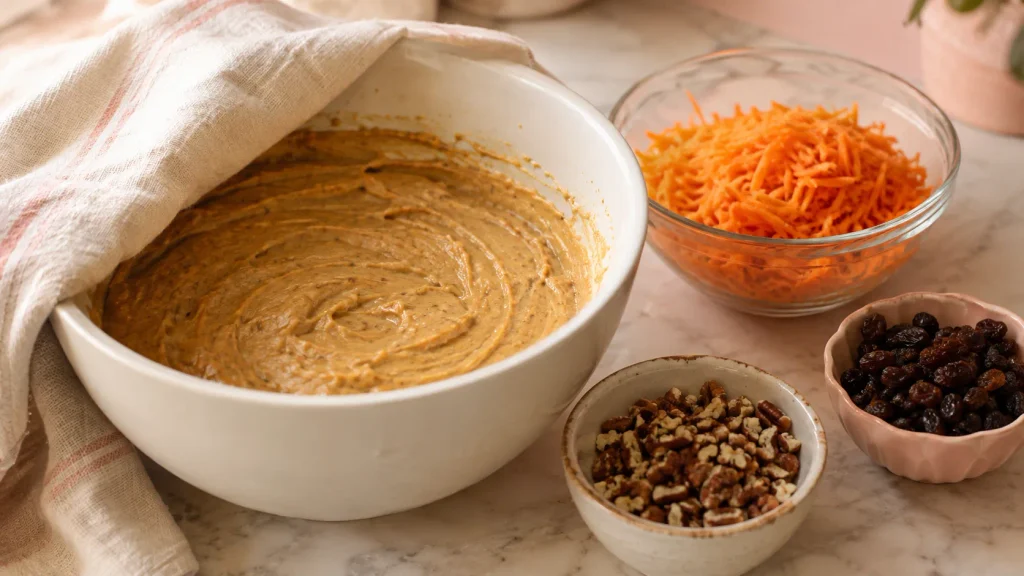
After the rest, fold in the carrots, nuts and raisins. It’s going to look way too thick at first. Keep folding! The carrots let go of their juice and loosen it up.
Bake the two layers for 32 to 35 minutes. They’re done when the edges start pulling away from the pan and a toothpick in the middle comes out with a few moist crumbs (not wet batter).
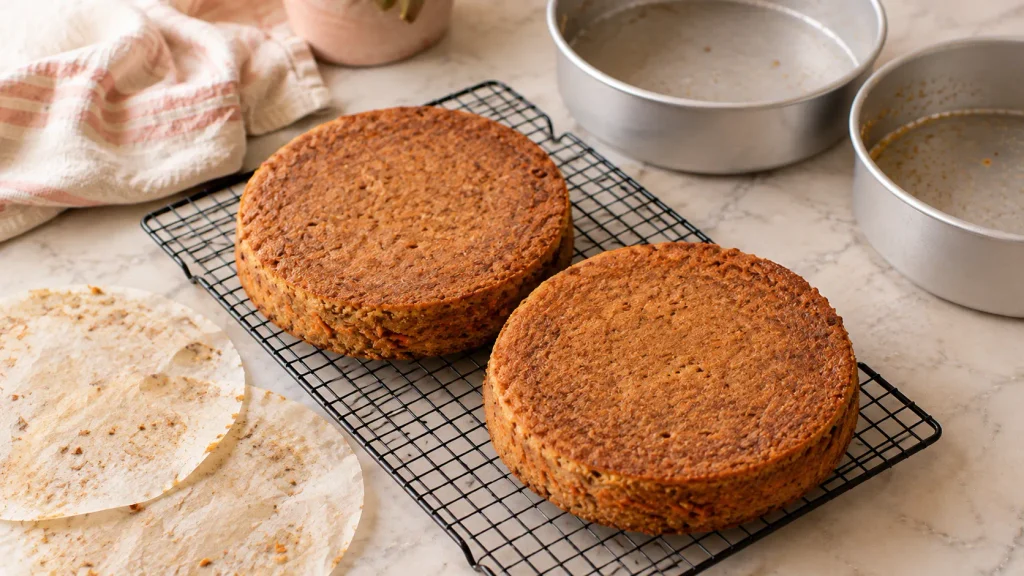
Let them cool in the pans for 10 minutes, then turn them out onto a wire rack. Here’s a little trick for stacking: put each layer upside down, so the flat bottom ends up on top. You don’t have to trim anything, and the frosting goes on so much easier.
Recipe card: gluten free carrot cake
This gluten free carrot cake is soft, moist and full of warm spice, with a thick layer of cream cheese frosting on top!
Yield: one 2-layer 8-inch cake (12 to 16 slices) · Prep: 25 min · Rest: 30 min · Bake: 35 min · Total: about 1 hr 30 min, plus cooling and chilling
For the cake (dry)
- 2 1/4 cups (315 g) gluten-free 1:1 flour blend
- 1 tsp xanthan gum (omit if your blend already contains it)
- 2 tsp ground cinnamon
- 1 tsp ground ginger
- 1/2 tsp ground nutmeg
- 1 tsp baking soda
- 1 1/2 tsp baking powder
- 1/2 tsp salt
- 3/4 cup (150 g) granulated sugar
- 1/2 cup (110 g) packed brown sugar
For the cake (wet)
- 1/2 cup (120 ml) neutral oil or light olive oil
- 1/2 cup (120 g) unsweetened applesauce
- 4 large eggs, room temperature
- 1 tsp apple cider vinegar
- 1/2 cup (120 ml) milk
- 1 tsp vanilla extract
Fold-ins
- 3 cups (about 300 g) finely grated carrots, from 4 to 5 medium carrots
- 1/2 cup (55 g) chopped pecans or walnuts
- 1/2 cup (75 g) raisins, soaked in warm water 10 to 15 minutes and drained
Classic cream cheese frosting
- 16 oz (450 g) full-fat brick cream cheese, room temperature
- 1/2 cup (113 g) unsalted butter, softened
- 3 to 4 cups (360 to 480 g) powdered sugar
- 1 tsp vanilla extract
- Pinch of salt
Instructions
- Line two 8-inch round pans with parchment and grease the sides.
- In a large bowl, whisk the flour, xanthan gum (if using), cinnamon, ginger, nutmeg, baking soda, baking powder, salt, granulated sugar, and brown sugar.
- In a second bowl, whisk the eggs, oil, applesauce, vinegar, milk, and vanilla until smooth.
- Make a well in the dry ingredients, pour in the wet, and stir until just combined. Cover and rest at room temperature for 30 minutes. Preheat the oven to 350°F (175°C) for the last 10 minutes.
- Fold in the carrots, nuts, and drained raisins.
- Divide the batter between the pans. Bake 32 to 35 minutes, until the edges pull away slightly and a toothpick comes out with a few moist crumbs.
- Cool in the pans for 10 minutes, then turn out onto a wire rack and cool completely, about 1 hour.
- For the frosting, beat the cream cheese and butter on medium until completely smooth, about 2 minutes. Add the powdered sugar 1 cup at a time on low speed, then the vanilla and salt. Beat 1 more minute.
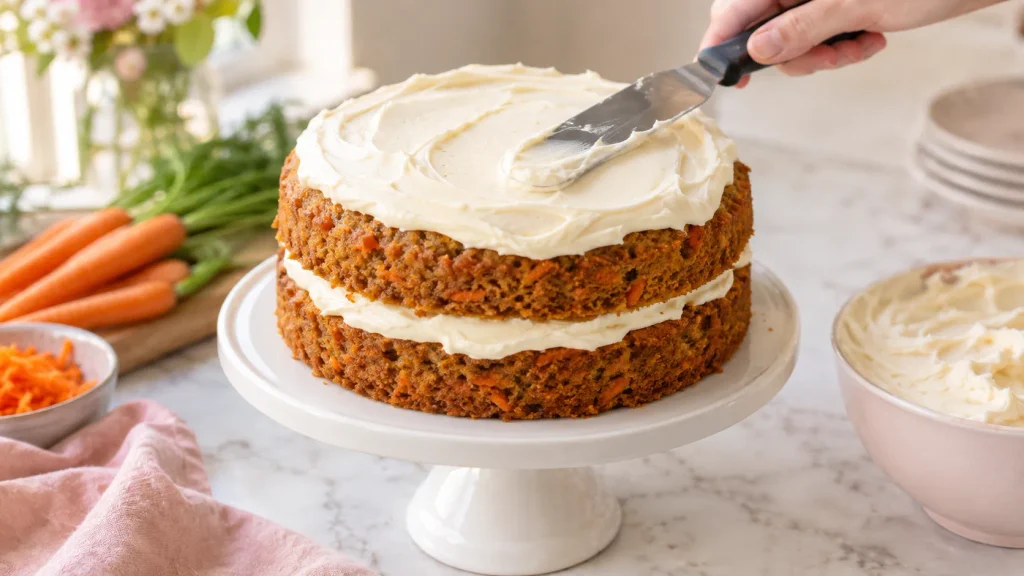
- Set one layer upside down on a plate and spread with about 1 cup of frosting. Top with the second layer, also upside down, then frost the top and sides. Chill at least 1 hour before slicing.
Notes
- Weighing the flour gives the most reliable results.
- Baking for someone with celiac disease? Check that your baking powder and powdered sugar are labeled gluten-free.
- For other pan sizes and cupcakes, see the pan chart in the post.
- Store the frosted cake covered in the fridge for up to 5 days.
Frosting ideas
Cream cheese frosting is the classic, and it’s the one in the recipe card. But it’s pretty rich and sweet, and it’s out if you’re dairy free, so here are a few other ways to frost a gluten free carrot cake.
Classic cream cheese frosting: 16 oz cream cheese, 1/2 cup butter, 3 to 4 cups powdered sugar and vanilla. Beat the cream cheese and butter at room temperature until there are no lumps at all before any sugar goes in. It’s firm enough to pipe, so it’s the best one for a layer cake.
Whipped cream cheese frosting: 250 g cream cheese, 250 g heavy cream and 80 g powdered sugar, no butter. Whip the cream cheese and cream together straight from the fridge until you get soft peaks. It’s so light, and really good on a sheet cake.
Dairy-free cashew frosting: Blend 1 cup soaked cashews with 1/4 cup coconut milk, a little agave, lemon juice and a splash of cider vinegar in a high-speed blender until it’s completely smooth. Chill it to firm up.
Lemon frosting with less sugar: Make the classic frosting with 25 to 50% less powdered sugar and add lemon zest and juice. Lemon is so good with all those spices that you won’t miss the sugar.
Just know that less sugar and no butter both make a softer frosting. The whipped and lemon versions are lovely spread over a 9×13, but they won’t hold up the sides of a tall layer cake for very long, especially in a warm kitchen.
Using tub cream cheese or a European brand? Those have more water in them. Wrap the cream cheese in a clean tea towel and squeeze out the extra liquid until it feels firm, then beat it. If you skip this, the frosting can turn runny no matter how much sugar you add.
Ingredient substitutions
Dairy free
This gluten free carrot cake only has 1/2 cup of milk in it, so any unsweetened dairy-free milk works. For the frosting, try a dairy-free butter like Miyoko’s and a vegan cream cheese like Kite Hill or Violife. Check your flour blend too, because some have milk powder in them (Cup4Cup Multipurpose does).
Egg free
Use 4 flax eggs in place of the 4 eggs. That’s 4 tablespoons ground flaxseed mixed with 10 tablespoons water, left for 10 minutes to thicken. You can also use 3 tablespoons chia seeds with about 9 tablespoons water. A cake that’s gluten free and egg free is going to be denser and a bit more fragile, so I’d bake it in a 9×13 pan.
Paleo or grain free
Use the grain-free flour mix from above (315 g total, by weight) and add a fifth egg. Swap in a dairy-free milk, and use coconut sugar in place of both sugars, plus a few tablespoons of maple syrup. Maple syrup is a liquid, so use that much less milk.
Gluten free carrot cake cupcakes
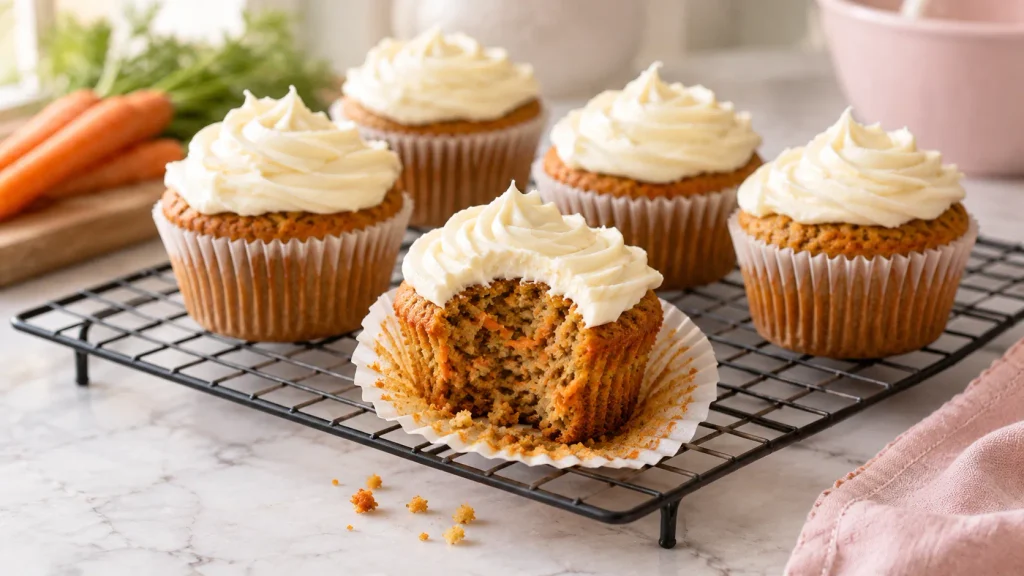
This batter makes about 24 gluten free carrot cake cupcakes! Fill lined muffin cups about two-thirds full and bake at 350°F for 18 to 22 minutes, until the tops spring back when you press them lightly. The classic cream cheese frosting pipes really well on these.
Homemade gluten free carrot cake mix
Want to skip the measuring next time? Whisk all the dry ingredients together (flour, xanthan gum if you need it, spices, baking soda, baking powder, salt and both sugars) and put them in an airtight jar. Write the wet ingredients on the lid. Your gluten free carrot cake mix keeps for about 3 months in the pantry. Give it a good shake before you use it, since the brown sugar can clump, and start at step 3 of the recipe.
Baking gluten free carrot cake in a different pan
- Three 8-inch rounds: 325°F (165°C) for 30 to 35 minutes
- Two 8-inch rounds: 350°F (175°C) for 32 to 35 minutes
- Two 9-inch rounds: 350°F for 28 to 32 minutes
- 9×13-inch pan: 350°F for 35 to 45 minutes (start checking at 35)
- 10 to 12-cup Bundt pan: 350°F for 45 to 55 minutes
- Cupcakes: 350°F for 18 to 22 minutes (makes about 24)
Whatever pan you use, check it the same way: edges pulling away and a toothpick with a few moist crumbs. For a Bundt pan, grease every little ridge really well. Gluten-free cake is tender and loves to stick!
Gluten free carrot cake questions
Why is my gluten free carrot cake dense or gummy in the middle?
It’s usually one of three things. It needed a few more minutes in the oven, there was too much flour, or the baking soda didn’t have enough acid to work with. Weigh your flour, keep the brown sugar and vinegar in, and bake until the toothpick comes out with just a few moist crumbs. Skipping the 30-minute rest can make the middle heavy too.
How do I keep gluten free carrot cake from crumbling when I slice it?
Let the layers cool all the way before you frost them, then chill the cake for at least an hour. Cold cake cuts so much cleaner! Make sure your flour blend has xanthan gum (or add 1 teaspoon psyllium husk powder), and wipe your knife off between slices.
Can I freeze gluten free carrot cake?
Yes! Wrap the cooled layers without frosting in plastic wrap, then foil, and freeze them for up to 1 month. Thaw them overnight in the fridge, still wrapped so they don’t get soggy, then frost.
How long does gluten free carrot cake keep?
Up to 5 days in the fridge, covered. Take slices out 15 to 20 minutes before you eat them, because the cake gets softer and the spices come through more at room temperature.
More gluten-free bakes to try
On a cake kick? Check out the rest of the gluten-free cake recipes here on Slice of Sweet. And if you want something a little smaller, there are lots more gluten-free cookies and gluten-free desserts to try.
If you make this gluten free carrot cake, please come back and leave a rating in the recipe card! And tell me in the comments which frosting you picked and any swaps you made, so other readers can try them too.