
Table of Contents
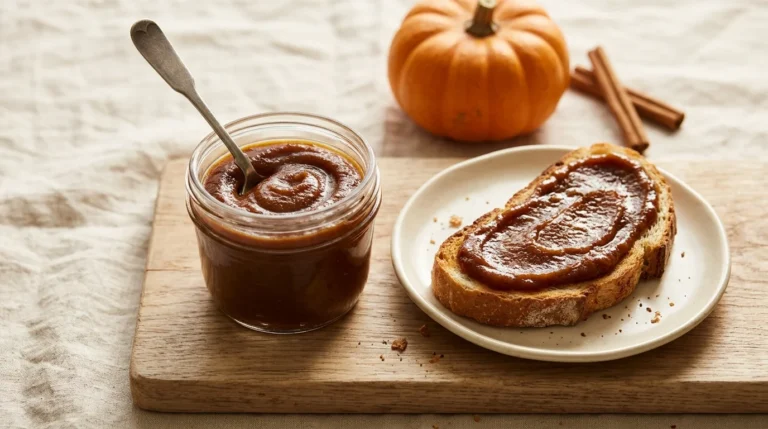
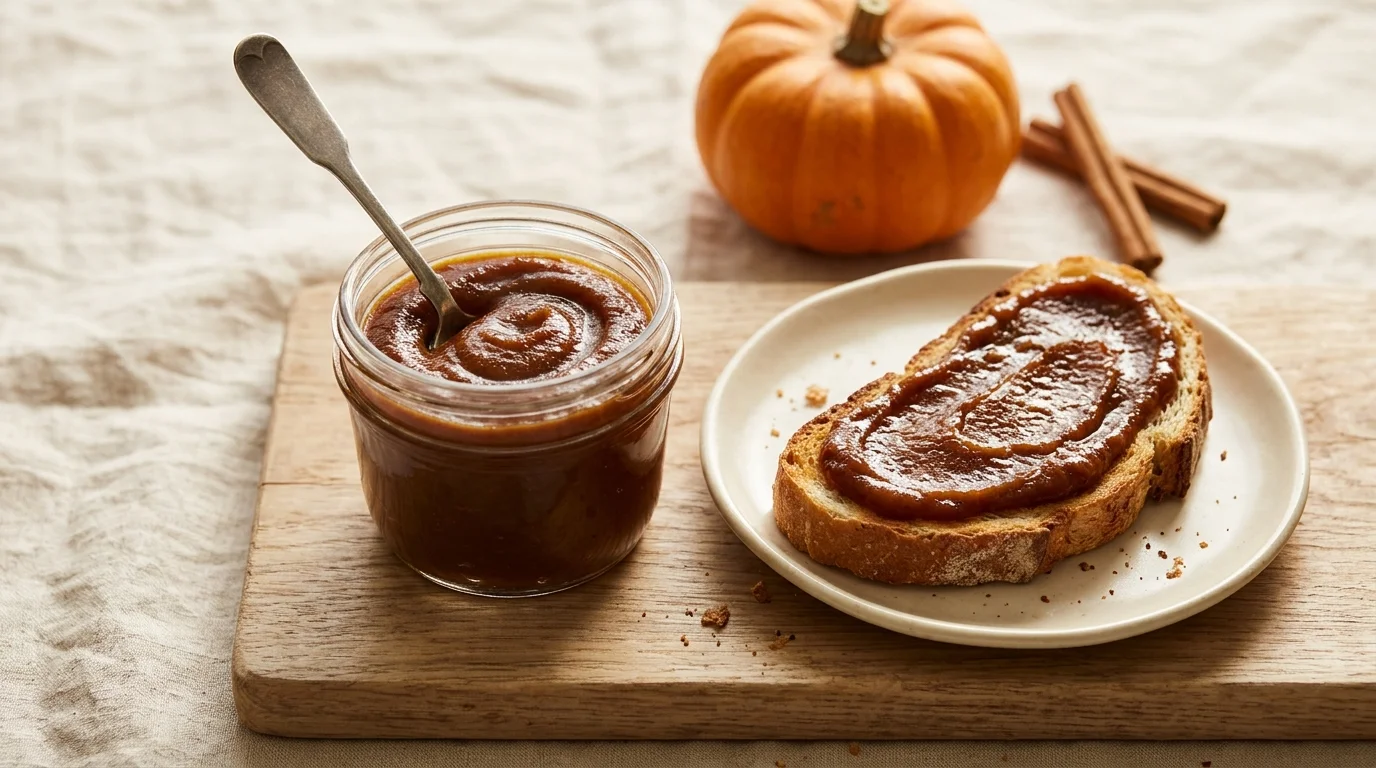
Thick, spoonable and full of cinnamon and ginger, this homemade pumpkin butter tastes like pumpkin pie filling you can spread on toast. You make it with a can of pumpkin, brown sugar, a little maple syrup and apple cider, and it’s ready in about 30 minutes on the stove (or a few hands-off hours in the slow cooker).
And yes, it’s naturally gluten-free! There’s no flour or thickener in here at all. The pumpkin thickens on its own as the water cooks off.
I started making my own because the store-bought jars were always too sweet for me, and pretty pricey for such a small jar. Now a pot of it bubbling on the stove is part of our fall tradition at home. Once pumpkin season starts, there’s always a jar in my fridge.
I’m sharing this one first for a reason. It’s the base for my pumpkin gooey butter cake, which uses 1 cup of it. One batch of this recipe makes about 1 1/2 cups, so you’ll have enough for the cake and a little left over for toast.
What is pumpkin butter?
Pumpkin butter is pumpkin puree cooked down with sugar and spices until it’s thick enough to spread. There’s no actual butter in it. The name works the same way as apple butter: “butter” just describes the smooth, spreadable texture.
So how is it different from pumpkin puree? Purée is plain cooked pumpkin, with no sugar or spice. It tastes pretty bland on its own and it’s a bit watery. Pumpkin butter starts with that purée, then simmers until a lot of the water is gone. The flavor gets deeper, the color turns from orange to a dark rusty brown, and the texture goes from loose to glossy and thick.
One more thing people mix up: pumpkin pie filling (sold in cans right next to the purée). That’s already sweetened and spiced, so don’t use it here. You won’t be able to control the sugar or the spice.
Recipe ingredients
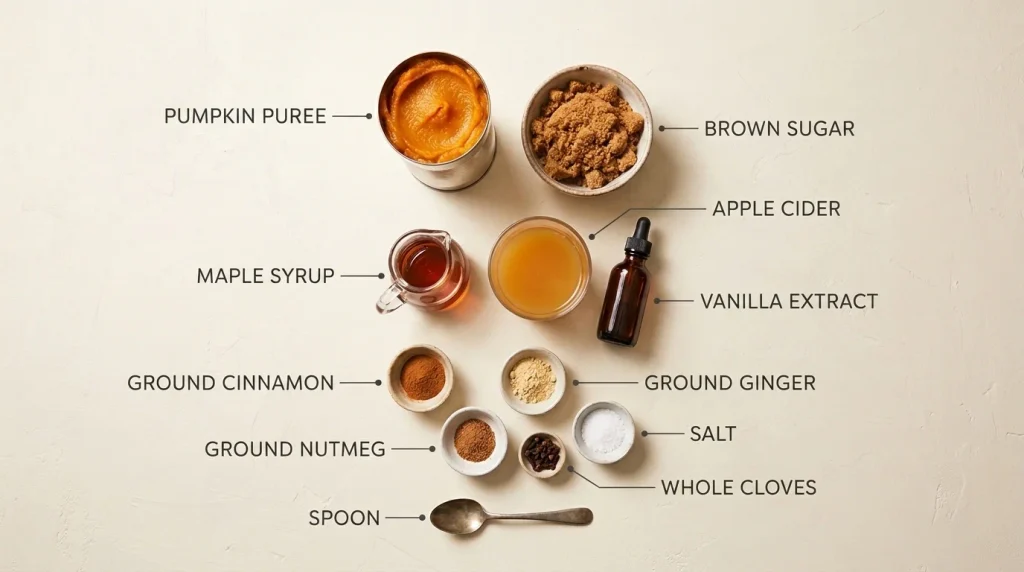
- Pumpkin puree: One 15-ounce can of 100% pumpkin. Canned is thick and the same every time, which makes the cooking time easy to predict. Fresh works too (see the fresh pumpkin section below).
- Apple cider: It loosens the thick purée so it can simmer without spitting, and adds a little tang. Unsweetened apple juice works the same way. Water is fine if that’s all you have, but the flavor is flatter.
- Brown sugar: Light or dark. Dark gives a more molasses-y taste.
- Maple syrup: Use pure maple syrup, not pancake syrup. It’s only 1/4 cup, but you can taste it.
- Spices: Cinnamon, ginger, nutmeg and a pinch of cloves. If you’d rather use one jar, 2 teaspoons of pumpkin pie spice can replace all four. Fresh spices make a real difference here, so if your cinnamon has been open for a couple of years, this is a good excuse to buy a new jar.
- Salt: Just 1/4 teaspoon. It keeps the butter from tasting flat and sugary.
- Vanilla: Optional. Stir it in at the end, off the heat.
Everything on this list is naturally gluten-free. If you bake for someone with celiac disease, check that your spices and pumpkin pie spice say gluten-free on the label, since some brands are packed in shared facilities.
How to make pumpkin butter on the stove
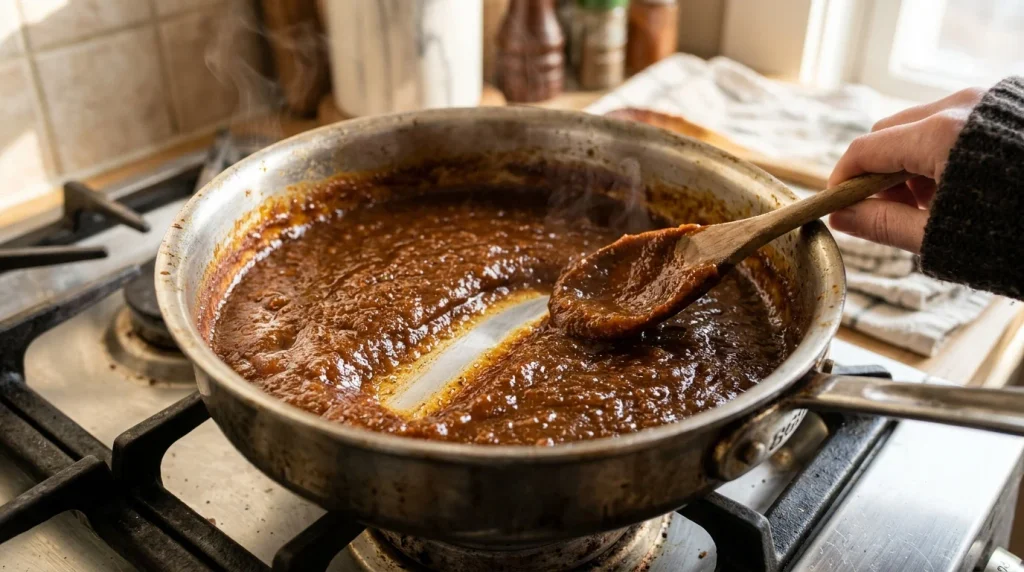
Put everything except the vanilla in a heavy-bottomed saucepan and stir until the sugar disappears. A heavy pot matters. Thin pans get hot spots, and pumpkin scorches fast on the bottom.
Bring it up to a bubble over medium heat, then turn it right down to low. Thick pumpkin doesn’t simmer gently like soup. It burps and spits, and those blobs are hot! Keep the heat low and partly cover the pot with a lid, or use a splatter screen.
Now stir every 2 to 3 minutes for 20 to 30 minutes. Scrape the bottom and the corners each time.
How do you know it’s done? Look for three things:
- The color has gone from bright orange to a darker, rusty brown.
- It looks glossy, not matte.
- When you drag a spoon across the bottom of the pot, the line stays open for a few seconds before it slowly closes.
Take it off the heat and stir in the vanilla. It’ll still look a little looser than you want. That’s normal, because pumpkin butter thickens as it cools. Making it for baking, like the gooey butter cake? Cook it toward the thicker end (closer to 30 minutes), so it doesn’t add extra moisture to the batter.
Slow cooker pumpkin butter
The crockpot way takes longer, but there’s almost no stirring, and no splattering.
Add everything except the vanilla to the slow cooker and stir. Cover and cook on high for 3 to 4 hours, stirring once an hour. For the last 45 minutes to an hour, take the lid off (or prop it open with a wooden spoon). With the lid on, the steam just drips back in and the butter stays runny. Stir in the vanilla when it passes the same spoon test as the stovetop version.
Your kitchen is going to smell amazing all afternoon.
Pumpkin butter with fresh pumpkin
You can absolutely use fresh pumpkin. Pick a small sugar pie pumpkin, not a big carving pumpkin. Carving pumpkins are stringy and watery and don’t taste like much.
- Cut the pumpkin in half and scoop out the seeds.
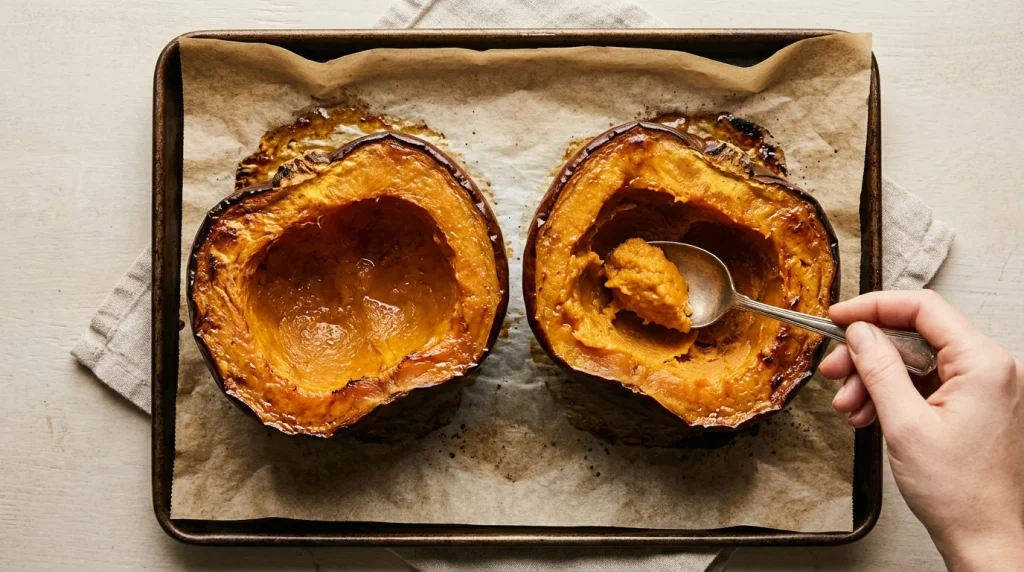
- Roast the halves cut side down on a lined sheet pan at 400°F for 45 to 60 minutes, until a fork slides in easily.
- Scoop out the flesh and blend it until completely smooth. A food processor or blender works better than a masher here, since any strings will end up in your butter.
- If the purée looks wet, let it drain in a fine-mesh sieve for 30 minutes.
- Measure 1 3/4 cups and use it in place of the can.
Fresh purée is usually wetter than canned, so start with just 1/4 cup of cider. Add more only if it’s too thick to stir. It may also need a few extra minutes on the stove.
Tips and troubleshooting
It’s spitting all over the stove. The heat is too high. Turn it down until you see only a lazy bubble now and then, and partly cover the pot.
It’s still runny. Keep cooking in 5-minute rounds and do the spoon test again. Remember to judge it a little loose, since it firms up in the fridge. If it’s still thin after cooling, you can put it back in the pot.
It’s too thick, almost like paste. It just cooked a bit too long. Stir in a tablespoon of cider at a time until it spreads easily. No harm done!
There are dark flecks in it. That’s the bottom catching. As long as it doesn’t taste burnt, stir them in and keep going (and stir more often). If it does taste burnt, pour the rest into a clean pot without scraping the bottom.
It’s stringy. This happens with fresh pumpkin. Blend the cooked butter right in the pot with an immersion blender for 30 seconds.
It tastes flat. It probably needs salt, not more sugar. Add a pinch and taste again.
Variations
Maple pumpkin butter: Skip the brown sugar and use 1/2 cup pure maple syrup in total. It’s a little softer and tastes more like maple than molasses. Plan on a few extra minutes of cooking, since the syrup adds liquid.
Pumpkin apple butter: Add 1 cup of unsweetened applesauce along with the pumpkin and cut the cider to 1/4 cup. It takes about 10 minutes longer to thicken. The apple makes it fruitier and a bit tangier.
Less sugar: Drop the brown sugar to 2 tablespoons and keep the maple syrup. It’s still good, just more pumpkin-forward. Sugar helps it keep, so eat this version within a week or freeze it.
Chai spice: Add 1/4 teaspoon ground cardamom and a pinch of black pepper with the other spices. This version is especially nice stirred into coffee.
How to use pumpkin butter
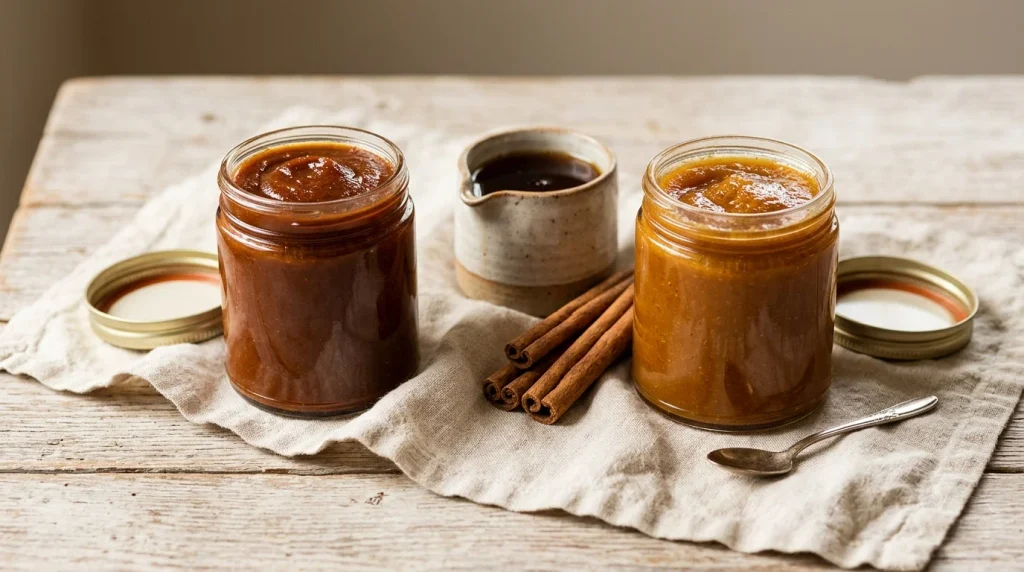
The easy answer is toast. But once you have a jar in the fridge, you’ll find it going into everything.
For breakfast:
- Spread it on gluten-free toast or English muffins, with a little salted butter underneath.
- Swirl a spoonful into oatmeal or plain yogurt.
- Spoon it over a stack of fluffy gluten-free pancakes instead of syrup. Warm it for 20 seconds first so it drizzles.
- Pumpkin butter latte: Whisk 1 to 2 tablespoons into hot coffee, then add steamed or warm milk. It’s like the coffee shop drink, without the syrup.
For baking and desserts:
- Pumpkin gooey butter cake. This is the reason I made the jar in the first place! The cake uses 1 cup of pumpkin butter in the gooey filling. [ADD LINK when the cake post is live]
- Swirl 1/3 cup through the batter of a gluten-free cheesecake right before baking.
- Beat 1/4 cup into cream cheese frosting for a pumpkin icing. It’s great on gluten-free carrot cake.
- Spread it on squares of gluten-free puff pastry, fold into little turnovers and bake.
- Fill or top baked gluten-free donuts. That post also has a pumpkin version of the donuts themselves.
- Ripple it through a loaf of gluten-free banana bread before it goes in the oven.
And for snacks: Spoon it over warm baked brie and serve with gluten-free crackers and apple slices. It’s a really easy holiday appetizer.
A jar also makes a sweet hostess gift. Just put a “keep refrigerated” note on the lid.
How to store pumpkin butter
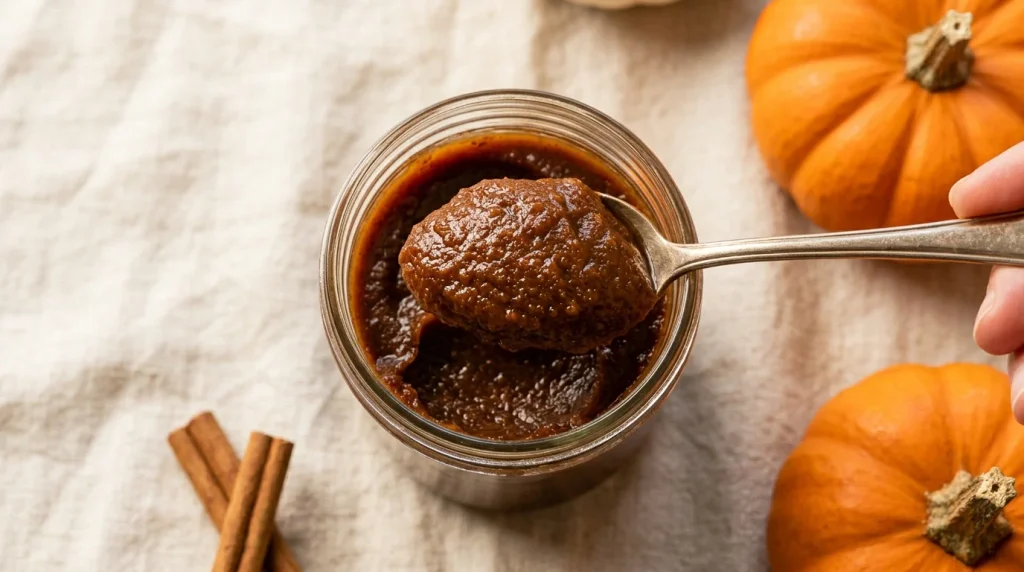
Let it cool completely, then spoon it into clean glass jars or airtight containers.
In the fridge: Up to 2 weeks. You’ll see recipes that say a month, but homemade pumpkin butter has no preservatives and far less sugar than jam, so I’d rather play it safe. Always use a clean spoon, and toss it if you see mold or it smells sour or fizzy.
In the freezer: Up to 3 months for the best flavor (it stays safe longer, but the spices fade). Leave about 1/2 inch of space at the top of the container, since it expands as it freezes. Thaw it overnight in the fridge and give it a good stir.
Small freezer containers or even an ice cube tray work well. Then you can thaw just enough for a week of toast.
Can you can pumpkin butter?
No, and this is the one part of the recipe I’d ask you not to skip reading.
Lots of older recipes (and some current ones) have you ladle pumpkin butter into hot jars and seal them. The lids will pop and the jars will look perfectly sealed. But there’s no tested, safe way to can pumpkin butter at home, not in a water bath and not in a pressure canner.
Here’s why. Pumpkin is a low-acid food, and pumpkin puree is very dense. The thickness and acidity also change a lot from one pumpkin (or batch) to the next. That means no one can say how long it takes for heat to reach the middle of the jar and kill harmful bacteria, including the ones that cause botulism. The sugar isn’t enough to make it safe either. The USDA pulled its pumpkin butter canning directions decades ago for these reasons, and the National Center for Home Food Preservation still recommends against it.
The good news: pumpkin butter freezes really well. If you want a big batch to last through winter, the freezer is the way to go.
Store-bought jars that sit on the shelf are made in commercial kitchens with lab-tested acidity and equipment you can’t copy at home. Once you open one, follow the label, which almost always says to refrigerate.
Homemade vs Trader Joe’s pumpkin butter
Trader Joe’s pumpkin butter is a fall favorite for a lot of people, and it’s handy when you want a jar right now. But it’s seasonal, so once it’s off the shelf, you’re stuck until next year.
Homemade has a few things going for it. You can make it any month of the year from a can of pumpkin. You pick the sweetener and how much of it goes in. And you can push the spice up or down until it tastes exactly how you like it.
If you buy a jar, check the label for storage after opening and, if you need it, for gluten-free labeling. I’ve tried the Trader Joe’s jar myself, and honestly, homemade wins for me. It tastes fresher, the spices come through more, and it isn’t as sweet.
Pumpkin butter FAQ
Is pumpkin butter gluten-free?
Yes. Pumpkin, sugar, maple syrup, cider and spices contain no gluten. For a celiac kitchen, just double-check that your spices are labeled gluten-free.
Does pumpkin butter need to be refrigerated?
Homemade, always. Keep it in the fridge or freezer, never in the pantry. Most store-bought jars can sit on the shelf until you open them, then they go in the fridge too.
How long does it last in the fridge?
Up to 2 weeks in a clean, airtight jar. Freeze anything you won’t eat by then.
Is pumpkin butter healthy?
It’s mostly pumpkin, but it does have added sugar, so think of it like jam. A tablespoon or two on toast is the idea, not a bowlful. The less-sugar variation above is a good option if you want it lighter.
What does pumpkin butter taste like?
Like the inside of a pumpkin pie, just thicker and more concentrated. Sweet, warmly spiced and a little caramel-y from the brown sugar.
Can I use pumpkin pie filling instead of purée?
I don’t recommend it. Pie filling already has sugar and spices in it, so the butter ends up too sweet and you can’t adjust it.
Can I double the recipe?
Sure. Use a wider pot so it has room to thicken, and expect it to take 10 to 15 minutes longer.
More fall baking
Looking for something to bake with your jar? Browse my gluten-free cake recipes and gluten-free desserts, or make a gluten-free pie crust for Thanksgiving pumpkin pie.
If you make this pumpkin butter, I’d love to hear what you spread it on. Leave a rating in the recipe card, and tell me in the comments if you tried the maple or chai version.
Easy Homemade Pumpkin Butter
A thick, cinnamon-spiced fall spread made from canned pumpkin, brown sugar, maple syrup and apple cider, on the stove or in the slow cooker.