
Table of Contents
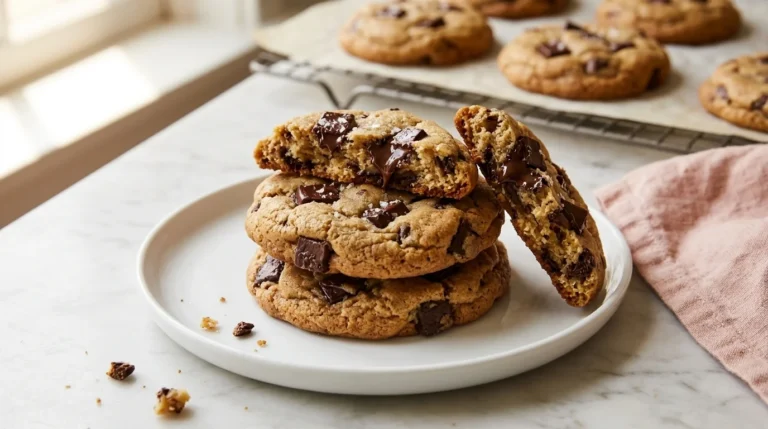
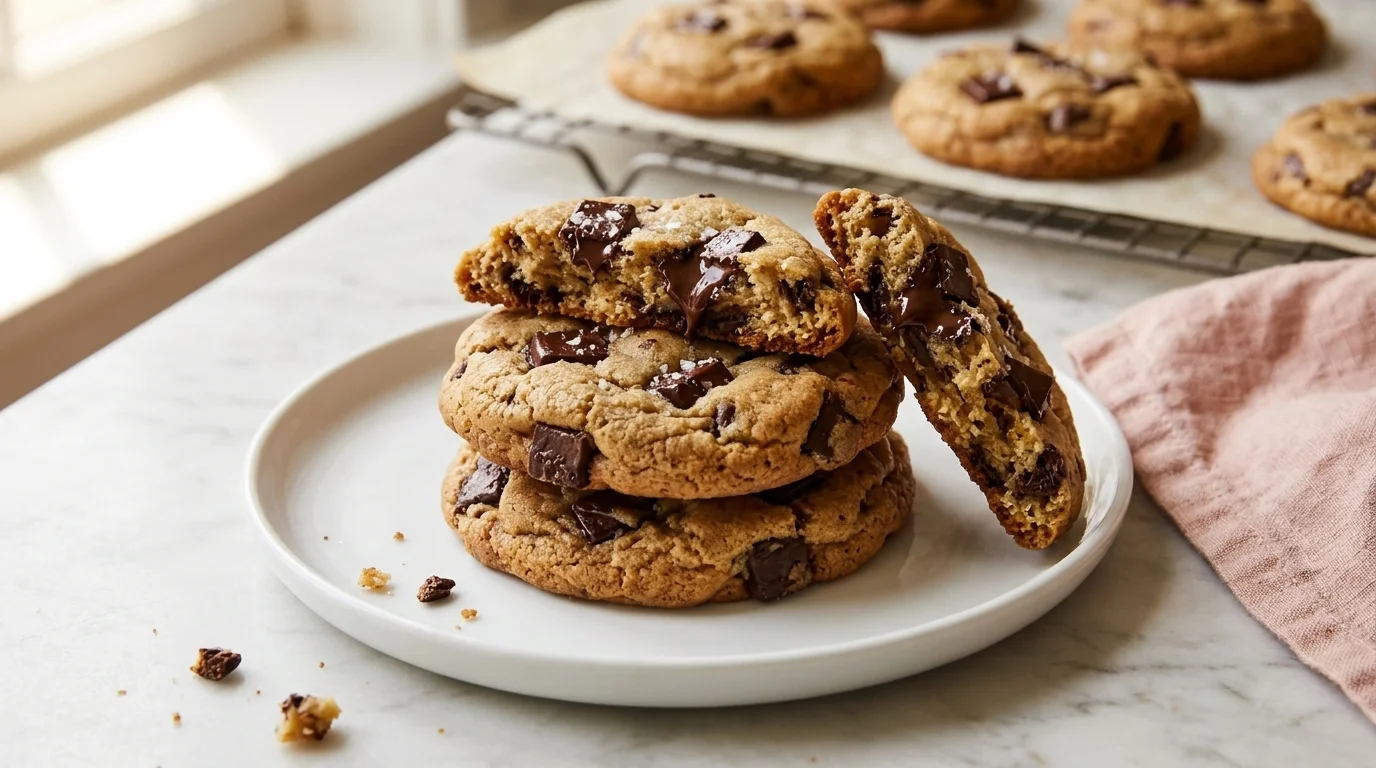
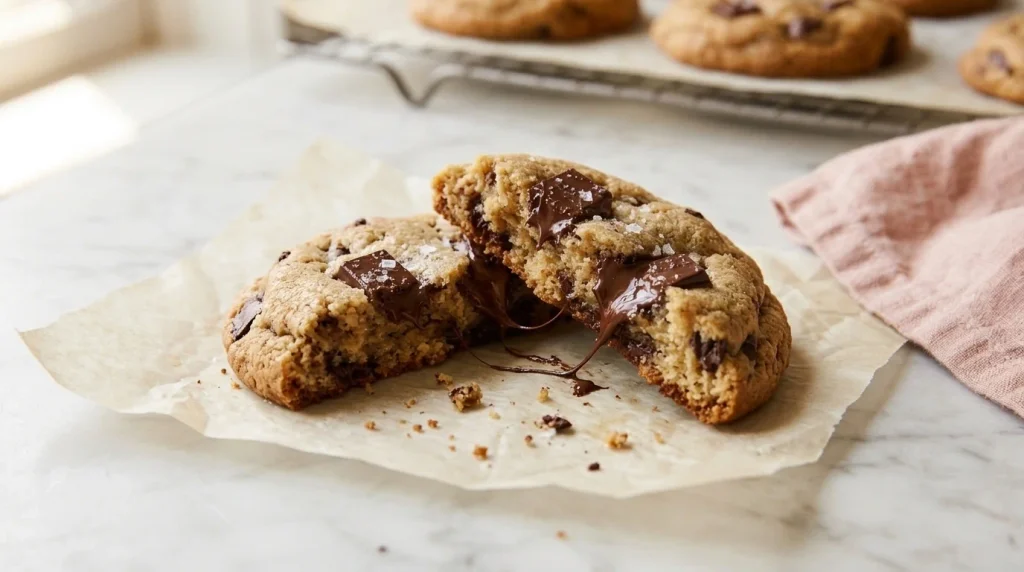
Cottage cheese chocolate chip cookies are big, chewy cookies with blended cottage cheese stirred into the dough, and once it’s smooth you can’t taste it (it just keeps the centers soft). These cottage cheese cookies are gluten-free too, made with oat flour and almond flour, and there’s no protein powder in them.
I saw them on Instagram and had to try a batch! I’m gluten intolerant, so my version swaps the regular flour for oat and almond flour. My kids were the taste testers, and they asked for more before the first batch had even cooled. I bake every recipe here before it goes up.
Below: what keeps them from going cakey, when to pull them, and how long they keep.
Why put cottage cheese in chocolate chip cookies?
Blended cottage cheese adds moisture and a light tang to chocolate chip cookies, so they bake up soft in the middle and stay soft for a couple of days. It has to be blended completely smooth first. Then it disappears into the dough, and the cookies don’t taste cheesy at all.
That matters more in gluten-free dough. Oat flour soaks up liquid, so oat flour cookies can go dry and crumbly overnight. The cottage cheese gives it something to drink, and the almond flour adds fat for a tender crumb.
What makes this cottage cheese cookies recipe different? No protein powder and no wheat flour to swap out. It’s a regular big chocolate chip cookie that happens to have cottage cheese in it.
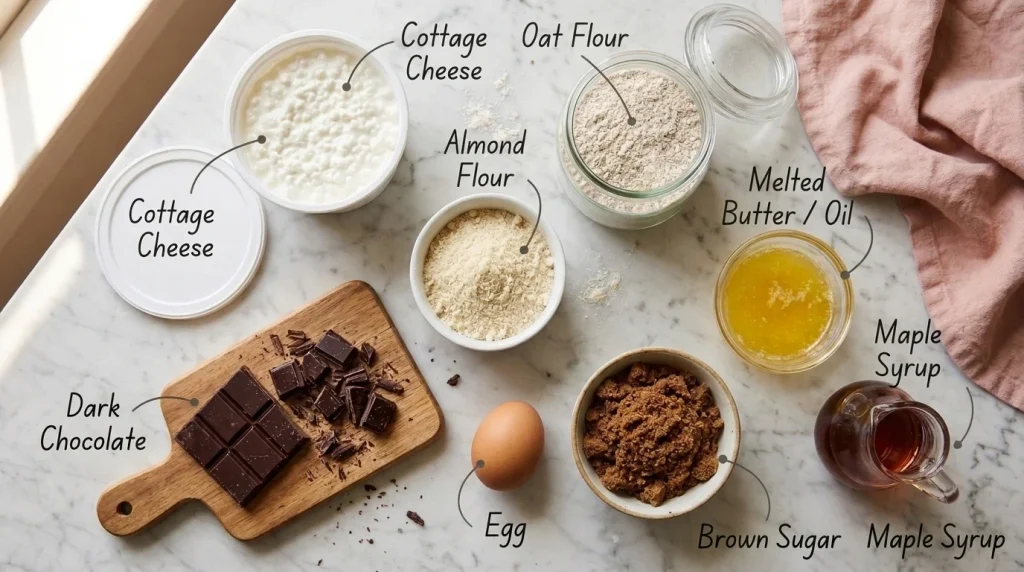
What you need for gluten-free cottage cheese chocolate chip cookies
Cottage cheese: Full-fat (4%), small curd if you can find it, because small curds blend smooth faster. Pour off any liquid pooled on top. Low-fat has more water and less fat, so it tends to bake up puffier and drier.
Maple syrup and vanilla: They go into the blender with the cottage cheese, and the extra liquid helps it turn into a smooth cream.
Oat flour: Make it from oats labeled certified gluten-free, because regular oats are often cross-contaminated with wheat. (Oats are the tricky one on any list of which grains are gluten-free.) I toast my oats for 2 to 3 minutes first, in the oven or a dry pan, so they grind finer (here’s how to make oat flour step by step). Spoon it into the cup and level it off without pressing, since homemade oat flour can be fluffy or packed.
Almond flour: Blanched and finely ground. It keeps the centers chewy, and it means these aren’t nut-free.
Butter: Unsalted, melted, then cooled a few minutes. Hot butter makes a greasy dough that spreads.
Dark brown sugar: The extra molasses makes them chewier. Coconut sugar works as a swap (I always have some), but it’s drier, so expect a less chewy cookie.
Egg: One large egg at room temperature, so it mixes in evenly.
Baking soda, baking powder, salt: Half a teaspoon each. Check that the baking powder is labeled gluten-free.
Chocolate: Dark chunks or chips labeled gluten-free, because some chocolate is made on shared lines with wheat. A chopped bar gives you bigger melty puddles.
How to make cottage cheese cookies
Here’s the short version (the recipe card has every step):
- Blend the cottage cheese, maple syrup and vanilla until it looks like thick cream, with no white specks.
- Whisk the melted butter and dark brown sugar for about 1 minute, until glossy.
- Whisk in the egg, then the blended cottage cheese.
- Stir in the flours, baking soda, baking powder and salt until no dry flour shows.
- Fold in the chocolate.
- Cover and chill for 30 to 60 minutes. An hour is best, and overnight works too.
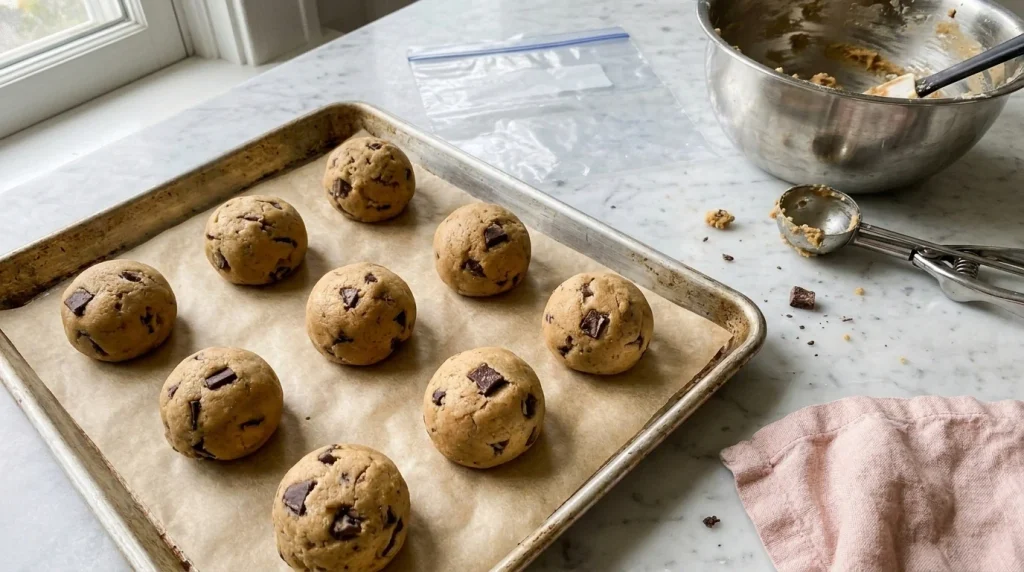
- Scoop 10 big balls with a 3.25 oz scoop and press a few extra chocolate pieces on top.
Before chilling, the dough is soft and a bit sticky. That’s normal. The oat flour needs time to soak up the liquid, and the cold firms up the butter so the cookies don’t spread flat. After an hour it should scoop cleanly.

Do you bake cookies at 350 or 400?
Most drop cookies bake at 350°F (175°C), and 400°F suits thin cookies that should crisp fast. These cottage cheese chocolate chip cookies bake lower, at 325°F (165°C), on purpose. They’re big and thick, so a slower bake lets the centers cook through before the edges get too dark.
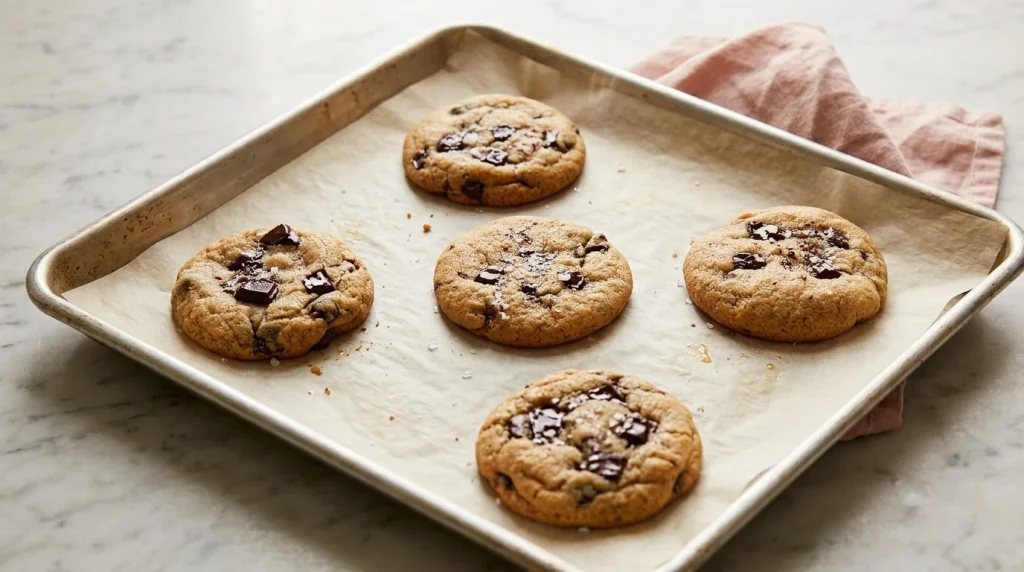
Bake one sheet at a time on the middle rack for 16 to 18 minutes, and keep the second sheet in the fridge while you wait.
Pull them when the edges are golden and set but the centers still look puffy and a little underdone. They finish cooking during their 15 minutes on the hot sheet. If the middles look done in the oven, they’ll be dry later.
Why are my cottage cheese cookies cakey or flat?
- Cakey or puffy: curds that weren’t blended smooth, low-fat or watery cottage cheese, or too much flour. Blend until there are no specks, and spoon and level both flours instead of scooping with the cup.
- Flat and greasy: no chill, butter still hot when it went in, or a warm baking sheet. If you reuse a sheet, let it cool completely first.
- Dry or gritty: coarse oat flour or too long in the oven. Blend the oats longer and sift out the bigger bits.
- Pale bottoms: use the middle rack. Light aluminum sheets brown more gently than dark ones, so you may need the full 18 minutes.
A slightly cakey cookie is still a good cookie. Just change one thing next time.
Easy swaps and variations
This one can’t be made dairy-free, since cottage cheese is the whole point. For that, make my gluten-free dairy-free chocolate chip cookies instead.
And those 3-ingredient cottage cheese “cookies” you see online? They’re closer to soft protein bites than a chocolate chip cookie.
All oat flour or a 1:1 gluten-free blend
I haven’t tested this recipe with only oat flour, or with a 1-to-1 blend like Bob’s Red Mill 1-to-1, King Arthur Measure for Measure or Cup4Cup, so I can’t give you a swap amount yet. If it’s the almond flour you love, my almond flour chocolate chip cookies are built around it.
Chunky and extra chocolatey
Use a chopped dark chocolate bar for the full 1 1/2 cups, so you get puddles and thin shards. Half dark and half milk chocolate is sweeter (check that label too). A pinch of flaky sea salt on top right after baking is really good with the brown sugar.
Can you eat cottage cheese cookie dough with a spoon?
Not this one. This cottage cheese cookie dough recipe has a raw egg and raw flour in it, so it’s made for the oven, not the spoon. Raw flour isn’t a ready-to-eat food, even when it’s gluten-free. The CDC advice on raw flour and dough explains why.
What you can do is make the dough ahead. This cottage cheese cookie dough without protein powder keeps covered in the fridge for up to a day, or you can scoop it into balls and freeze them (more on that below). Then you can bake two or three cookies at a time whenever the kids ask.
Want a treat you don’t have to bake at all? Try these no-bake chocolate oatmeal cookies.
How long do homemade cookies last?
These cookies keep up to 2 days at room temperature in an airtight container, or up to 5 days in the fridge, because cottage cheese is fresh dairy. For longer storage, freeze the baked cookies or the unbaked dough balls for up to 2 months.
Want them fresh for 3 days or more? Use the fridge with parchment between the layers, then warm one for about 10 seconds in the microwave. After 2 weeks? Not from the counter or the fridge. Freeze anything you won’t eat within 5 days.
For dough balls, freeze them on a lined tray until firm, then bag them. Bake from frozen at 325°F (165°C), give them a few extra minutes, and go by the golden edges.
Cottage cheese chocolate chip cookies FAQ
Can you taste the cottage cheese in a cottage cheese cookie?
Not if it’s blended smooth. You might notice a light tang, a bit like a cream cheese cookie. Curds you miss show up as little white specks.
What kind of cottage cheese is best for cookies?
For cookies, cottage cheese with full fat (4%) and small curds works best. Pour off any liquid on top. Low-fat makes them puffier.
Can I make cottage cheese cookie dough without almond flour?
Not with this recipe as written. It uses 1/2 cup oat flour and 3/4 cup almond flour, and I haven’t tested an all oat flour version yet, so I can’t promise the same soft texture. If you try it, use oats labeled certified gluten-free.
Do I have to blend the cottage cheese?
Yes, for this texture. A blender, food processor or stick blender all work. No blender? Press small-curd cottage cheese through a fine sieve with the back of a spoon.
Can I make these without the egg?
I haven’t tested these cookies without the egg, so I can’t say how they’d hold together. The egg is what binds the oat and almond flour, so I’d keep it.
Just remember to take them out while the centers still look soft. If you make these, leave a rating in the recipe card and tell me in the comments how they turned out! Did you go with chips or a chopped bar?