

Table of Contents
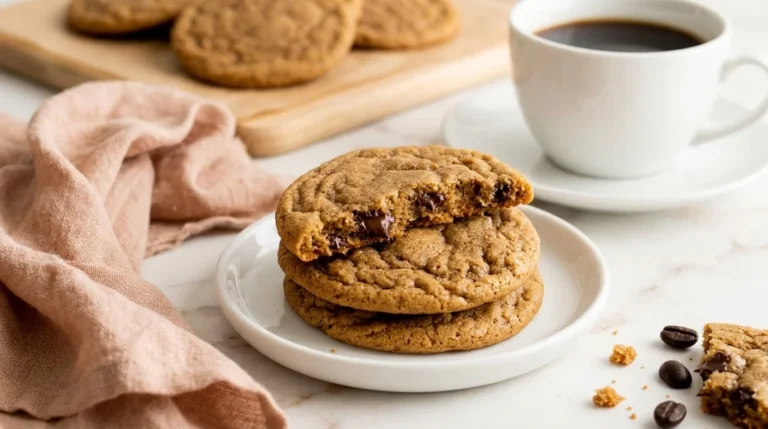
These coffee cookies are soft chocolate chip cookies with a little dissolved espresso powder beaten into the dough. They’re also gluten-free coffee cookies, made with homemade oat flour, and you only need one bowl. No chilling, and each sheet bakes in about 10 minutes!
Below you’ll find which coffee to use (espresso powder, instant, or a real shot) and the one measuring habit that decides whether they bake up soft or puffy. My kid and I are both gluten intolerant, so every cookie on this blog has to work without wheat, and this one does. I bake a batch most weekends to have with my coffee.

Why oat flour works in gluten-free coffee cookies
Oat flour is just oats blended until fine. It has a mild, slightly toasty taste that sits nicely under the coffee and brown sugar.
I toast my oats for 2 to 3 minutes before blending them, either in the oven or in a dry pan, moving them around so they don’t scorch. Toasted oats are drier, so they blend into a finer flour. If you’ve never made it, here’s how to make oat flour step by step.
Use oats labeled certified gluten-free. Regular oats are often cross-contaminated with wheat during growing or processing, and the label is how you know they’ve been kept apart. You can read what that label has to mean in the FDA’s gluten-free labeling rule. A small number of people with celiac disease also react to oats themselves, so if you’re baking for someone with celiac, ask first.
Now the important bit. Weigh the flour.
You need 266 g, which is about 2 3/4 cups. Oat flour is a lot lighter than all-purpose flour, so a cup of it holds much less, and measuring by cups is where most oat flour cookies go wrong. Too little flour and the cookies spread thin. Pack it into the cup and you get too much, which makes them dry and puffy. No scale? Spoon the flour into the cup and level it off with a knife instead of scooping straight from the bag.

Ingredients for coffee cookies
The full list is in the recipe card. A few notes:
- Butter: 2/3 cup (140 g), softened, so a finger leaves a dent but it isn’t shiny or melting. Regular or dairy-free both work. I always have dairy-free butter in the pantry, and if you want more cookies without dairy, try my gluten-free dairy-free cookies.
- Granulated and light brown sugar: 1/2 cup (100 g) of each. Brown sugar holds on to moisture, which keeps the middles soft, and it adds a little caramel flavor. In the UK, use light soft brown sugar.
- Egg and vanilla: one egg and 1 1/2 teaspoons of vanilla extract.
- Espresso powder and boiling water: this is where the coffee flavor comes from. More on that below.
- Salt and baking soda: 3/4 teaspoon each. The baking soda helps the cookies spread and brown.
- Chocolate: 1/2 cup semisweet chocolate chips or chopped chocolate, plus a few extra for the tops if you like. I always keep gluten-free chocolate chips on hand.
Check the labels on the chocolate and the espresso powder, since both can be made in places that handle wheat.

Espresso powder, instant coffee or brewed coffee: which should you use?
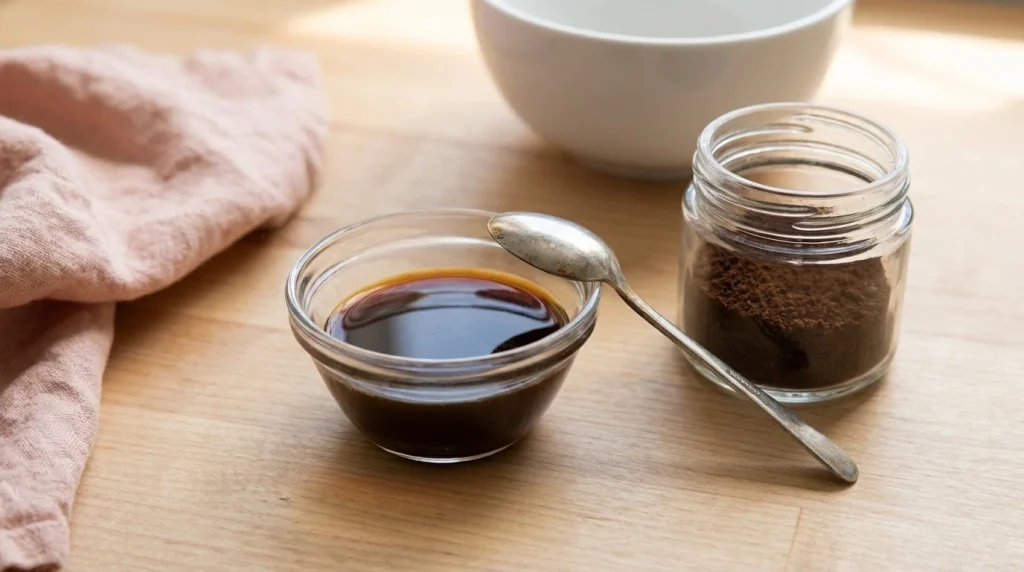
Use instant espresso powder dissolved in boiling water. It gives the strongest coffee flavor without making the dough wet. A freshly pulled espresso shot works too, as long as you measure exactly 1 1/2 tablespoons. Regular brewed coffee is too weak in such a small amount, so the cookies barely taste like coffee.
The recipe uses 4 teaspoons (4 g) of espresso powder in 1 1/2 tablespoons (21 ml) of boiling water. Boiling water dissolves it completely, so you won’t get dark specks in the dough.
Why so little liquid? The dough has no room for more. Extra liquid makes it sticky, and sticky dough spreads in the oven. So if you use a machine, pull a shot, measure out 1 1/2 tablespoons and drink the rest.
Instant coffee is milder than espresso powder, so the coffee taste is softer. I’ve made these with regular instant coffee in the same 4 teaspoons, and they work fine, just a little less coffee-forward.
Skip coffee grounds. They don’t dissolve, so they stay as gritty bits in the cookie. And if you want less caffeine, decaf espresso powder works the same way, in the same amount.
How to make coffee cookies
This coffee cookies recipe takes one bowl and a stand or hand mixer. The card has every step, so here are just the ones that matter.
Heat the oven to 350°F (175°C) and line two large baking sheets with parchment. Make the espresso first, so it has a few minutes to cool a bit before it meets the butter.
Beat the softened butter with both sugars for 1 to 2 minutes, until it’s paler and fluffy. Then add the egg, the espresso and the vanilla and mix until it all comes together.
Add the oat flour, salt and baking soda. Stop mixing as soon as you can’t see any dry flour, then stir in the chocolate. Oat flour has no gluten, so you can’t make these tough, but a mixer running on and on warms the butter, and warm butter means more spread.
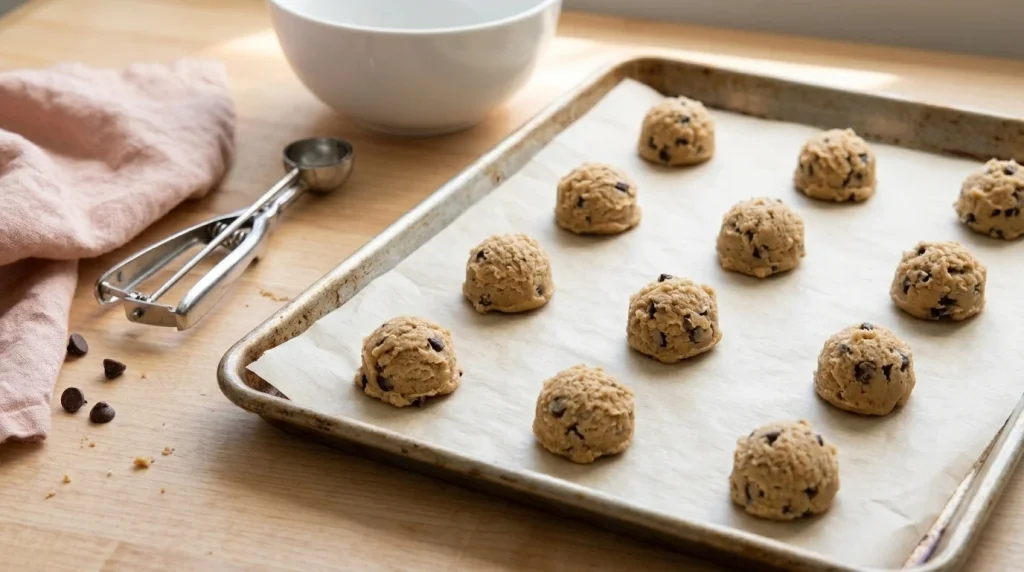
Scoop balls of about 1 1/2 tablespoons and set them 3 to 4 inches apart, because they spread.
Bake one sheet at a time. With two sheets in the oven, one ends up closer to the heat and they bake unevenly. The second sheet can go in while the first one cools.
How do you know when coffee cookies are done?
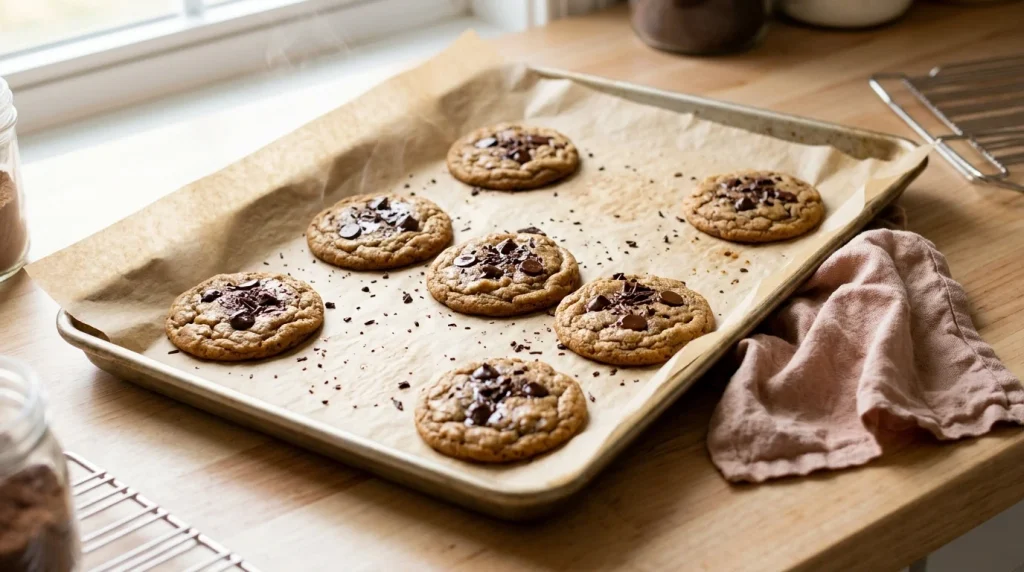
Bake them 8 to 11 minutes, until the edges are set and the centers still look soft and a little shiny. They firm up as they cool on the sheet for 10 minutes. Because the dough is already brown from the coffee, judge by the edges and the shine on the centers, not by color.
Pulling them while the middles look raw feels wrong. Do it anyway. Each coffee cookie keeps baking on the hot sheet, and that’s what keeps the center soft.
Did they puff up into little domes? Tap the baking sheet firmly on the counter as soon as it comes out of the oven. The middles sink, the edges wrinkle a little, and they look like proper cookies again.
For melty tops, scatter a little finely chopped or shaved chocolate on the warm cookies, then move them to a rack after the 10 minutes.
Why are my coffee cookies puffy or flat?
Puffy or cakey cookies almost always have too much flour. That happens when oat flour gets packed into a cup or measured without leveling. Weigh it next time. For the batch you have, tap the pan as soon as it comes out.
Flat or greasy cookies are the opposite problem. Usually it’s too little flour (cups of oat flour instead of 266 g), butter that was too soft or partly melted, or more than 1 1/2 tablespoons of coffee liquid.
Dry or crumbly ones were baked too long or had packed flour. Start checking at 8 minutes.
And if they feel gritty, the oat flour was too coarse. Blend it longer, until it feels soft between your fingers.
Coffee cookie variations
I’ve made every one of these, and they all work with the same dough.
Dairy-free coffee cookies
Use dairy-free butter and dairy-free chocolate chips. They’re still not vegan, because of the egg.
Mocha or dark chocolate
Swap the semisweet chips for 1/2 cup dark chocolate chunks for a deeper, less sweet mocha flavor. My Mexican hot chocolate cookies are another chocolate cookie made with oat flour.
Toffee or flaky salt
Use 1/4 cup chocolate chips and 1/4 cup toffee bits (check the toffee label for gluten). Or keep the chocolate and add a small pinch of flaky salt to each cookie when it comes out of the oven.
Want a classic chocolate chip cookie without the coffee? Try my almond flour chocolate chip cookies.
How to store and freeze coffee cookies
Keep them in an airtight container at room temperature for 4 to 5 days. For longer, freeze the baked cookies in an airtight freezer bag for up to 2 months.
You can freeze the dough too. Set the scooped balls on a baking sheet and put them in the freezer until they’re firm on the outside, then pack them into a zip-top freezer bag. No need to thaw them. Bake straight from frozen and add 1 to 2 minutes, so 10 to 13 minutes total.
Coffee cookies FAQ
Are coffee cookies gluten-free?
Most aren’t, because they use all-purpose flour. This version is, since the flour is ground from certified gluten-free oats. Check the chocolate and espresso powder labels too.
Do coffee cookies have caffeine?
Yes, a little, mostly from the espresso powder (chocolate has a bit too). For a lower-caffeine batch, use decaf espresso powder in the same amount.
Can I make coffee cookies vegan or eggless?
Not this recipe. Dairy-free is easy, but the egg stays. I haven’t tested an egg replacement here, so I can’t promise how they’d turn out.
How do I make crunchy coffee cookies?
These are meant to be soft. For firmer edges, bake them toward the 11-minute end of the range, but not longer, or they just get dry.
Are Biscoff cookies coffee cookies?
No. Biscoff are caramelized spiced biscuits that are traditionally served with coffee, not made with it. The regular ones also contain wheat flour, so check the label if you’re avoiding gluten.
Can I use a regular gluten-free flour blend instead of oat flour?
I only make these with oat flour. A 1-to-1 blend is much heavier per cup, so never swap it cup for cup, and I can’t promise the texture without testing it.
A cookie with coffee in it, made to sit next to a cup of coffee. Makes sense to me. If you bake this coffee cookie recipe, leave a rating in the recipe card and tell me in the comments which coffee you used!