
Table of Contents
Our everyday cookie
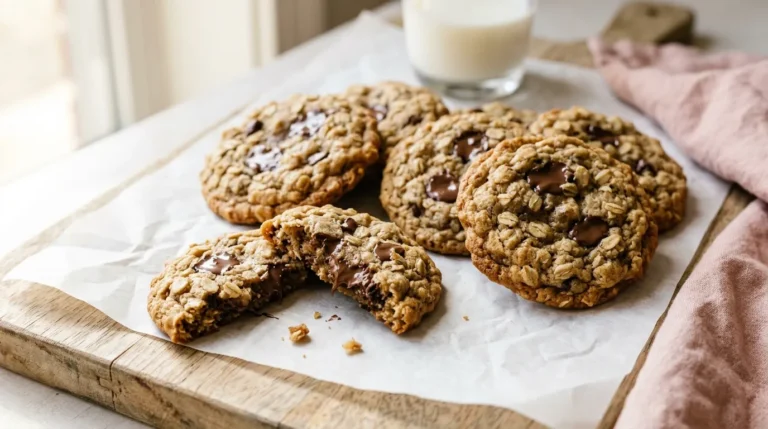
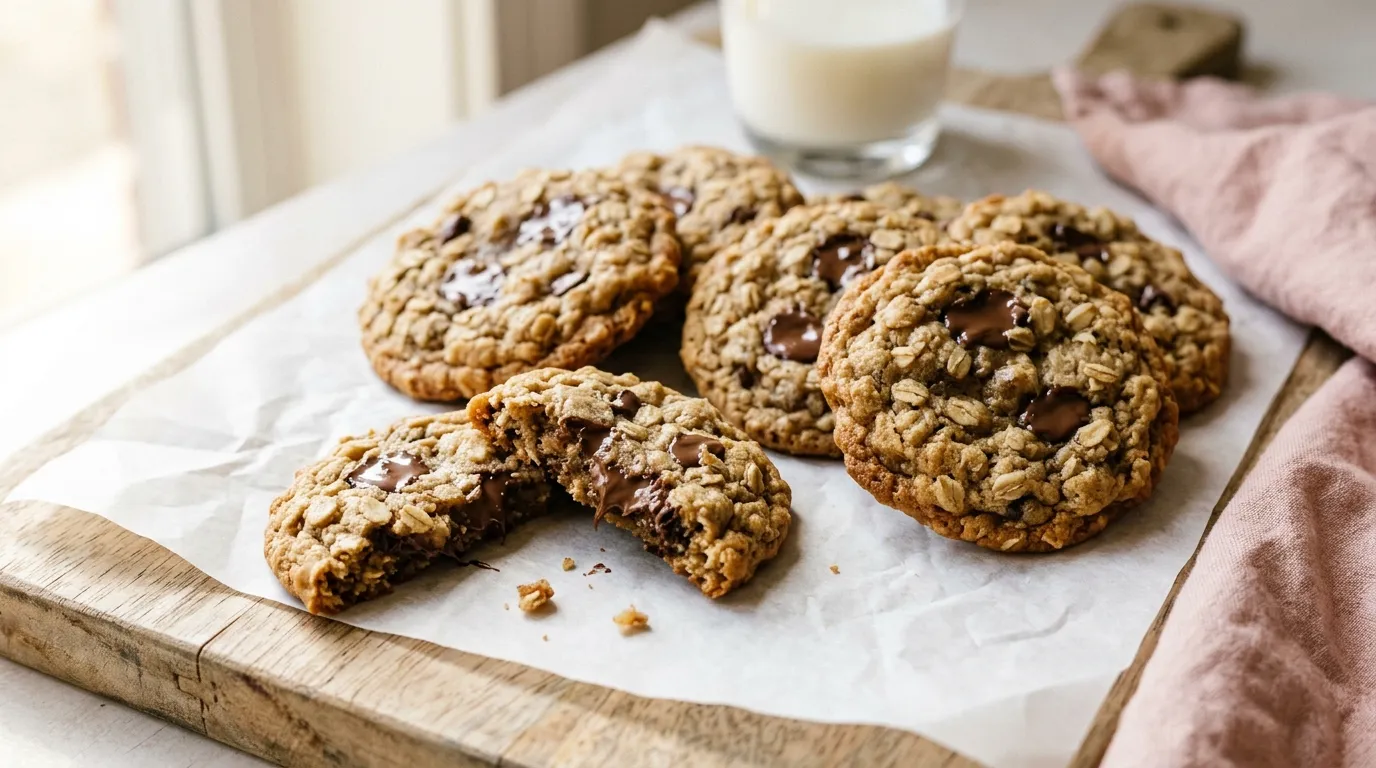
These gluten free oatmeal cookies have chewy middles, golden crispy edges, and a little cinnamon in every bite. The only gluten-free ingredient you need is oats. I toast them, blend some into flour, and keep the rest whole for that classic oatmeal cookie chew.
This is my own recipe. I made it for my kids and me after one of my children turned out to be gluten-sensitive, and it quickly became the cookie we bake for everything. After-school snacks, lunch boxes, slow weekend baking with the kids, and family holidays. We’ve tried every mix-in you can think of (chocolate chips, raisins, cranberries, a bit of everything), so I’ll show you all of them.
Could I just buy gluten-free oatmeal cookies? Sure. But I like homemade better, because I know exactly what goes in my belly. And in my kids’ bellies too.
Quick answer: To make gluten free oatmeal cookies, use certified gluten free oats and swap the wheat flour for gluten free oat flour (homemade or store-bought). Beat butter, brown sugar, and egg, stir in the oat flour, rolled oats, and mix-ins, chill the dough for 30 minutes, and bake at 350°F for 11 to 13 minutes.
| Recipe at a glance | |
|---|---|
| Total time | About 1 hour 15 minutes (most of it toasting, cooling, and chilling) |
| Yield | About 20 cookies |
| Gluten-free flour | Homemade toasted oat flour (just oats) |
| Nut-free | Yes |
| Texture | Chewy middle, crispy edges |
| Mix-ins | Chocolate chips, raisins, or dried cranberries |
| Storage | Room temperature 5 days, freezer 3 months (dough or baked) |
Are oatmeal cookies gluten-free?
Most oatmeal cookies aren’t. Regular recipes use wheat flour, and even the oats can be a problem.
Oats don’t contain gluten themselves. But they’re usually grown in rotation with wheat and barley, harvested with the same machines, and milled in the same plants, so stray grains end up in the bag. That’s why you’ll see people asking why Quaker oats aren’t gluten-free. The regular Quaker oats you grab at the store aren’t labeled gluten-free, although the brand sells a separate gluten-free line.
When you shop, you’ll see two kinds of safe oats:
- Certified gluten-free oats have been tested and meet the gluten-free limit. In the US, the FDA’s gluten-free labeling rule sets that limit at less than 20 parts per million.
- Purity protocol oats go a step further. They’re grown, harvested, and processed away from wheat, barley, and rye from the field on, instead of being sorted clean afterward.
For my gluten-sensitive kid, certified gluten-free oats work well, so that’s what I buy. If you’re baking for someone with celiac disease, purity protocol oats are the safest choice. A small number of people with celiac also react to oats themselves, as Health Canada’s review of oats and celiac disease explains, so it’s always worth asking first.
I talk more about oats in my no bake chocolate oatmeal cookies post, which is my mom’s recipe and our other family favorite.
How I make toasted oat flour at home
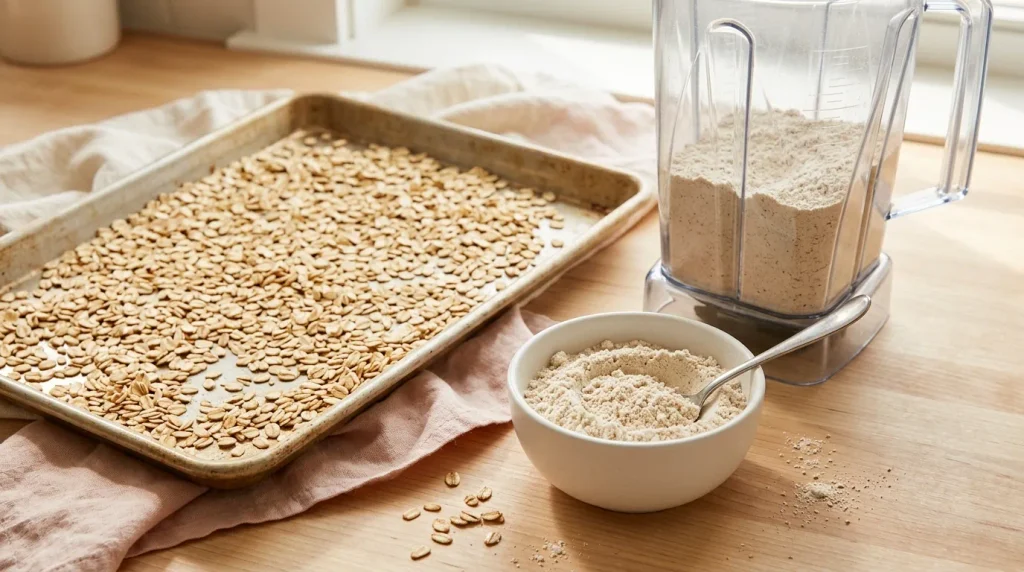
This is the part that makes these gluten free oatmeal cookies mine. Instead of buying a special gluten-free flour, I make my own from the same oats. It’s cheaper, it’s naturally nut-free (so the cookies can go to school), and toasting gives the flour a nutty, almost caramel flavor that plain oat flour doesn’t have.
- Spread the oats in a thin layer on a baking sheet. One layer, no piles.
- Toast at 350°F (175°C) for 8 to 10 minutes, stirring every 3 minutes. Stirring is the important part. The oats at the edges of the pan toast faster, so moving them around keeps everything evenly golden instead of dark on the sides.
- They’re ready when they smell toasty and look light golden. Not brown, and never dark.
- Let them cool completely, about 10 minutes. Warm oats turn a bit gummy in the blender.
- Blend until fine and powdery, about 30 to 60 seconds. Stop and shake the blender once or twice so nothing gets stuck under the blade.
You’ll need about 1 3/4 cups of oats to get the 1 1/2 cups of oat flour in this recipe. If you like, toast all 3 cups at once (flour plus whole oats) and only blend part of them. Toasted whole oats add even more flavor to the dough.
One tip: homemade oat flour is light and fluffy, so a cup of it can weigh very different amounts depending on how you scoop. If you have a kitchen scale, weigh it. If not, spoon it into the cup and level it off instead of packing it.
Ingredients for gluten free oatmeal cookies
Everything here is a pantry basic. The only thing to double-check is that your oats say certified gluten-free.
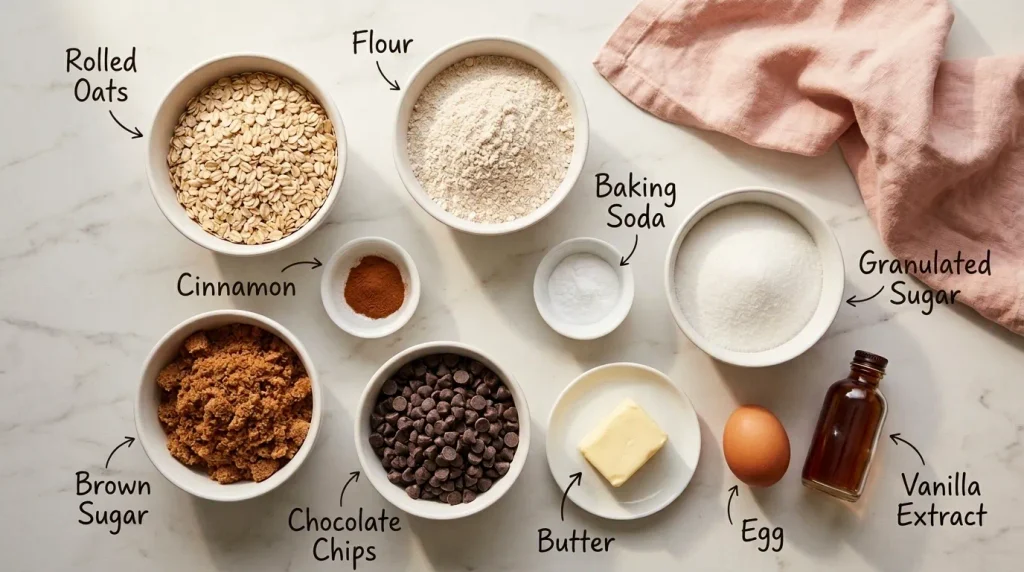
- Butter: Softened, so it beats smooth with the sugar. Unsalted lets you control the salt.
- Brown sugar: Most of the sugar is brown, and that’s on purpose. Its moisture keeps the middles chewy.
- Granulated sugar: A smaller amount helps the edges crisp up and turn golden.
- Egg: With no gluten in the dough, the egg does most of the work holding the cookies together.
- Vanilla: For that warm bakery smell.
- Toasted oat flour: The gluten-free flour, made from oats (see above). Store-bought gluten-free oat flour works too.
- Baking soda: Is it necessary? Not for the cookies to bake, but it is for the texture. Baking soda reacts with the brown sugar, which helps the cookies spread a little and brown more. That’s where the golden, crispy edges come from. Without it, gluten free oatmeal cookies come out thicker, paler, and more cake-like. Baking soda is naturally gluten-free.
- Salt: Just enough to keep the cookies from tasting flat.
- Cinnamon: My little trick. Half a teaspoon makes them taste like a real old-fashioned oatmeal cookie, not just a sweet cookie with oats in it.
- Old-fashioned rolled oats: Certified gluten-free. The big flakes hold their shape in the oven and give you the chewy bite. Quick oats work, but the cookies come out softer and flatter.
- Mix-ins: Chocolate chips, raisins, or dried cranberries. More on those below.
How to make gluten free oatmeal cookies
Once your oat flour is ready, the dough comes together in one bowl.
- Beat the butter and sugars. Beat the softened butter, brown sugar, and granulated sugar for about 2 minutes, until smooth and a little lighter in color.
- Add the egg and vanilla. Beat just until combined.
- Add the dry ingredients. Stir in the oat flour, baking soda, salt, and cinnamon until no dry streaks are left.
- Fold in the oats and mix-ins. Use a spatula for this so the oats don’t get crushed.
- Chill. Cover the bowl and refrigerate for 30 minutes.
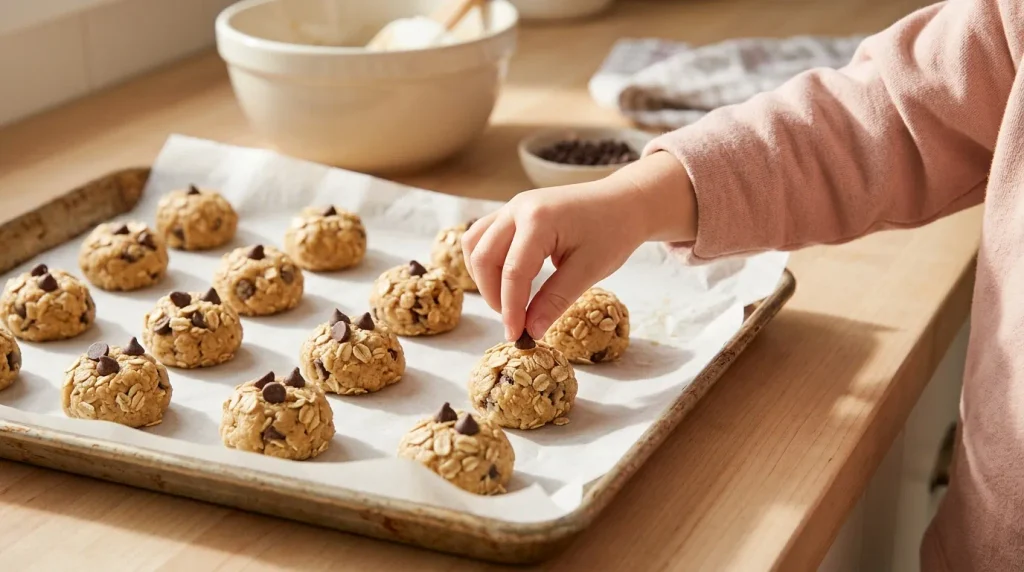
- Scoop and top. Scoop 1 1/2-tablespoon balls onto a parchment-lined baking sheet, 2 inches apart. Press a few extra chocolate chips on top of each one.
- Bake. Bake at 350°F for 11 to 13 minutes, until the edges are golden and the centers still look a little soft. Let them cool on the pan for 10 minutes before moving them.
I always do three things with these cookies, and each one has a reason.
I chill the dough. Gluten-free flour, and oat flour especially, soaks up moisture slowly. Thirty minutes in the fridge gives it time to absorb the butter and egg, so the dough firms up and the cookies don’t spread into thin puddles. You can chill it longer, even overnight, if that’s easier for your day.
I add a pinch of cinnamon. You won’t taste it as “cinnamon cookies.” It just makes them taste like the oatmeal cookies you remember.
I press extra chips on top before baking. The chips mixed into the dough mostly hide inside. A few on top melt into shiny pools, and the cookies look like they came from a bakery. It’s a fun job for little helpers on weekend baking days.
How to get chewy gluten free oatmeal cookies with crispy edges
That’s the texture my family likes best, and it comes from a few small choices working together.
| What you do | What it gives you |
|---|---|
| More brown sugar than white | Moist, chewy middles |
| A little white sugar and baking soda | Spread and browning for crispy, golden edges |
| Old-fashioned rolled oats | Chewy, hearty bite |
| Chilling the dough | Thick cookies that don’t spread too thin |
| Pulling them out when the centers look underdone | Soft middles once they cool |
That last one is the hardest. When the cookies come out of the oven, the edges should be golden, but the middles should still look puffy and a little shiny. They’ll look underbaked. That’s right. They keep cooking on the hot pan for a few minutes, and they firm up as they cool. If you wait until the middles look done in the oven, you’ll get hard cookies once they cool.
Prefer them softer all over? Bake for 10 to 11 minutes. Crispier? Go for 13 to 14 minutes and flatten the dough balls slightly before baking.
Troubleshooting gluten free oatmeal cookies
Gluten-free cookies are a little less forgiving than regular ones, because there’s no gluten to hold everything together. Here’s what usually goes wrong and how to fix it.
They spread flat and thin
The dough was too warm or not chilled long enough, or the butter was melted instead of softened. Chill the rest of the dough for another 20 to 30 minutes before the next tray. Also check your oat flour. Fluffy homemade oat flour can measure light in a cup, and too little flour means too much spread. Weighing it fixes this.
They didn’t spread at all
Too much flour (packed into the cup), or the dough was chilled for hours and went straight into the oven. Let very cold dough sit on the counter for 10 minutes, and press each ball down slightly with your palm before baking.
They’re crumbly and fall apart
They were moved too soon. Gluten free oatmeal cookies are fragile when hot. Leave them on the pan for the full 10 minutes. If they’re crumbly even after cooling, your oat flour may be too coarse. Blend it a little longer next time.
They’re dry or hard
Overbaked. Pull them when the centers still look soft, even if it feels too early. If a batch already went hard, store it with a slice of gluten-free bread in the container. The cookies pull moisture from the bread and soften overnight.
They taste gritty
The oat flour wasn’t blended fine enough. It should feel soft and powdery between your fingers, like regular flour.
They taste bitter or burnt
The oats got too dark while toasting. Light golden is all you want. Stir them every 3 minutes and check them early, especially if your oven runs hot.
Gluten free oatmeal cookies 3 ways
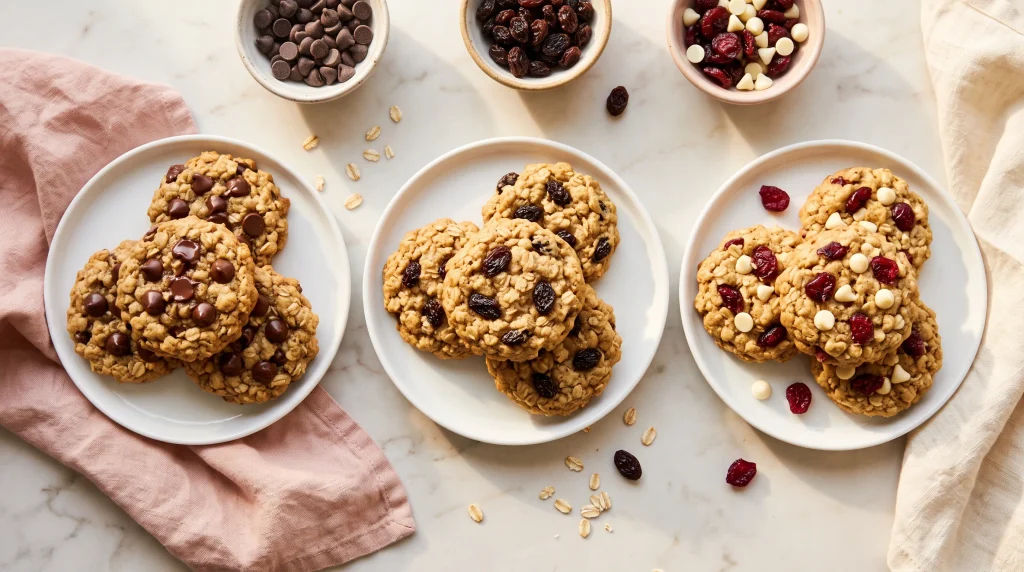
In our house, we’ve tried every mix-in, and we like them all. The dough stays exactly the same. Only the 1 cup of mix-ins changes.
Gluten free oatmeal chocolate chip cookies
This is the version in the recipe card. Use 1 cup of semi-sweet chocolate chips in the dough and a handful more to press on top. Dark chocolate chunks work too if you like them less sweet. Most chocolate chips are gluten-free, but check the label for a gluten-free claim or a shared-facility warning.
Gluten free oatmeal raisin cookies
Swap the chocolate for 1 cup of raisins. Soak them in hot water for 5 minutes first, then drain and pat them dry. Plump raisins stay soft and juicy instead of turning hard in the oven. This is where the cinnamon really shines. You can even go up to 3/4 teaspoon.
Gluten free oatmeal cranberry cookies
This one is perfect for the holidays. Use 1 cup of dried cranberries, or 1/2 cup cranberries and 1/2 cup white chocolate chips. They look festive on a cookie tray when family comes over.
A little bit of everything
Can’t decide? Use 1/3 cup each of chocolate chips, raisins, and cranberries. It sounds like a lot, but it works.
If your family loves peanut butter, try my peanut butter oatmeal cookies instead. There are three versions in that post, including a flourless one.
Can you make gluten free oatmeal cookies with a different flour?
Yes. I use oat flour because it keeps the cookies all oats and nut-free. I haven’t baked this exact recipe with other flours, so treat these swaps as starting points.
| Flour | How to swap | What changes |
|---|---|---|
| Store-bought gluten-free oat flour | Same amount (140 g) | Nothing big, just less toasty flavor |
| 1:1 gluten-free flour blend (Bob’s Red Mill 1-to-1 or King Arthur Measure for Measure) | About 1 cup (140 g) | A more classic, bakery-style cookie that holds together a little better |
| Almond flour | About 1 1/2 cups (150 g) | Softer, richer, and they spread more. Chill the dough at least an hour. Not nut-free, so not for nut-free schools |
Almond flour oatmeal cookies are popular right now, and they’re delicious, but they’re a different cookie. They’re softer and more delicate, with a buttery, nutty flavor. If you go that way, let them cool completely on the pan before you touch them.
Dairy-free and vegan swaps
I haven’t made a dairy-free or vegan batch myself, so take these as general tips rather than tested results.
- Dairy-free: Swap the butter for the same amount of plant butter in stick form. Sticks have less water than tub spreads, so the cookies spread less. Use dairy-free chocolate chips.
- Vegan: Do the dairy-free swaps, then replace the egg with a flax egg (1 tablespoon ground flaxseed mixed with 3 tablespoons water, left for 5 minutes). Without the egg, the cookies will be more fragile, so chill the dough well and let them cool fully on the pan.
For a cookie that’s built dairy-free from the start, see my gluten free dairy free cookies.
How to store gluten free oatmeal cookies (it depends on the week)
Honestly, how I bake these depends on what kind of week we’re having. Here are the three ways I do it.
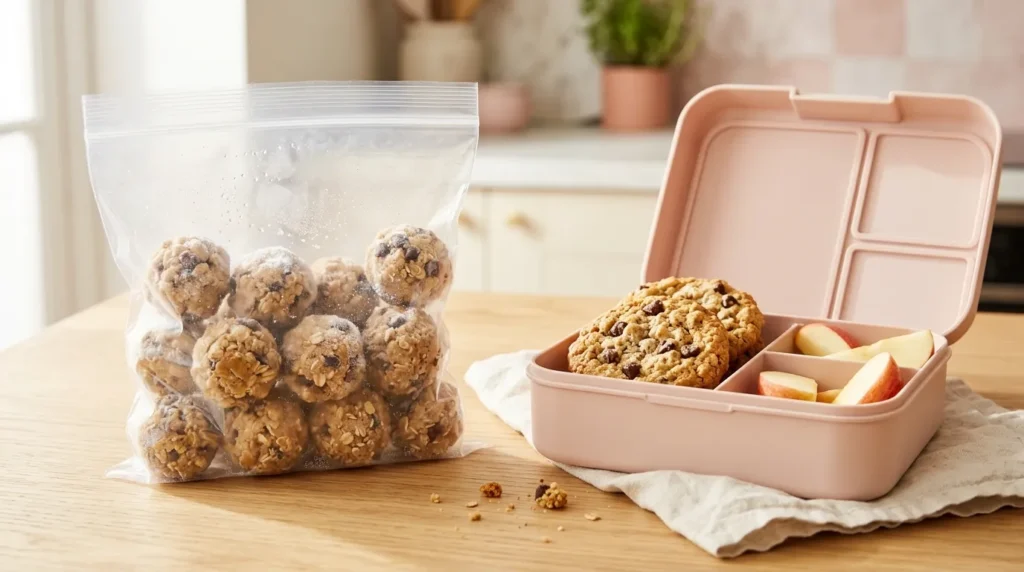
Calm week: bake the whole batch. Keep the cookies in an airtight container at room temperature for up to 5 days. They stay chewiest in the first 3 days.
Busy week: freeze the dough. Scoop the dough into balls, freeze them on a tray for an hour, then move them to a freezer bag. They keep for up to 3 months. Bake straight from frozen, adding 1 to 2 minutes to the baking time. Two or three warm cookies after school, without making a whole batch, is a great treat.
Lunch box week: freeze the baked cookies. Let them cool completely, then freeze them in a container with parchment between the layers for up to 3 months. A frozen cookie packed in the morning is thawed by lunch.
FAQ
Are all oatmeal cookies gluten-free?
No. Most oatmeal cookies use wheat flour, and regular oats can carry traces of wheat and barley. They’re only gluten-free when they’re made with a gluten-free flour and certified gluten-free oats, like these.
Can I use quick oats in gluten free oatmeal cookies?
Yes, but the cookies will be softer and flatter, with less chew. Use the same amount. For the oat flour, either kind works since it gets blended anyway.
Do I have to chill the dough?
I really recommend it. Gluten free oatmeal cookies made with unchilled dough tend to spread thin and turn crumbly. Thirty minutes is enough.
Is baking soda necessary?
It’s what gives the cookies their crispy, golden edges. Without it, they come out thicker, paler, and more cake-like. Don’t swap it for baking powder, which makes them puffy.
Are gluten free oatmeal cookies healthy?
They’re still a cookie, with butter and sugar. But oats bring fiber, and making them at home means you choose what goes in. That’s the main reason I bake instead of buying.
How many calories are in one cookie?
About 170 calories each when you make 20 cookies with chocolate chips, and about 155 with raisins. That’s an estimate from standard nutrition data.
Can I make gluten free oatmeal cookies without brown sugar?
You can use all granulated sugar, but you’ll lose a lot of the chew, and the cookies will be crispier all the way through. Coconut sugar works as a 1:1 swap for the brown sugar.
More gluten-free cookies to try
If you’re in an oat mood, my mom’s no bake chocolate oatmeal cookies are ready without turning on the oven, and the peanut butter oatmeal cookies come in three versions. For the holidays, my gluten free gingerbread cookies and gluten free sugar cookies are perfect for cookie trays. And if you have apples, the apple crisp with oatmeal uses the same gluten-free oats. You’ll find the rest in the gluten-free cookies category.
If you bake these gluten free oatmeal cookies, tell me in the comments which team you’re on: chocolate chip, raisin, cranberry, or a little bit of everything. And leave a rating in the recipe card. It really helps other gluten-free families find the recipe.