
Table of Contents
Are rice cakes healthy? Mostly yes, with one big “but.” A plain rice cake is just puffed rice and a little salt, it’s naturally gluten free, and it has about 35 calories. The “but” is that it digests fast, raises your blood sugar quickly, and won’t keep you full for long on its own.
So, are rice cakes good for you? Yes, as a snack base. On their own they’re not a health food, and what you put on top decides how good they really are for you.
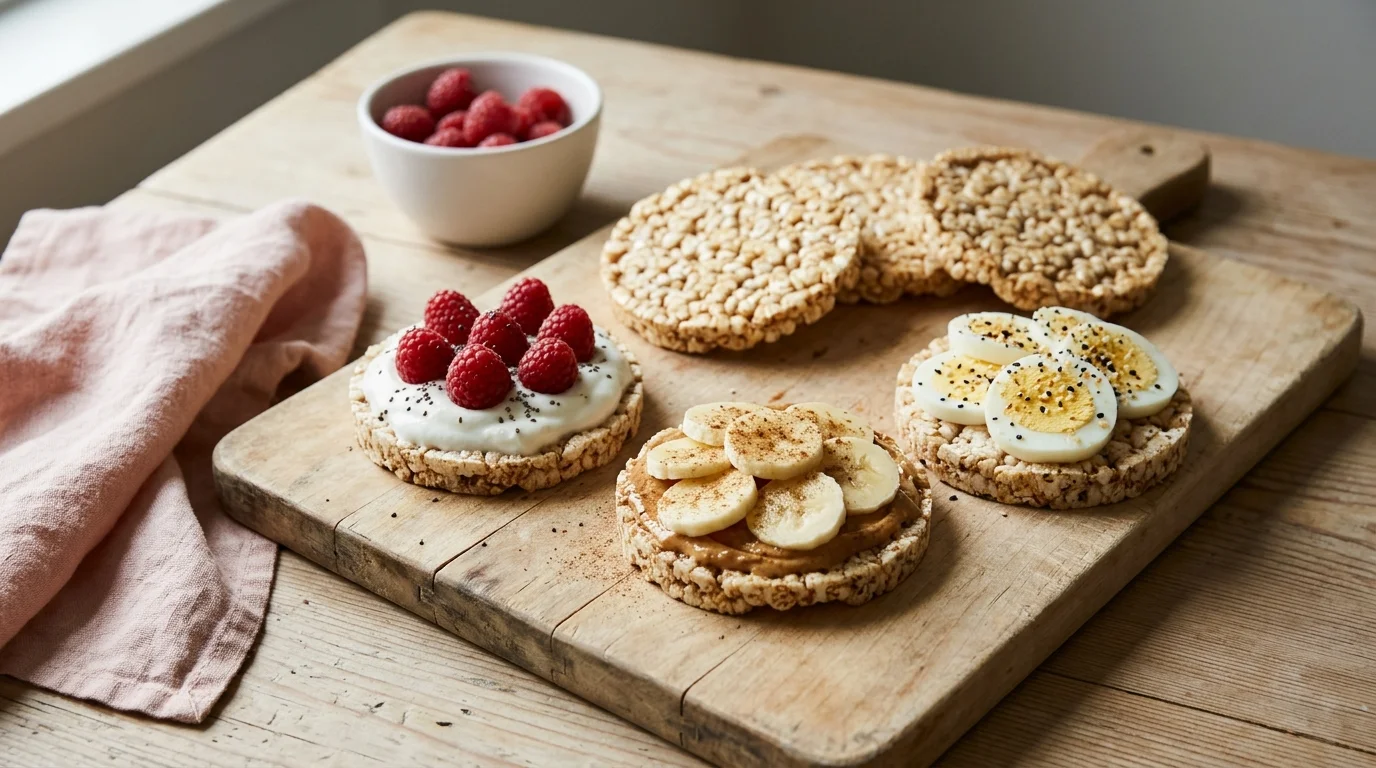
I eat rice cakes mostly around my workouts, before or after the gym. And I can’t pick a favorite topping! Peanut butter and banana, Greek yogurt and berries, a sliced egg, a little chocolate… it really depends on the day.
Below I’ll go through the real benefits, the questions people ask most (blood sugar, weight loss, constipation, arsenic), and the toppings that turn a rice cake into a snack that actually holds you over.
Are rice cakes healthy? The short answer
Here’s how they stack up when you put the good and the not-so-good side by side.
| The good | The not-so-good |
|---|---|
| Low in calories, about 35 per plain cake | Very little protein or fiber |
| Naturally gluten free | High glycemic index, so blood sugar rises fast |
| Short ingredient list: rice, sometimes salt | Easy to eat half a bag and still feel hungry |
| Whole grain when made with brown rice | Rice can carry traces of arsenic |
| Shelf-stable and easy to pack | Flavored ones add sugar, oil, and sometimes milk |
Plain or lightly salted cakes are the healthiest pick. Chocolate, caramel, and cheddar versions are closer to a cookie or a chip. That’s fine! Just treat them like a treat.
What’s actually in a rice cake
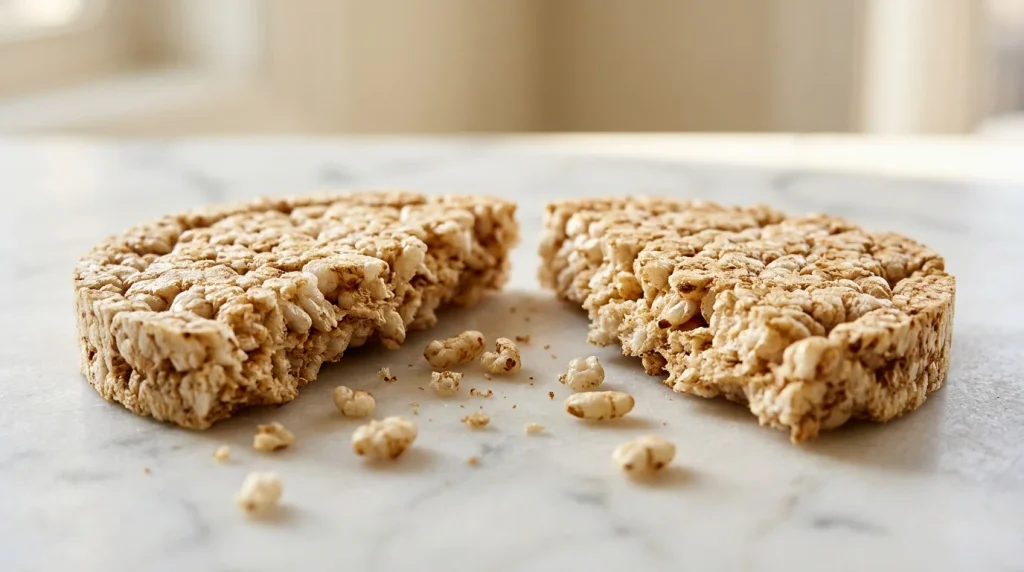
Plain rice cakes are made from whole grain brown rice (or white rice) and usually a pinch of salt. The rice is heated in a round mold under pressure until it puffs up and sticks together, so there’s no flour, oil, or binder.
One plain cake (9 g) has about 35 calories, 7 g of carbs, less than 1 g of protein, and 0.4 g of fiber. If you want the full breakdown, label tips, and how flavored cakes compare, I cover all of that in my rice cake nutrition facts post.
Are rice cakes good for you? The real rice cakes benefits
There’s more to them than low calories, and a few of these matter a lot if you eat gluten free.
- Low in calories: About 35 per plain cake, so two cakes with a topping is still a light snack.
- Naturally gluten free: Rice has no gluten, which makes rice cakes an easy swap for bread or crackers. If you have celiac disease, pick a bag labeled gluten free, because multigrain versions can pick up gluten from shared equipment. (More on safe grains in my gluten free grains list.)
- Simple ingredients: Rice and salt. That’s it for plain ones.
- Whole grain: When “whole grain brown rice” is the first ingredient, you’re getting the whole grain, bran and all.
- Built-in portions: One cake is one cake. It’s a lot easier to stop at two than to stop halfway through a bag of chips.
- A crunchy base for better food: This is the big one. Nut butter, Greek yogurt, eggs, avocado, and fruit all sit nicely on top.
Why are rice cakes considered junk food?
You’ll see people online calling rice cakes junk food, and I get where it comes from. A rice cake is mostly puffed starch and air. There’s almost no protein, fat, or fiber to slow down digestion, so you feel hungry again pretty soon.
The puffing matters too. It breaks the rice open, which makes the starch really easy for your body to digest. Flavored cakes then add sugar and oil on top of that.
But junk food usually means lots of calories, sugar, or salt packed into a small bite, and a plain rice cake doesn’t have much of any of those. I’d call it “not very filling” rather than junk.
Do rice cakes raise blood sugar?
Yes, and pretty quickly. Harvard Health puts rice cakes in the high glycemic index group (70 or higher), right next to white bread, bagels, and most crackers. That means the carbs turn into blood sugar fast.
There’s a second number worth knowing, though: glycemic load. It looks at how many carbs you actually eat. One plain rice cake only has about 7 g of carbs, so a single cake has a smaller effect than the GI alone suggests. Four or five plain cakes in a row is a different story.
To soften the spike:
- Eat them with protein or fat, like peanut butter, Greek yogurt, cheese, or an egg. These slow down how fast the carbs hit your bloodstream.
- Stop at one or two cakes.
- Choose brown rice, multigrain, or legume-based cakes (chickpea or lentil), which have a bit more fiber and protein.
Are rice cakes OK for diabetics?
They can fit, as long as you count them as carbs (about 7 g per plain cake) and pair them with protein or fat. Everyone’s blood sugar reacts a little differently, so check your own numbers with your meter and talk to your doctor or dietitian about what works for you.
Are rice cakes good for weight loss?
Rice cakes for weight loss can work, but not in the way the diet ads from the ’80s promised.
Rice cakes don’t make you lose weight. They’re just light. Where they help is as a swap: two rice cakes with a topping instead of a bagel, a muffin, or a big handful of chips is usually a lighter snack.
The problem is fullness. If you eat two plain cakes and you’re starving 30 minutes later, you’ll probably make up for it with something else. So the trick is protein. One cake with a spoonful of peanut butter will hold you over a lot longer than three plain ones.
Why do bodybuilders eat rice cakes?
If you follow fitness people online, you’ve probably seen rice cakes with honey or jam before a workout. There’s a reason for that.
Before training, the same things that make rice cakes “bad” (fast digestion, very little fiber or fat) become useful. They give quick energy and sit light in your stomach, so you’re not lifting or running on a heavy meal. That’s why rice cakes pre-workout are such a gym staple. A lot of lifters eat them about an hour before they train.
Are two rice cakes enough before the gym? For a short or easy session, often yes. For a long or hard one, you’ll probably want more carbs, like a banana on top. After your workout, eat them with protein (eggs, yogurt, a protein shake) so your muscles have something to recover with.
And to answer the other common question: rice cakes don’t build muscle on their own. They fuel the workout. Protein and training do the building.
How many rice cakes can you eat a day?
There’s no official limit. For most people, a couple a day, topped with something filling, is a perfectly reasonable habit.
So what happens if you eat rice cakes every day? Usually nothing dramatic. Just keep two things in mind:
- Fiber. If rice cakes replace higher-fiber foods (fruit, veggies, whole grain gluten free bread), your fiber can drop without you noticing.
- Arsenic. Rice takes up small amounts of arsenic from the soil. Sweden’s food agency says adults can eat rice cakes from time to time, depending on how much other rice they eat (Sveriges Radio). If rice cakes are a daily thing for you, switch up your grains: corn cakes, oats, quinoa, or buckwheat.
Can rice cakes cause constipation?
Rice cakes don’t “block you up” on their own. But one plain cake has only about 0.4 g of fiber, so if they replace higher-fiber foods and you’re not drinking much water, things can slow down.
Easy fixes: add fiber on top (berries, banana, chia seeds, avocado, hummus), pick brown rice or multigrain cakes, and drink a glass of water with your snack.
Are rice cakes ultra-processed?
It depends on the bag. Food scientists often use the NOVA system, which sorts food by how processed it is.
Plain cakes made from only brown rice and salt usually land in group 3, “processed foods” (Open Food Facts). That’s the same group as cheese or fresh bakery bread. Flavored cakes with ingredients like maltodextrin, natural flavor, and added oils move into group 4, ultra-processed. Quaker’s chocolate rice cakes, for example, are rated ultra-processed (Food Benchmark).
The quick check: the shorter the ingredient list, the closer you are to plain.
Are rice cakes a good snack for toddlers?
This is the one where I’d be a bit more careful.
The main concern is arsenic. Rice picks up more arsenic from the soil than most grains, and brown rice tends to have more than white. The FDA and the American Academy of Pediatrics don’t ban rice snacks, but they advise giving toddlers a variety of grains instead of mostly rice-based ones (Harvard Health). Sweden goes further and advises no rice cakes at all for kids under 6.
So I’d keep rice cakes as an occasional snack for little ones, not an everyday one. Rotate with oat-based or corn-based snacks, fruit, and yogurt. Break cakes into small pieces, stay with your child while they eat, and ask your pediatrician if you’re unsure what’s right for their age.
Rice cakes vs bread, crackers, and corn cakes
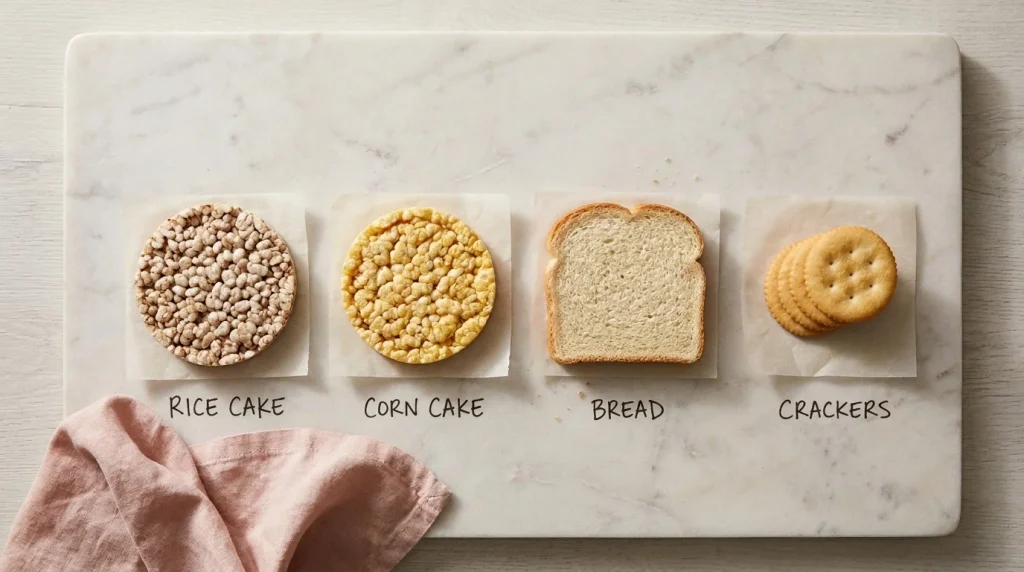
Are rice cakes healthy compared with bread or crackers? Here’s how a plain rice cake stacks up against the snacks it usually replaces.
| Snack | Compared with a plain rice cake |
|---|---|
| Slice of bread | More calories per piece, but whole grain bread has more fiber and protein. Regular bread has gluten. |
| Gluten free bread | Similar job as a base. Often more calories per slice; check the fiber on the label. |
| Crackers | Many add oil and more salt, and a handful usually has more calories than one cake. |
| Corn cakes | Very similar: puffed, light, and fast-digesting. A good way to mix up your grains. |
| Chickpea or lentil cakes | More protein and fiber, and gentler on blood sugar. |
How to make rice cakes a healthier snack
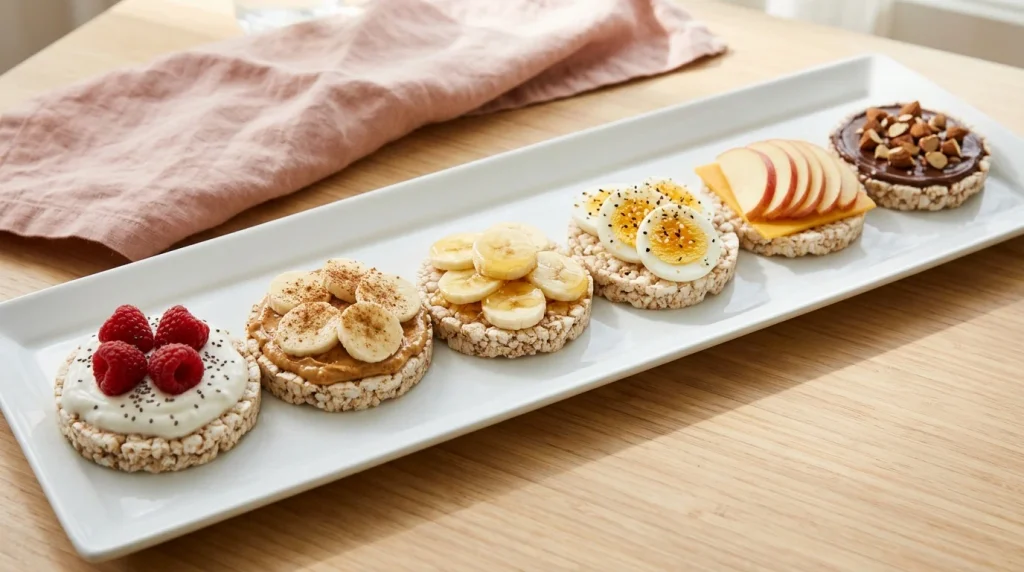
Here’s my rule: add protein or healthy fat, plus some fiber when you can. That’s what turns a rice cake from “gone in 30 seconds” into a real snack.
| When you want | Try this on one cake |
|---|---|
| Something sweet | 2 tablespoons Greek yogurt, about 1/4 cup raspberries, 1 teaspoon chia seeds |
| Classic and filling | 1 tablespoon natural peanut butter, 4 or 5 thin banana slices, a pinch of cinnamon |
| Pre-workout energy | 1 teaspoon honey or jam and a few banana slices |
| Savory protein | 1 sliced hard-boiled egg and a pinch of everything bagel seasoning |
| Snack-plate style | 1 thin slice of cheddar and a few apple slices |
| A chocolate craving | A thin layer of melted dark chocolate and 1 tablespoon chopped almonds |
Add wet toppings like yogurt or fruit right before eating, because rice cakes go soft fast. Thicker cakes hold heavy spreads better than thin ones.
If you love the sweet versions, I have homemade chocolate rice cakes and caramel rice cakes where you control the sugar and the chocolate.
Rice cakes FAQ
Which rice cakes are the healthiest?
Plain or lightly salted cakes where whole grain brown rice is the first ingredient. Multigrain cakes with seeds, and chickpea or lentil cakes, are good picks too.
Are flavored rice cakes healthy?
Think of them as a treat, closer to a cookie than to plain rice. Check the added sugar and the serving size, since some bags count two cakes as one serving.
Which rice cakes are the healthiest?
Plain or lightly salted cakes where whole grain brown rice is the first ingredient. Multigrain cakes with seeds, and chickpea or lentil cakes, are good picks too.
Are rice cakes good for breakfast?
Only with protein. Two cakes with an egg and some avocado will carry you to lunch. Two plain ones won’t.
Are brown rice cakes healthier than white rice cakes?
A little. Brown rice keeps the bran, so you get slightly more fiber and the whole grain. It also tends to carry more arsenic, which is one more reason to switch up your grains.
Are rice cakes keto-friendly?
No. At about 7 g of carbs per plain cake, they don’t fit a keto diet.
Are rice cakes healthy to eat every day?
For most people, yes, as long as you top them with something filling and switch up your grains now and then. The daily section above has the details.
So, are rice cakes healthy?
They’re a light, gluten free snack that works best with protein or fat on top. Pick plain whole grain cakes, stop at one or two, and mix in other grains through the week. Flavored ones are a treat, and that’s okay too.
More gluten free snacks and sweets
Want the numbers? My rice cake nutrition facts post has the full label breakdown. And if you’re here for something sweet, browse my gluten free desserts.
Do you eat rice cakes plain, or do you have a topping combo you swear by? Tell me in the comments. I’m always looking for new ones to try!