
Table of Contents
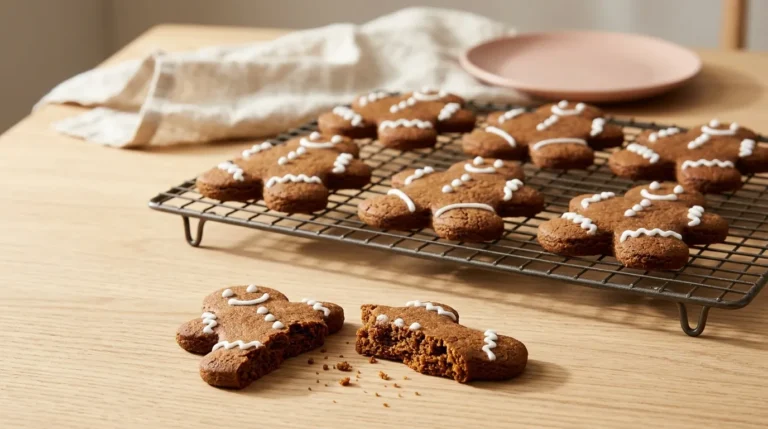
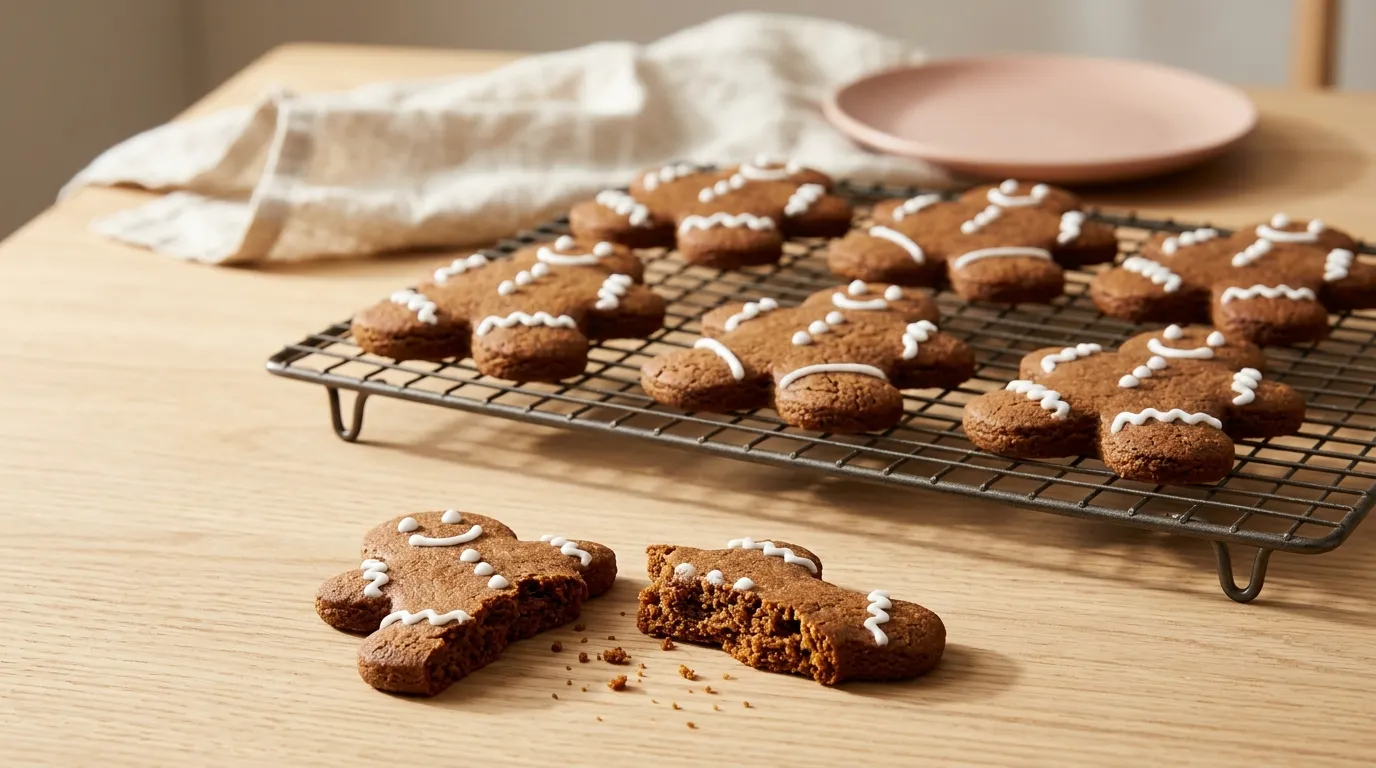
These gluten free gingerbread cookies are soft and chewy in the middle, warm with ginger and cinnamon, and sturdy enough to cut into any shape you want. Roll them thinner and they bake up crisp instead. Same dough, two cookies!
The recipe is my mom’s. Gingerbread was her favorite part of the holidays, and it was always on the table when the whole family got together. So when I started baking gluten free, I took her recipe and changed it so I could keep making it. It didn’t work the first time (I’ll tell you what went wrong below), but now it rolls out smoothly and the little arms and legs stay put in the oven.
And I have to confess something. When I was a little girl, my dad and I used to play with the gingerbread men before anyone got to eat them. We’d make them walk and dance across the table, singing the whole time.
If you’ve been looking for a gluten free recipe for gingerbread cookies that doesn’t crumble when you roll it, this is the one I’d hand you.
Why do these gluten free gingerbread cookies hold their shape?
They hold their shape because of two things: a flour blend with xanthan gum, and a cold dough.
In regular gingerbread, gluten is the glue. Take it away and the dough has nothing holding it together, so it tears when you roll it and spreads in the oven. Xanthan gum does the gluten’s job here by making the dough more elastic. You can see the difference it makes in this 400-cookie xanthan gum experiment from Science News Explores. That’s why I use a gluten free all-purpose blend that already has it mixed in.
The chill matters just as much. Gluten free flours are mostly rice flour and starches, and they need time to soak up the butter and molasses. An hour in the fridge firms up the butter (so the cookies don’t spread) and gives the flour time to hydrate (so the cookies aren’t gritty). Please don’t skip it!
I’m not the only one who learned this. When America’s Test Kitchen developed their gluten-free holiday cookies, chilling alone didn’t stop the shapes from slumping, so they added a little xanthan gum too. They also warn against cutting the chill short.
The molasses and brown sugar keep the cookies soft and chewy. Molasses is also a little acidic, which is why the recipe uses baking soda. The two react and give the cookies a small lift without puffing them up into blobs.
Recipe ingredients
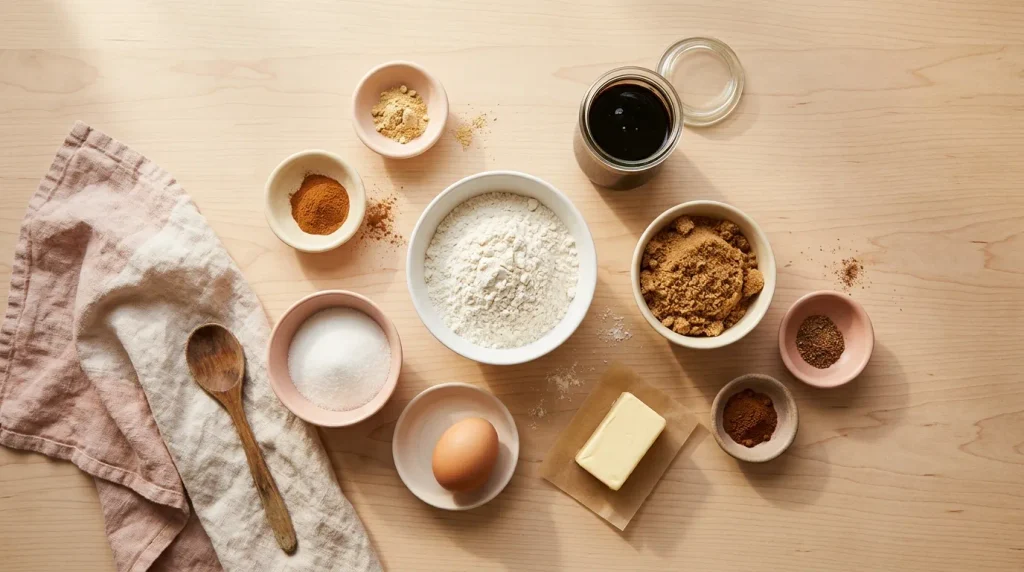
- Gluten free flour: I use Pillsbury gluten free all-purpose flour, which already has xanthan gum in it. If your blend doesn’t list xanthan gum, whisk about 1/2 teaspoon into the dry ingredients. Every blend absorbs liquid a little differently, so your dough might need a touch more or less (see the tips section).
- Butter: Unsalted and softened. Press it with a finger and it should leave a dent without feeling greasy.
- Brown sugar and granulated sugar: Brown sugar keeps the middles moist and chewy. White sugar helps the edges set.
- Egg: One large egg, at room temperature so it blends into the butter without lumps.
- Molasses: Regular dark molasses. Don’t use blackstrap! It’s bitter and so strong it covers up the spices.
- Vanilla: A full tablespoon. It sounds like a lot, but it softens the sharp edge of the molasses.
- Baking soda: Not baking powder. They aren’t swappable here.
- Spices: Ground ginger, cinnamon, nutmeg and allspice. Like more bite? Add another 1/2 teaspoon of ginger.
- Salt: Just 1/4 teaspoon, to balance the sweetness.
Soft or crispy? How to get the cookie you want
Thickness and bake time decide the texture, so pick your cookie before you roll.
| Thickness | Bake time at 350°F | Texture | Best for |
|---|---|---|---|
| 1/2 inch | 8 minutes | Soft and chewy | Eating, cookie platters, gifts |
| 1/4 inch | 10 minutes | Crisp and snappy | Gingerbread houses, dunking in hot cocoa |
Now, a few steps that really matter.
Cream the butter and both sugars for 2 to 3 minutes, until the mix looks lighter in color and fluffy. Then beat in the egg, molasses and vanilla.
Whisk the flour, baking soda, salt and spices in a separate bowl first. That way you don’t get a pocket of baking soda in one cookie. Add the dry mix to the wet slowly. The dough will be soft, and that’s fine.
Shape it into a ball, flatten it into a disk and wrap it tightly. A flat disk chills faster and rolls out more evenly than a ball. Chill for 1 hour.
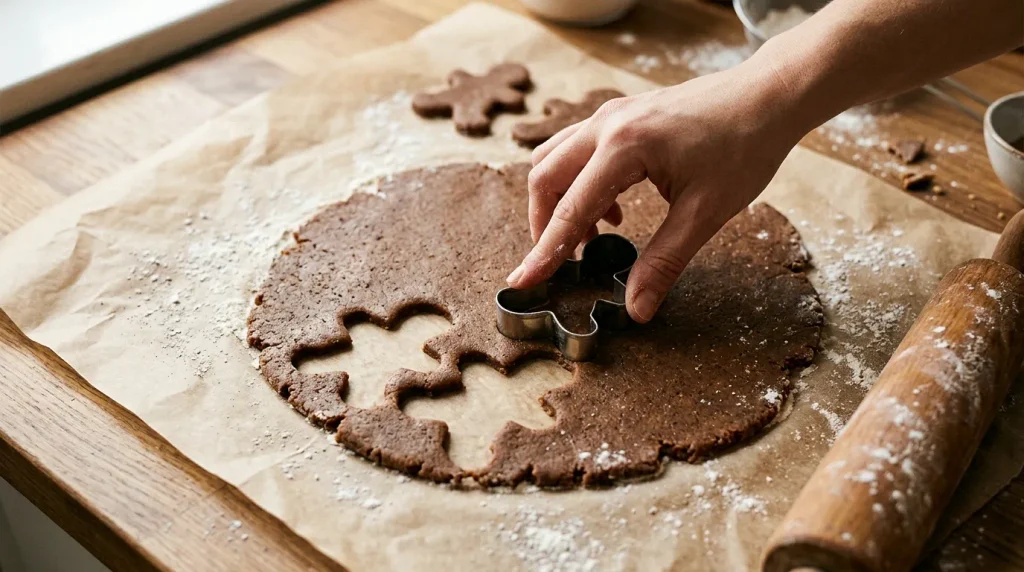
Roll the dough on parchment dusted with gluten free flour, and dust your rolling pin too. Place the cut shapes 1 inch apart. Then gather the scraps and roll again.
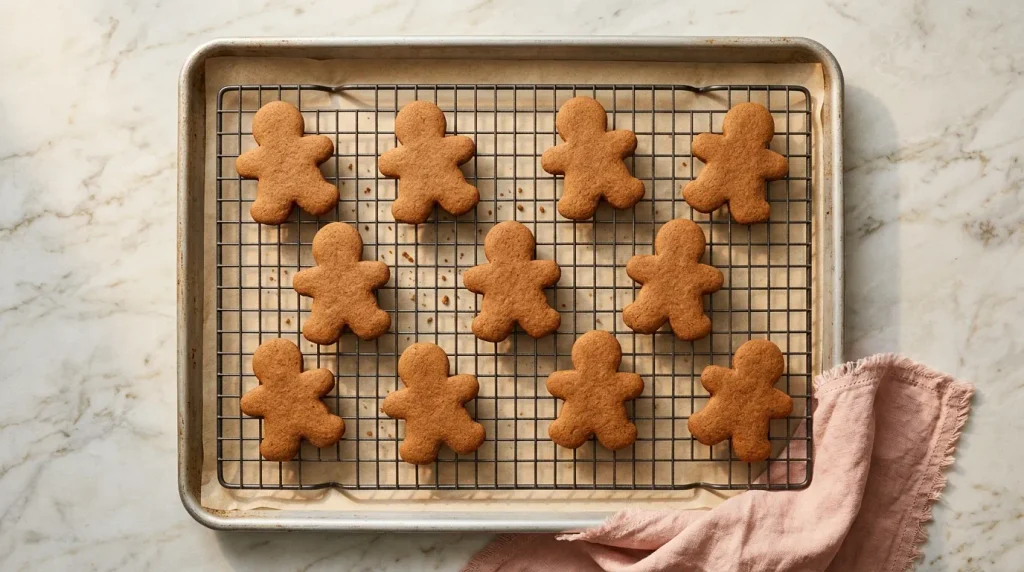
The cookies are done when the edges look dry and set but the centers still look soft. They firm up as they cool. Leave them on the baking sheet for 5 to 10 minutes before moving them, because warm gingerbread men lose their heads easily!
Tips for perfect cut-out cookies (and what to do when they go wrong)
My first batch cracked. What fixed it was more flour, added a tablespoon at a time until the dough felt soft but not sticky. That’s the thing about gluten free blends. Each one drinks up liquid a bit differently, so trust how the dough feels, not only the cup measure.
Measure the flour the right way. Spoon it into the cup and level it off with the back of a knife. If you scoop straight from the bag, you pack in extra flour and the cookies come out dry and dense.
Dough too sticky to roll? Put it back in the fridge for another 20 to 30 minutes. Cold dough handles much better.
Dough cracking at the edges while you roll? It’s too cold now. Let it sit on the counter for 10 to 15 minutes, then try again.
Cookies spreading in the oven? Pop the tray of cut shapes into the fridge for 10 minutes before baking. Also, never put raw dough on a hot baking sheet straight from the last batch. Let the sheet cool first.
Cookies hard the next day? They were probably baked a minute too long or rolled thin. Keep them in an airtight container, and next time pull them out while the centers still look soft.
Easy royal icing for decorating
Royal icing is the classic choice for gingerbread because it dries hard, so you can stack and gift the cookies without smudging.
You need 2 cups (240 g) powdered sugar, 1 1/2 tablespoons meringue powder, 1/2 teaspoon clear vanilla (regular vanilla works but tints it a little beige) and 3 to 4 tablespoons warm water. Beat everything with a mixer for 4 to 5 minutes, until it’s thick, white and glossy. Check the meringue powder label to make sure it’s gluten free.
The trick is the thickness:
- For outlines and details, you want it like toothpaste. It holds a line without sagging.
- For filling in (flooding), add water a few drops at a time until it’s like honey. Drag a spoon through it, and the line should disappear in about 10 to 15 seconds.
Let decorated cookies dry uncovered for at least 6 hours, or overnight, before you stack them.
Want something softer? Stir 2 cups powdered sugar with 2 to 3 tablespoons milk for a simple glaze. It sets, but it never gets as hard as royal icing.
Ways to decorate gluten free gingerbread cookies
I like all three of these, and usually on the same tray:
- Sprinkles: Press them on while the icing is still wet, or they won’t stick.
- Candies: Little candies make perfect buttons and eyes. Mini chocolate chips work too.
- Chocolate: Drizzle melted white or dark chocolate over the cookies, or dip half of each one.
One warning. Sprinkles and candies can hide wheat or barley malt, so read every label (and check again each year, because recipes change). The Celiac Disease Foundation’s food labeling guide lists candy as a common hidden source of gluten and shows which ingredient names, like malt and malt flavor, to look out for.

Variations and substitutions
Peanut butter gingerbread: Sometimes I add just a little peanut butter, a spoonful or so, beaten in with the butter and sugar. The cookies come out a little nuttier. Don’t go overboard, because extra peanut butter makes the dough softer and harder to cut cleanly. Leave it out if anyone at your table has a peanut allergy. (If you love that flavor, my gluten free peanut butter cookies are all about it.)
More spice: Add 1/4 teaspoon ground cloves or a pinch of black pepper for a stronger, old-fashioned gingerbread.
Can you make a gingerbread house with this dough? Yes. Roll it 1/4 inch thick and bake the pieces until crisp. Big walls and roof pieces need a few extra minutes, so bake them until the edges are firm and slightly darker. While the pieces are still warm, lay your template on top and trim any edges that spread. Then let them cool completely on the sheet. Use stiff royal icing (the toothpaste kind) as glue.
Dairy free or egg free? I haven’t tested this recipe either way yet, so I can’t promise how it turns out. If you try it, please tell me in the comments what you used! If you need a dairy free cookie for the holidays right now, my gluten free dairy free cookies are already made that way.
Make ahead and storage
This dough is great for busy December weeks. Make it on a quiet evening and bake whenever you have an hour.
The dough keeps in the fridge for up to 3 days, wrapped well in plastic wrap. For longer, put the wrapped disk in a freezer bag and freeze it for up to 3 months. Thaw it overnight in the fridge. If it’s too firm to roll, give it 10 to 15 minutes on the counter.
Baked cookies go in an airtight container at room temperature. They taste best within 3 to 4 days and keep for up to a week. Put a sheet of parchment between the layers so they don’t stick together.
To freeze baked cookies, freeze them plain (undecorated) in a freezer bag with the air pressed out, for up to 3 months. Thaw them at room temperature, then decorate.
Frequently asked questions
Are gingerbread cookies gluten free?
No, regular gingerbread cookies are made with wheat flour, so they contain gluten. This version uses a gluten free all-purpose flour blend instead. Spices and molasses are usually naturally gluten free, but check the labels if you bake for someone with celiac disease. In the US, anything labeled gluten free must contain less than 20 parts per million of gluten under the FDA’s gluten-free labeling rule, so that label is the easiest thing to look for.
Can I use almond flour or coconut flour instead?
Not as a straight swap. Almond flour has no starch and a lot of fat, so the cookies spread and break easily, and coconut flour soaks up far more liquid than this dough has. Stick with a rice-based all-purpose blend for cut-out shapes.
Do I really have to chill the dough?
Yes, for at least 1 hour. Warm gluten free dough is sticky, tears when you lift it, and spreads in the oven. Chilling also takes away the gritty texture some blends have.
Why are my gluten free gingerbread cookies gritty?
The flour didn’t have enough time to soak up the liquid. A longer chill helps, and an overnight rest helps even more.
Can I make them without molasses?
I don’t recommend it. Molasses gives gingerbread its flavor, its dark color and its chew. Honey or maple syrup would change the taste and the texture, and I haven’t tested either one.
How do I keep the cookies soft?
Roll them 1/2 inch thick, bake them for 8 minutes, and store them in an airtight container as soon as they’re cool. A slice of plain gluten free bread in the container helps keep them soft for a few more days.
More gluten free holiday baking
Love cut-out cookies? My gluten free sugar cookies use the same roll-and-cut method and take royal icing beautifully. For the rest of your Christmas cookie tray, try these buttery gluten free spritz cookies or the old-fashioned springerle cookies. And if you need more ideas for the holiday table, here are 13 easy gluten free dessert recipes, plus everything else in my gluten-free cookies collection.
If you make these, I’d love to know which shapes you cut and how you decorated them. Leave a rating in the recipe card and tell me in the comments. And if a few gingerbread men dance across the table before they’re eaten, like mine did with my dad, I won’t tell anyone.
Recipe card: Gluten Free Gingerbread Cookie Recipe
My mom’s holiday gingerbread, made with gluten free flour, rolled soft and chewy or thin and crisp.
| Yield | 24 to 48 cookies, depending on thickness and cutter size |
| Prep time | 15 minutes |
| Chill time | 1 hour |
| Bake time | 8 to 10 minutes per batch |
| Total time | About 1 hour 25 minutes |
Ingredients
- 1/2 cup (113 g) unsalted butter, softened
- 1/2 cup (100 g) granulated sugar
- 1/2 cup (110 g) packed brown sugar
- 1 large egg, room temperature
- 1/4 cup (84 g) dark molasses (not blackstrap)
- 1 tablespoon (15 ml) pure vanilla extract
- 2 1/2 cups (312 g) gluten free all-purpose flour with xanthan gum, plus extra for rolling
- 1 teaspoon baking soda
- 1/4 teaspoon salt
- 2 teaspoons ground ginger
- 1 teaspoon ground cinnamon
- 1/4 teaspoon ground nutmeg
- 1/8 teaspoon ground allspice
Instructions
- Beat the butter, granulated sugar and brown sugar in a large bowl for 2 to 3 minutes, until light and fluffy.
- Add the egg, molasses and vanilla. Beat until smooth.
- In another bowl, whisk the flour, baking soda, salt, ginger, cinnamon, nutmeg and allspice.
- Add the dry ingredients to the wet ingredients a little at a time, mixing until no dry flour is left.
- Shape the dough into a ball, flatten it into a disk and wrap it in plastic wrap. Chill for at least 1 hour.
- Heat the oven to 350°F (175°C). Line two baking sheets with parchment paper.
- Dust a sheet of parchment and your rolling pin with gluten free flour. Roll the dough 1/2 inch thick for soft cookies or 1/4 inch thick for crisp ones.
- Cut out shapes and place them 1 inch apart on the baking sheets. Re-roll the scraps and cut again.
- Bake 8 minutes for soft cookies or 10 minutes for crisp ones, until the edges look dry and set.
- Cool on the baking sheet for 5 to 10 minutes, then move to a wire rack. Decorate only once they’re completely cool.
Notes
- Flour: If your blend has no xanthan gum, add 1/2 teaspoon. If the dough feels too sticky to handle after chilling, work in more flour 1 tablespoon at a time.
- Measure flour by spooning it into the cup and leveling it off.
- Storage: Airtight at room temperature for up to 1 week. Freeze undecorated cookies or the dough for up to 3 months.
- Royal icing, decorating ideas, and a gingerbread house guide are in the post above.